PuniCodex

Extended Lore

Πῦρ Pŷr

Etymology · Orthography · Cult · Iconography · Reception · Sources

Tier 1 Pŷr.com
Pŷr — Fire
01

Quick Facts

Essential information about Pŷr, Fire

Original ScriptΠῦρ
Unicode RestorationPŷr
Reconstructed Pronunciation/pŷːr/
PantheonGreek
DomainFire
MeaningFire
ClassificationTier 1
Primary DomainPŷr.com
Sacred SymbolsFlame, Hearth (hestia), Torch, The pyre on Oita, The fennel stalk
02

Etymology & Word Family

From original script to Unicode restoration

Original Script Πῦρ Pŷr — "Fire"
Unicode Restoration Pŷr Restored stress, length, and script
Modern ASCII pyr Plain-ASCII fallback

The name Pŷr carries the orthographic signature of the greek tradition: Πῦρ. Unicode restoration recovers what ASCII flattens.

03

Unicode Character Breakdown

Character-by-character philological analysis

CharacterUnicodeNameBlockPhonetic Role
PU+0050Latin Capital Letter PBasic LatinP uppercase
ŷU+0177Latin Small Letter Y with CircumflexLatin Extended-AAcute on y
rU+0072Latin Small Letter RBasic Latinr same

The Tier 1 classification reflects how much of the original phonology this restoration preserves — stress and vowel length for Greek names, distinctive letters and diacritics for every other tradition.

04

Cult & Worship

How the sacred was kept — rites, sanctuaries, remains

The Cult

Fire was the universal medium of Greek cult rather than the property of a single god. Every sanctuary maintained an altar flame; escharai and ash altars received sacrifices to heroes and chthonic powers, while great burned-offering deposits mark the major Olympian sanctuaries. The heroön at Lefkandi, with its warrior cremation pyre inside the tenth-century BCE hall, shows how fire could become the architectural center of a cult. Hephaistos received the closest divine patronage over fire and the forge, but the element itself was too pervasive to be confined to one cult.

In the Earth

Fire was the organizing technology of Greek cult: every altar maintained a flame, and the ash-and-bone altars (escharai) of heroes and the great burned-offering deposits of the gods are among the most common finds at sanctuaries. The heroön at Lefkandi (Euboea, ca. 950 BCE) preserved a warrior's cremation on a pyre inside its great hall — archaeology's earliest witness to the pyre as a door. Hephaistos' forge and Prometheus' theft were painted on hundreds of Attic vases; the eternal flame at Olympia and the prytaneion hearths of cities like Athens were maintained by civic officials as the state's perpetual fire. Kilns, smelting furnaces, and domestic hearths mark nearly every excavated Greek site — fire was the first infrastructure.

05

Iconography

How Pŷr was imaged across the ages

The Image

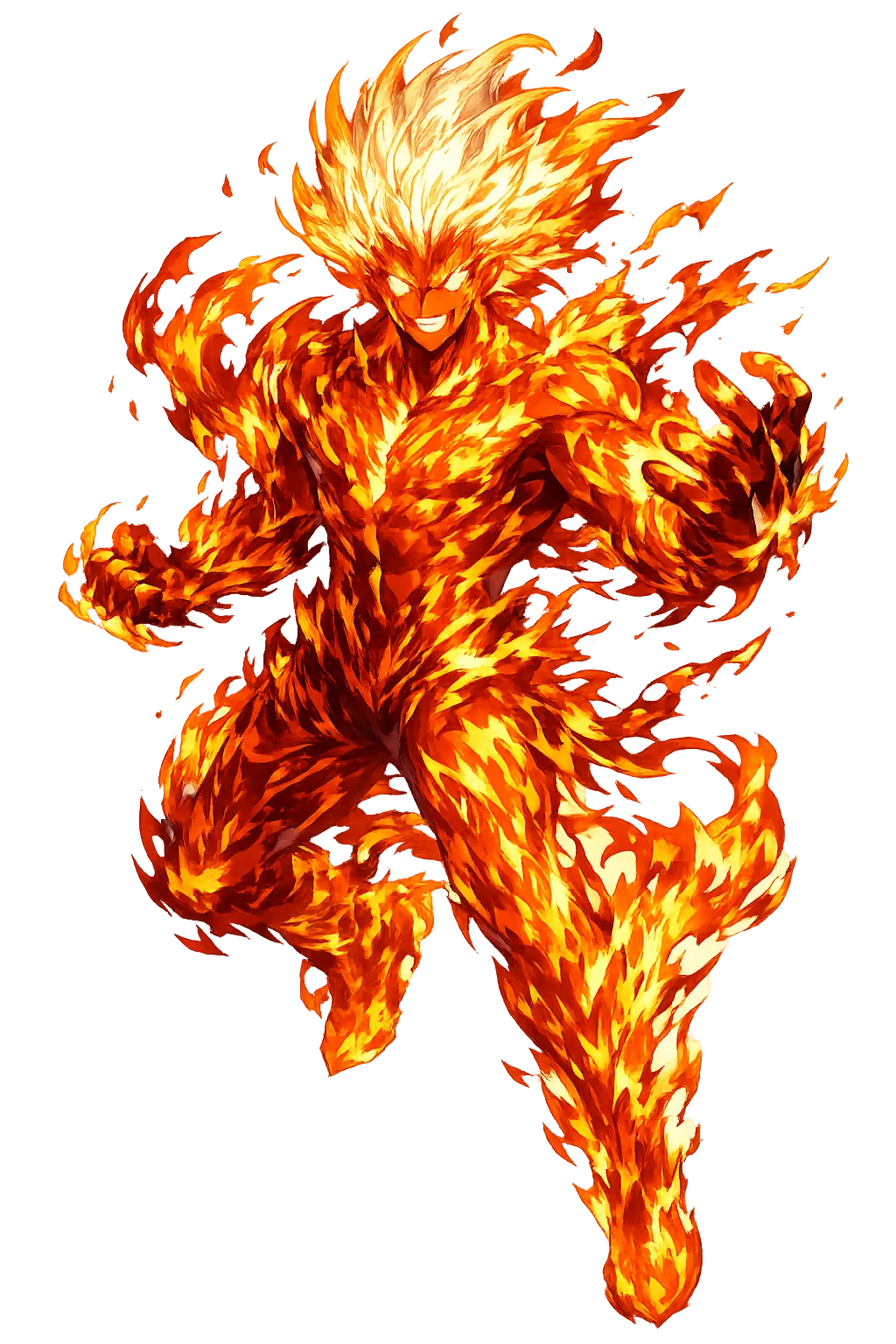
Fire appears in Greek art as attribute, ritual instrument, and symbol rather than as an independent figure. Vase painters depict torches, flaming altars, and the pyres of heroes such as Herakles; the Parthenon east pediment and other temple sculptures show sacrificial fire as the luminous center of divine audience. The Herakles pyre, in particular, became a favorite scene in South Italian vase painting. Philosophical and manuscript imagery later rendered fire as one of the four elements, often as a triangle or a flame.

06

Reception & Transformation

The name after its own age — transmission, translation, survival

Afterlives

Pŷr passed from cult element to philosophical principle in the hands of Heraklitos, who made ever-living fire the fundamental substance of the cosmos. The Presocratic interest in fire as archḗ influenced Stoic physics, with its doctrine of periodic cosmic conflagration, and fed alchemical literature and later elemental theory. Medieval and Renaissance thinkers received the four-element tradition through Aristotle and Galen, and fire remained a privileged symbol of transformation, purification, and divine presence. From the Prometheus myth to the Olympic flame and from Pentecost to modern plasma physics, fire has kept its double identity as destroyer and illuminator, a boundary where matter and symbol meet.

Identifications Across Traditions

Pŷr became one of the four Aristotelian elements and the Stoic active principle (pneuma/fire). Zoroastrianism elevated fire as the purest symbol of Ahura Mazda, tended in temples where it must never be polluted. In Christian symbolism fire became the Holy Spirit at Pentecost, judgment at the end of time, and the refining flame of purgatory. The Greek word survives in English through 'fire' itself, 'pyre,' and the scientific family of 'pyro-' compounds — pyrotechnics, pyroclastic, pyromania — while modern chemistry defines fire as rapid oxidation and smiles at the metaphysicians. But the cultural symbolism remains ancient: every rocket, furnace, and candle still speaks Heraclitus' language, promising transformation at a measured cost.

Modern Legacy

Pŷr is the element that made us human: cooking, metalworking, ceramics, glass, steam, electricity, and rocketry are all chapters in the domestication of the flame. Prometheus' theft is the founding myth of every technology — power taken from nature and turned against scarcity. Yet fire is also the element we most fear: conflagration, war, cremation, and the climate's slow burn. The Greeks kept both truths in one word. Hestia's hearth anchored the home and the state; the prytaneion's perpetual flame was the city's heartbeat; the Olympic flame still runs relay across the world as a moving fragment of that ancient fire. To hold pŷr is to hold the origin and the end of civilization in the same hand.

07

The Meditation

What Pŷr means — beyond the dictionary

Pŷr is the most alive of the elements. Earth rests, water flows, air moves, but fire consumes and transforms; it is never the same from moment to moment, and that is its definition. Heraclitus saw in it the logos of the universe — not a substance but a rate, a measure, a way of burning. Fire also teaches danger and responsibility together. Prometheus was punished not for discovering fire but for giving it away without a warranty, and every technology since has repeated his dilemma: the gift warms the household that it might also burn. To honor pŷr is to respect both its generosity and its hunger — to use it without being consumed by it, and to remember that it is always exchanging us, in measures, for itself.

08

Frequently Asked Questions

Common questions about Pŷr, Fire, and Unicode restoration

01How do you pronounce Pŷr?

In reconstructed pronunciation, Pŷr is /pŷːr/ — approximately 'PYOOR' — one long, high-pitched syllable, like the sound of a flame catching.

02What does Pŷr mean?

Pŷr means Fire in the greek tradition.

03What are the symbols of Pŷr?

Pŷr is associated with Flame (The visible, ever-moving form of fire itself), Hearth (hestia) (The sacred fire at the center of home and city), Torch (Carried fire, used in processions, war, and mystery rites), The pyre on Oita (The funeral fire that burned Heracles' mortality away and released the god), The fennel stalk (Prometheus' smuggling-device: stolen heaven hidden in a dry reed).

04Why restore Pŷr in Unicode?

Plain ASCII pyr strips the stress, length, and script that make the name specific. Unicode restoration returns the name to its original written dignity.

05What is the most important myth about Pŷr?

“Prometheus Steals Fire” — the Hesiod, Theogony 565–616 story that anchors the mythology of Pŷr, told in full on the lore page.

09

Scholarly Sources

The philological foundations of this restoration

Every claim on this page is grounded in established scholarship. The orthographic restorations follow disciplinary convention. The etymological chain follows the best available reference works. This is not invention — it is resurrection through scholarship.

◈

Lexicography & Philology

  • Heraclitus
  • Liddell, H. G., Scott, R., & Jones, H. S. A Greek-English Lexicon. Oxford: Clarendon Press, 9th ed. 1996.
◎

Primary Texts

◉

Archaeology & Art History

  • Material evidence — iconography, inscriptions, and temple archaeology — for Pŷr and related cults.
✦

Religious Studies

  • Heraclitus, fragments DK 22 B30, B64, B90
  • LSJ and Beekes, Etymological Dictionary of Greek, s.v. πῦρ
Return

The Surface Awaits

You have traced the name from its earliest attestation to its Unicode restoration. Now return to the myth. The story is where the name lives.

Back to Lore
Pŷr mascot