PuniCodex

Extended Lore

PLVTO Plūtō

Etymology · Orthography · Cult · Iconography · Reception · Sources

Tier 1 Plūtō.com
Plūtō — Underworld, Wealth, the Dead
01

Quick Facts

Essential information about Plūtō, Underworld, Wealth, the Dead

Original ScriptPLVTO
Unicode RestorationPlūtō
Reconstructed Pronunciation/ˈpluː.toː/
PantheonRoman
DomainUnderworld, Wealth, the Dead
Meaning"The Rich One" — Roman lord of the underworld and of buried wealth
ClassificationTier 1
Primary DomainPlūtō.com
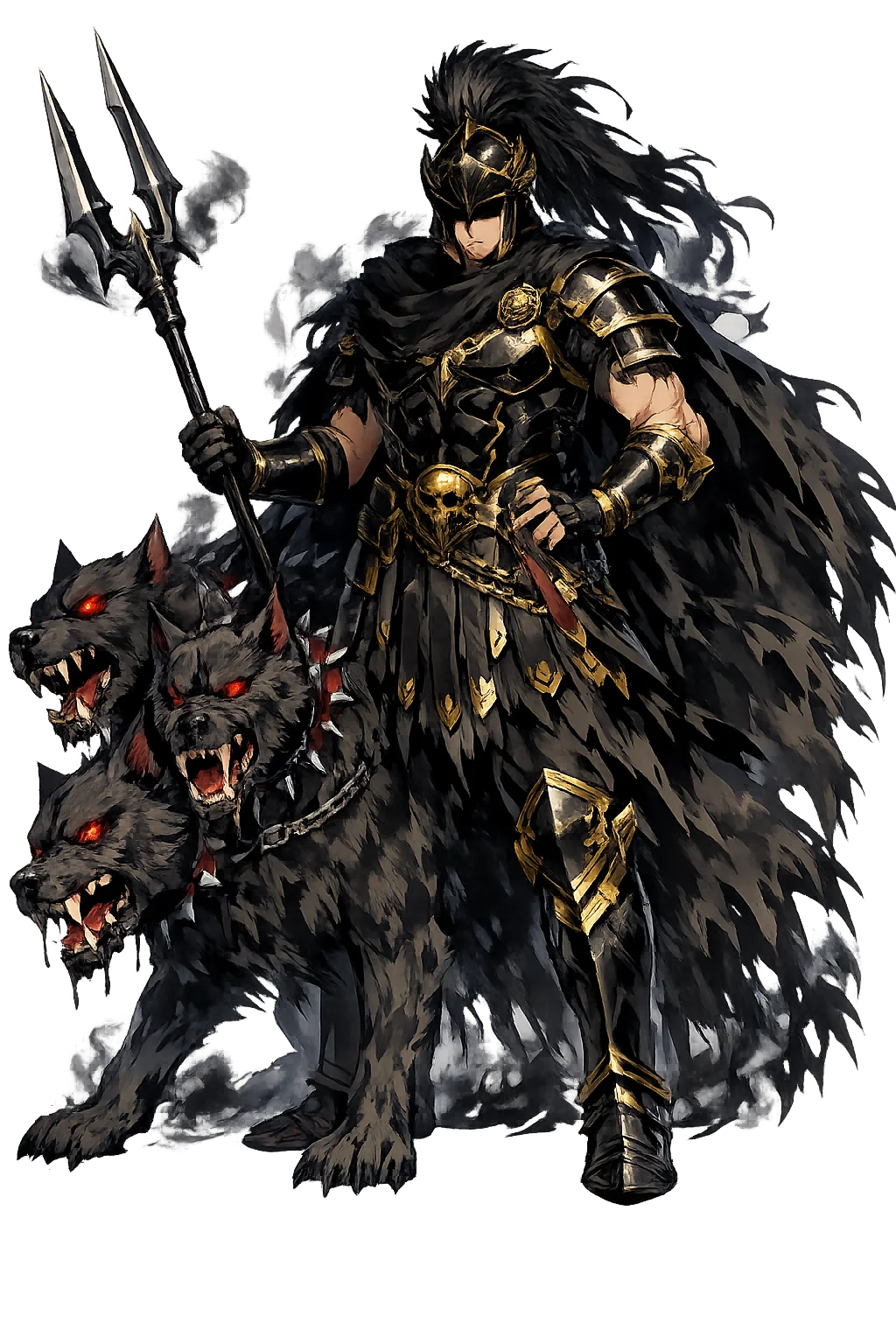
Sacred SymbolsThe bident, The cornucopia, The cypress, Cerberus, The narcissus
02

Etymology & Word Family

From original script to Unicode restoration

Original Script PLVTO Plūtō — ""The Rich One" — Roman lord of the underworld and of buried wealth"
Unicode Restoration Plūtō Restored stress, length, and script
Modern ASCII pluto Plain-ASCII fallback

The name Plūtō carries the orthographic signature of the roman tradition: PLVTO. Unicode restoration recovers what ASCII flattens.

03

Unicode Character Breakdown

Character-by-character philological analysis

CharacterUnicodeNameBlockPhonetic Role
PU+0050Latin Capital Letter PBasic LatinSame
lU+006CLatin Small Letter LBasic LatinSame
ūU+016BLatin Small Letter U with MacronLatin Extended-ALong ū
tU+0074Latin Small Letter TBasic LatinSame
ōU+014DLatin Small Letter O with MacronLatin Extended-ALong ō

The Tier 1 classification reflects how much of the original phonology this restoration preserves — stress and vowel length for Greek names, distinctive letters and diacritics for every other tradition.

04

Cult & Worship

How the sacred was kept — rites, sanctuaries, remains

The Cult

Plūtō's Roman cult was marked by what it avoided rather than by what it displayed. The mundus, a subterranean ritual pit, was opened only three times a year—August 24, October 5, and November 8—and on those days public business was suspended because the dead were abroad. The Ludi Saeculares of 17 BCE included nocturnal offerings to the inferis recorded on the Severan copy of the Augustan acta. Black victims were preferred, and rites were conducted at night or in roofed spaces. The 1888 discovery on the Quirinal of a subterranean altar-chamber identified with the Tarentum gave archaeology its one tangible trace of this deliberately hidden cult.

In the Earth

His monuments are pits and absences. In 1888 workmen on the Quirinal uncovered a subterranean altar-chamber identified with the Tarentum, the roofed pit where Rome sacrificed to Dis Pater and Proserpina — the closest archaeology comes to his door. The Severan copy of the Augustan acta (CIL VI 32323) preserves the 17 BCE liturgy in stone, including the nocturnal offerings to the 'inferis' on three successive nights. Before Rome, Etruria painted his face: the tombs of Tarquinia — the Tomb of the Augurs, the Tomb of the Leopards — banquet amid underworld watch-dogs and demons two centuries before the Secular Games, and funerary urns from Chiusi show Aita wrenching Phersipnai into his chariot. Rome's own grand Plūtō-temple is a negative space the texts acknowledge: the city preferred to worship the giver with Cerēs and to wall the taker into three dark days.

05

Iconography

How Plūtō was imaged across the ages

The Image

Roman artists rarely gave Plūtō an independent visual program; he borrowed the regalia of Greek Hades. Coins and gems show a bearded, seated king, often with Cerberus at his side, a cornucopia in token of his riches, and a sceptre or bident. The underworld abduction of Proserpina appeared on sarcophagus reliefs and wall paintings, where the god is a dignified kidnapper rather than a monster. In late antiquity he merged with the demonized figure of Satan in Christian art, borrowing the dark throne and the hound. The Renaissance rediscovered the classical Pluto mainly through Ovid and through Roman gems, reshaping him into the melancholy emperor of the dead.

06

Reception & Transformation

The name after its own age — transmission, translation, survival

Afterlives

Plūtō's classical image was fixed by Ovid's abduction of Proserpina and Virgil's underworld journey in the Georgics; together they gave European literature a gloomy, wealthy king of shades rather than the nameless Roman Dis Pater. Medieval Christianity absorbed him into the iconography of Hell, while Renaissance mythographers and opera librettists—most famously in settings of the Orpheus story—restored his classical melancholy. The name's afterlife took a scientific turn in 1930 when eleven-year-old Venetia Burney suggested "Pluto" for the newly discovered ninth planet; the dark outer world and its later demotion to dwarf-planet status have made the name a modern parable of diminished status. In psychology and popular culture he remains the underworld king, his realm now as much metaphorical as chthonic.

Identifications Across Traditions

His equation with the Greek Hádēs was total and early, but Rome kept the distinction of names: Hádēs the Unseen, Plūtō the Rich — the wealth-emphasis distinctly Roman. Etruria's Aita presides over his infernal quarter of the Piacenza bronze liver, beside Phersipnai; Gaul's Dis Pater, whom Caesar (Bellum Gallicum 6.18) reports as the ancestor the Gauls claimed, absorbed the cult northward. The mystery religions deepened the syncretism: in the Orphic-Platonic tradition Plouton rules the generative womb of the earth, whence seeds rise, and the Orphic Hymn to Plouton invokes him as 'wealth-giver' and earth-shaker. Late antique Hermetists and the medieval alchemists kept 'plutonic' for all deep-earth fire — the lineage that ends in the element plutonium, named in 1941 for the planet that had taken the god's name. The Romans worshipped the giver and walled out the taker, and quietly knew them for one door.

Modern Legacy

The dwarf planet, discovered in 1930 and named at the suggestion of the eleven-year-old Venetia Burney, carries his name — and the irony is his: the richest name in the sky given to the smallest body, demoted in 2006 and beloved still. Walt Disney's Pluto debuted the same year, a dog answering to the god of the underworld; Glenn T. Seaborg's plutonium (1941) took the name secondhand from the planet. 'Plutocracy' is his grammar of wealth, 'plutonic' his geology of deep-formed stone; financiers still speak of markets' 'underworld' without knowing they are citing him. In the Renaissance his image became Fortune's dark twin — cornucopia in one hand, bident in the other — and every treasury and cemetery remains his bookkeeping. He asked only one question of the living: what will you trust to the deep, and what will it give back in your season?

07

The Meditation

What Plūtō means — beyond the dictionary

Plūtō is the god of what the ground holds: the dead, the ore, the seed, the secret. Rome's insight was to give all four one name and one address — the rich dark below where everything valuable also fears to go. He asks the miner's and the mourner's common question: what will you trust to the deep — and what, in your season, will it give back?

The poets gave him two names because one was not enough: the Rich One for the harvesters, the Unseen for everyone else. Rome's honesty was to worship the first and schedule the second — the mundus opened three days a year, the Tarentum lit at night — and to know they were the same door. The deep gives; the deep keeps; the deep does not explain.

The Secular Games at his gate are Rome's darkest and most instructive festival: when the city could not win, it gave the powers below three nights of sacrifice and theater, and history says the war turned. Plūtō's lesson is the one empires learn last — the deep takes payment in advance, in courage, and returns it as history. Every treasury and every cemetery is his bookkeeping, and he never once missed an entry.

08

Frequently Asked Questions

Common questions about Plūtō, Underworld, Wealth, the Dead, and Unicode restoration

01How do you pronounce Plūtō?

In reconstructed pronunciation, Plūtō is /ˈpluː.toː/ — approximately PLOO-toh — both vowels long.

02What does Plūtō mean?

Plūtō means "The Rich One" — Roman lord of the underworld and of buried wealth in the roman tradition.

03What are the symbols of Plūtō?

Plūtō is associated with The bident (His two-pronged staff — the scepter of the depths), The cornucopia (Wealth rising from the earth — his benign face as Plūtus), The cypress (The underworld's tree — the dark column of the graveyard), Cerberus (The three-headed threshold-guard who admits the dead and refuses the living), The narcissus (The flower that sprang as a trap in the meadow and lured Proserpina within reach of the deep (Ovid, Met. 5.392–401)).

04Why restore Plūtō in Unicode?

Plain ASCII pluto strips the stress, length, and script that make the name specific. Unicode restoration returns the name to its original written dignity.

05What is the most important myth about Plūtō?

“Proserpina in the Meadow” — the The Taking story that anchors the mythology of Plūtō, told in full on the lore page.

09

Scholarly Sources

The philological foundations of this restoration

Every claim on this page is grounded in established scholarship. The orthographic restorations follow disciplinary convention. The etymological chain follows the best available reference works. This is not invention — it is resurrection through scholarship.

◈

Lexicography & Philology

  • Lewis & Short
  • Varro
  • Macrobius
  • Cambridge
◎

Primary Texts

  • Cicero
  • Ovid
  • Ovid, Metamorphoses 5.385–571 (the rape of Proserpina) and 10.1–85 (Orpheus)
  • Virgil, Georgics 4.453–527 (Orpheus in the underworld)
  • Apollodorus, Bibliotheca 2.5.12 and Epitome 1.24 (Theseus, Pirithous, and the Chair of Forgetfulness)
  • Hesiod, Theogony 969–974 (Plutus), and Homeric Hymn to Demeter 486–489
◉

Archaeology & Art History

  • Material evidence — iconography, inscriptions, and temple archaeology — for Plūtō and related cults.
✦

Religious Studies

  • Acta of the Ludi Saeculares (CIL VI 32323), with the mundus rites in Festus s.v. mundum and Servius ad Aen. 3.104
  • Lewis & Short, A Latin Dictionary, s.v. Plūtō; Valerius Maximus 2.4.5 and Zosimus 2.1–3 (the Ludi Saeculares of 249 BCE)
Return

The Surface Awaits

You have traced the name from its earliest attestation to its Unicode restoration. Now return to the myth. The story is where the name lives.

Back to Lore
Plūtō mascot