
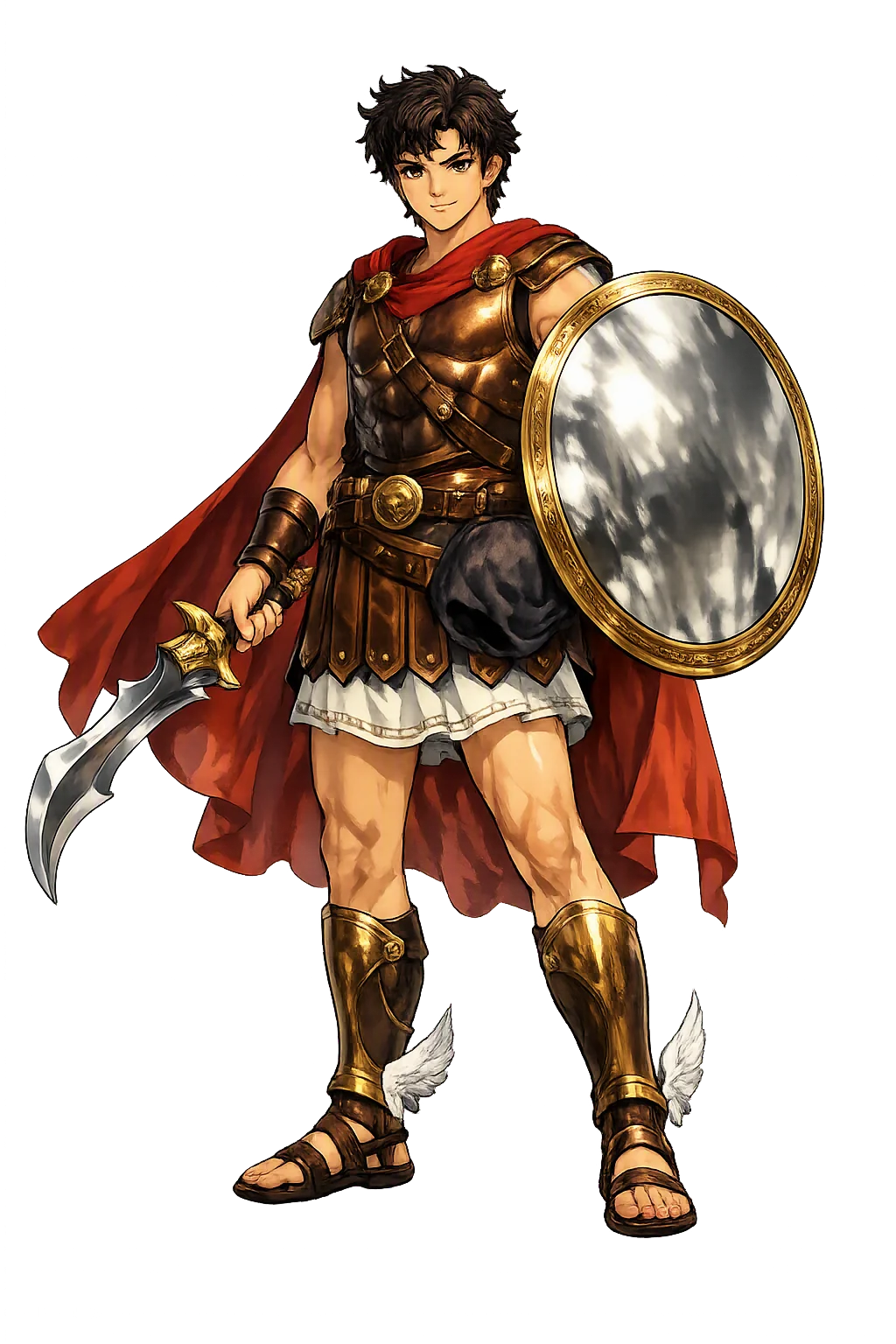
The Cult
Perseus received hero-cult, not god-cult — sacrifice at a tomb, games at a grave. At Argos the city showed his grave beside the great sanctuary of Hera, and at Mycenae the spring where he washed after the Gorgon-slaying (Pausanias 2.18.1; 2.16.6). Herodotus adds the strangest witness: at Chemmis in Egypt the locals kept a temple of Perseus ‘of Syrian origin,’ showed his sandal-mark stamped in the rock, held games in his honor with prizes, and told that the hero had flown there in his search for the Gorgon’s head (Histories 2.91). No priesthood or oracle is recorded anywhere; his cult lived in springs, graves, and games — the standard grammar of a founding hero, honored where he was buried rather than enthroned.