
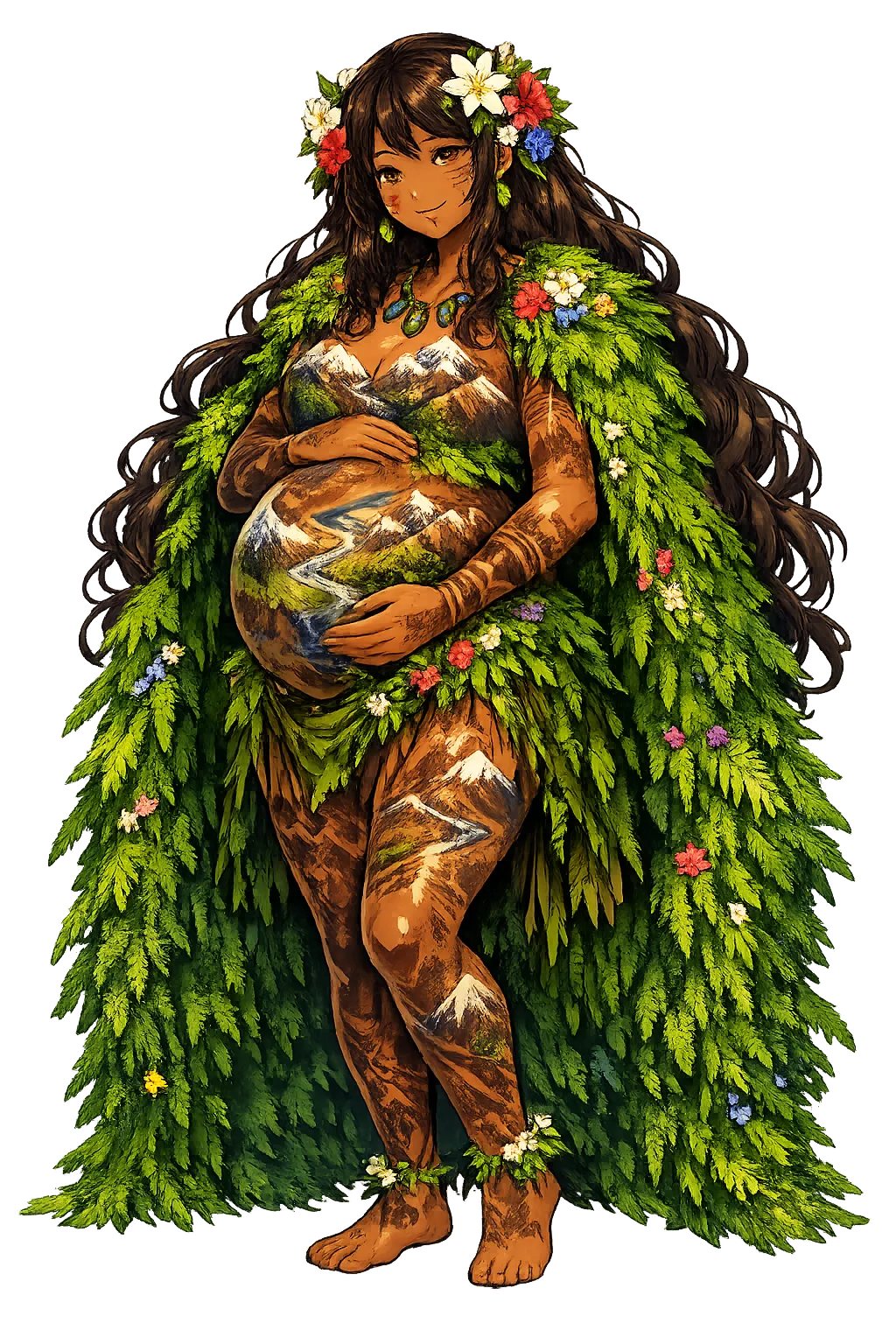
The Cult
Papatūānuku was worshipped everywhere and housed nowhere: the earth needed no temple because the earth was the temple. The evidence lies in practice rather than architecture — in the burial of the placenta (whenua, the same word as the land itself), in funeral custom returning the dead to her body, and in the karakia, the long oral litanies that address her and Ranginui together as the primal parents. The marae served as the ritual ground where genealogy tied the living community back to that first pair, and the records of Grey, Best, and White preserve the invocations still in use when they wrote. No priesthood belonged to her alone. Modern Māori life has renewed the relationship openly — kaitiakitanga, guardianship of the earth, is now a formal ethic in land care and environmental policy — but that is a contemporary flowering of the old kinship, not a surviving ancient cult.