
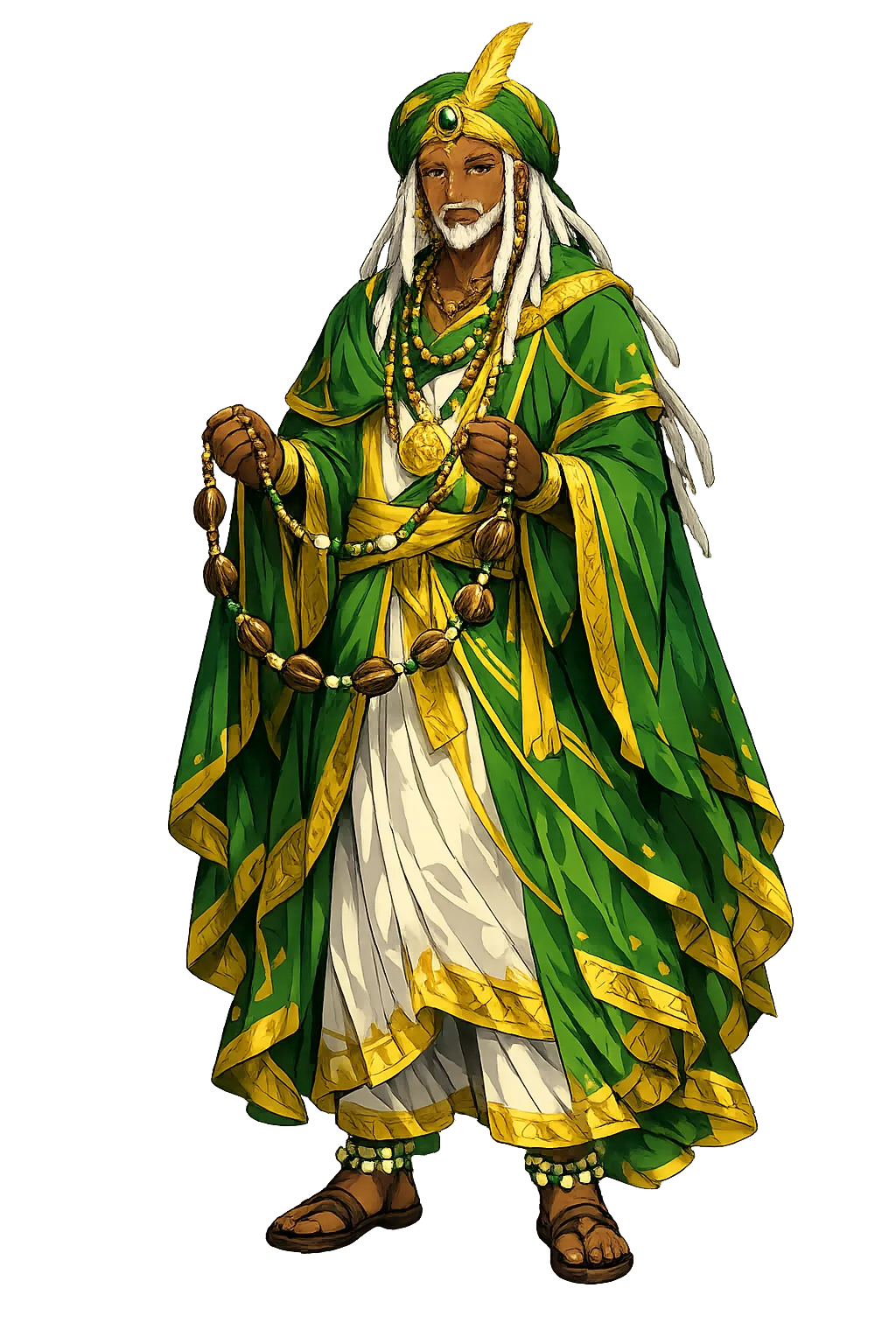
The Cult
Ọrúnmìlà’s cult is the practice of his priests, and his priests are his temple. There is no shrine-building that houses the god: the working centre of his worship is the babalawo — “father of secrets” — an initiated priesthood whose members apprentice for years to memorize the corpus, and the consecrated shrine each one keeps: the divination tray, the sixteen ikin palm-nuts sealed in their beaded sheath, the ọpẹ̀lẹ̀ chain. Consultation is the ritual: a client comes with a question, the nuts are cast or the chain thrown, the odù that falls summons its verses, and the prescribed sacrifice — ẹbọ — is the act that closes the rite. Kings in Yorubaland consulted Ifá before war and succession; today the babalawo initiates new priests in the itẹfá ceremony and presides over the religion’s households from Lagos to Havana. The evidence is not archaeological but living and continuous — a priesthood that has transmitted the same instruments and verses for centuries, with UNESCO’s recognition of the Ifá divination system recording, not creating, its standing.