PuniCodex

Extended Lore

Ọrun

Etymology · Orthography · Cult · Iconography · Reception · Sources

Tier 1 Ọrun.com
Ọrun — Sky, Heaven, Destiny
01

Quick Facts

Essential information about Ọrun, Sky, Heaven, Destiny

Scholarly TransliterationỌrun
Unicode RestorationỌrun
Reconstructed Pronunciation/ɔ̀.rún/
PantheonYoruba
DomainSky, Heaven, Destiny
Meaning"Heaven" — the sky-realm of the orisha, the divine order above the world
ClassificationTier 1
Primary DomainỌrun.com
Sacred SymbolsThe white cloth, The palm nuts, The head, The golden chain
02

Etymology & Word Family

From original script to Unicode restoration

Scholarly Transliteration Ọrun Ọrun — ""Heaven" — the sky-realm of the orisha, the divine order above the world"
Unicode Restoration Ọrun Restored stress, length, and script
Modern ASCII orun Plain-ASCII fallback

The name Ọrun carries the orthographic signature of the yoruba tradition. Unicode restoration recovers what ASCII flattens.

03

Unicode Character Breakdown

Character-by-character philological analysis

CharacterUnicodeNameBlockPhonetic Role
ỌU+1ECCLatin Capital Letter O with Dot BelowUnknownOpen-mid o with underdot
rU+0072Latin Small Letter RBasic LatinSame
uU+0075Latin Small Letter UBasic LatinSame
nU+006ELatin Small Letter NBasic LatinSame

The Tier 1 classification reflects how much of the original phonology this restoration preserves — stress and vowel length for Greek names, distinctive letters and diacritics for every other tradition.

04

Cult & Worship

How the sacred was kept — rites, sanctuaries, remains

The Cult

No independent cult of Ọrun as a personified sky-god is attested in the way one finds for orisha such as Ṣàngó or Ọṣun. Ọrun is better understood as the realm of the divine, the upper half of the cosmic egg separated from ayé, the earth. Its sacred geography is concentrated at Ilé-Ifẹ̀, the city "spread out" from the primordial hill, where the Ọọni's crown and the Oke Itase hill encode heaven's authority. Ritual access comes through Ifá divination and kingship rites performed by babaláwo lineages rather than through votive offerings addressed to Ọrun itself. The absence of a personal cult reflects a theology in which the sky is a dimension, not a character.

In the Earth

Ilé-Ifẹ̀, the city founded on the scattered earth, keeps the creation-site shrines: the Oke Itase hill and the palace of the Ọọni, whose crown descends from heaven's own. The bronze and terracotta heads of Ifẹ̀ (12th–15th c.), among Africa's supreme artworks, are the faces of heaven's first citizens. The Ifá corpus — the great oral archive — is preserved by the babaláwo lineages of Yorubaland and the diaspora.

05

Iconography

How Ọrun was imaged across the ages

The Image

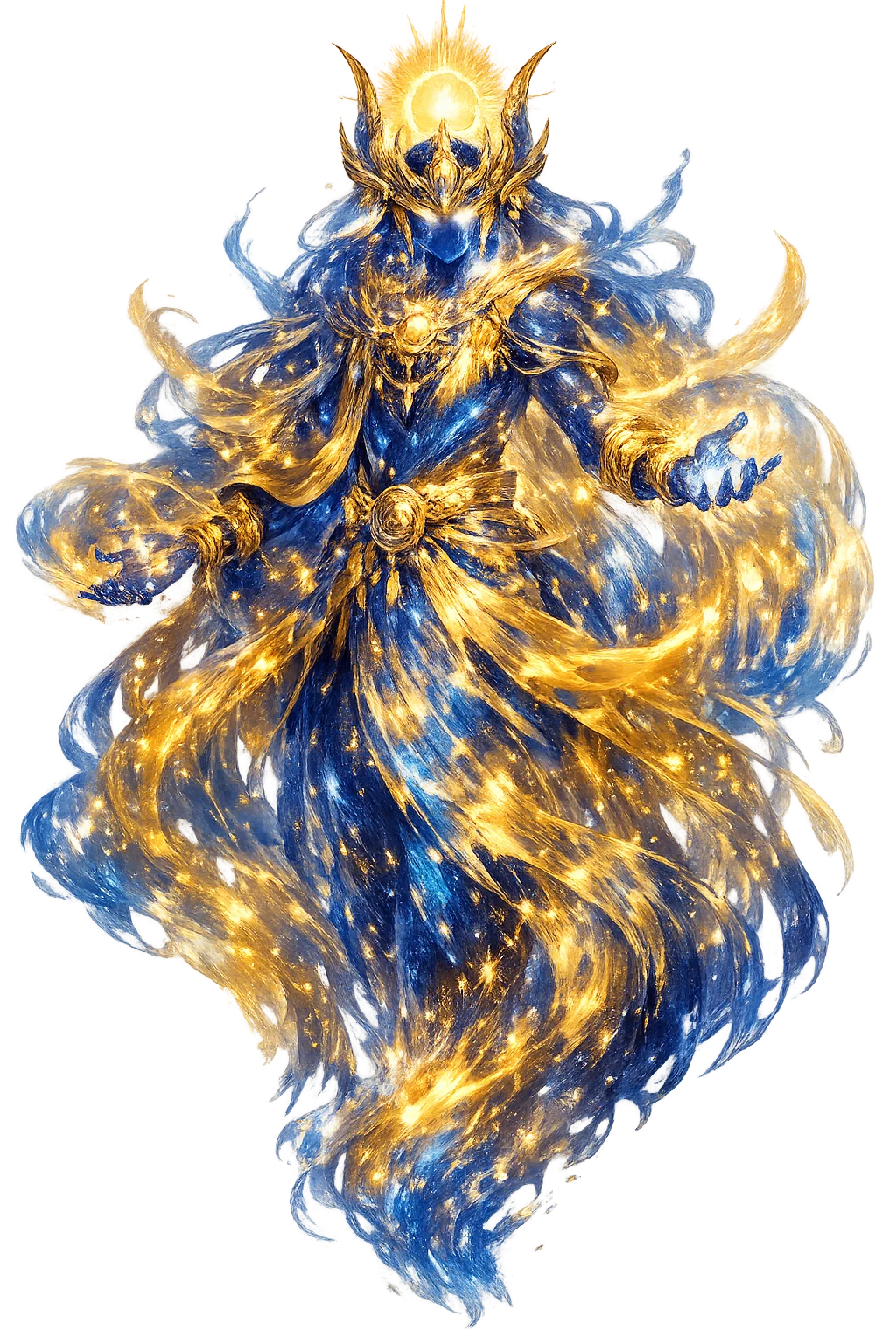
Ọrun has no fixed anthropomorphic image. Ifẹ̀ art gives us the bronze and terracotta heads of the first beings—masterworks of twelfth- to fifteenth-century casting now in Nigerian and European museums—but these are royal portraits, not icons of the sky. The crown (adé) of the Ọọni, with its elaborate beaded veils and bird motifs, comes closest to a visible emblem of heavenly authority. Ifá divination trays, with their central figure and geometric rim, map the relationship between earth and orun. The lack of a cult statue is itself doctrinal: the sky is too vast, too high, and too present to be confined to a single carved body.

06

Reception & Transformation

The name after its own age — transmission, translation, survival

Afterlives

Ọrun survived the centuries chiefly through the Ifá oral corpus, preserved and recited by babaláwo lineages across Yorubaland and the diaspora. Colonial ethnographers such as Samuel Johnson and E. Bolaji Idowu translated fragments of this cosmology into English, while William Bascom and Wande Abimbola later recorded the divination verses with scholarly care. Later African philosophers read the Ọrun/ayé pair as a distinct Yoruba ontology, not merely a mythic location. The transatlantic slave trade carried Yoruba cosmology to Cuba, Brazil, and Trinidad, where Orun and Olorun were reframed within Santería, Candomblé, and Oyotunji village practice. Today Ọrun appears in African diaspora studies, contemporary art, and Yoruba-language revival movements, less as a deity to be worshipped than as a symbol of cosmic order and ancestral belonging.

Identifications Across Traditions

The Ọrun-ayé structure traveled with the diaspora: Candomblé's Oxalá-realm, Santería's heaven of Olófin, and Haiti's lwa-cosmology all keep the two-world map. Christian heaven merged with Ọrun in the New World without ever absorbing it: the Yoruba sky remains a realm of traffic and traffic-officers (the orisha), not of distant thrones — heaven as the next city over, not the next world.

Modern Legacy

The word lives in a thousand names: Ọrunmila (heaven-knows-salvation), Ọlọrun (owner-of-heaven), Ọrúnmìlà, Ọba-Ọrun. Ifá divination — UNESCO-listed — is its daily news service, and the Egúngún festivals keep the ancestors' visits on the calendar. Every Yoruba funeral says the same thing in ten thousand voices: 'the journey to Ọrun is well-traveled' — heaven as home, not as hope.

07

The Meditation

What Ọrun means — beyond the dictionary

Ọrun is the heaven you came from, not the one you hope to reach. Every soul descends with an orí already chosen and the memory of the choice erased: you signed the contract, but the signature is in a language you no longer speak. Yoruba religion is therefore not a quest for heaven but a negotiation with the heaven already inside — the head you chose is the life you are living.

And the traffic never stops. The babaláwo casts the palm-nuts at dawn, the Egúngún walk at noon, a child is named for heaven by evening. Ọrun is the least distant heaven ever conceived — next door, upstairs, on the line. The question is never whether it answers; it is whether we are still calling.

08

Frequently Asked Questions

Common questions about Ọrun, Sky, Heaven, Destiny, and Unicode restoration

01How do you pronounce Ọrun?

In reconstructed pronunciation, Ọrun is /ɔ̀.rún/ — approximately aw-ROON — open o (dot-below), low-high melody.

02What does Ọrun mean?

Ọrun means "Heaven" — the sky-realm of the orisha, the divine order above the world in the yoruba tradition.

03What are the symbols of Ọrun?

Ọrun is associated with The white cloth (Heaven's color — purity and the unblemished sky), The palm nuts (Ifá's instruments — heaven's messages read on earth), The head (Orí, the chosen destiny — heaven carried inside the skull), The golden chain (The road from Ọrun down which the first orisha descended to found Ilé-Ifẹ̀ — and by which every soul since has commuted between heaven and earth).

04Why restore Ọrun in Unicode?

Plain ASCII orun strips the stress, length, and script that make the name specific. Unicode restoration returns the name to its original written dignity.

05What is the most important myth about Ọrun?

“The Chain to Earth” — the The Descent story that anchors the mythology of Ọrun, told in full on the lore page.

09

Scholarly Sources

The philological foundations of this restoration

Every claim on this page is grounded in established scholarship. The orthographic restorations follow disciplinary convention. The etymological chain follows the best available reference works. This is not invention — it is resurrection through scholarship.

◈

Lexicography & Philology

  • Idowu
  • Bascom
  • Abraham
  • Folklore
  • Cambridge
  • Oxford
◎

Primary Texts

  • The Ifá divination corpus; ọ̀rọ̀ àṣà and oríkì traditions; Abraham’s Dictionary of Modern Yoruba.
◉

Archaeology & Art History

  • Material evidence — iconography, inscriptions, and temple archaeology — for Ọrun and related cults.
✦

Religious Studies

  • Idowu, Olódùmarè: God in Yoruba Belief (1962)
  • Bascom, Ifá Divination (1969)
  • Abimbola, Ifá: An Exposition of Ifá Literary Corpus (1976)
  • Johnson, The History of the Yorubas (1921)
  • R.C. Abraham, Dictionary of Modern Yoruba (1958)
  • Drewal, Pemberton & Abiodun, Yoruba: Nine Centuries (1989)
Return

The Surface Awaits

You have traced the name from its earliest attestation to its Unicode restoration. Now return to the myth. The story is where the name lives.

Back to Lore
Ọrun mascot