PuniCodex

Extended Lore

Ὄλυμπος Ólympos

Etymology · Orthography · Cultural Legacy · Reception · Primary Sources

Tier 2 Ólympos.com
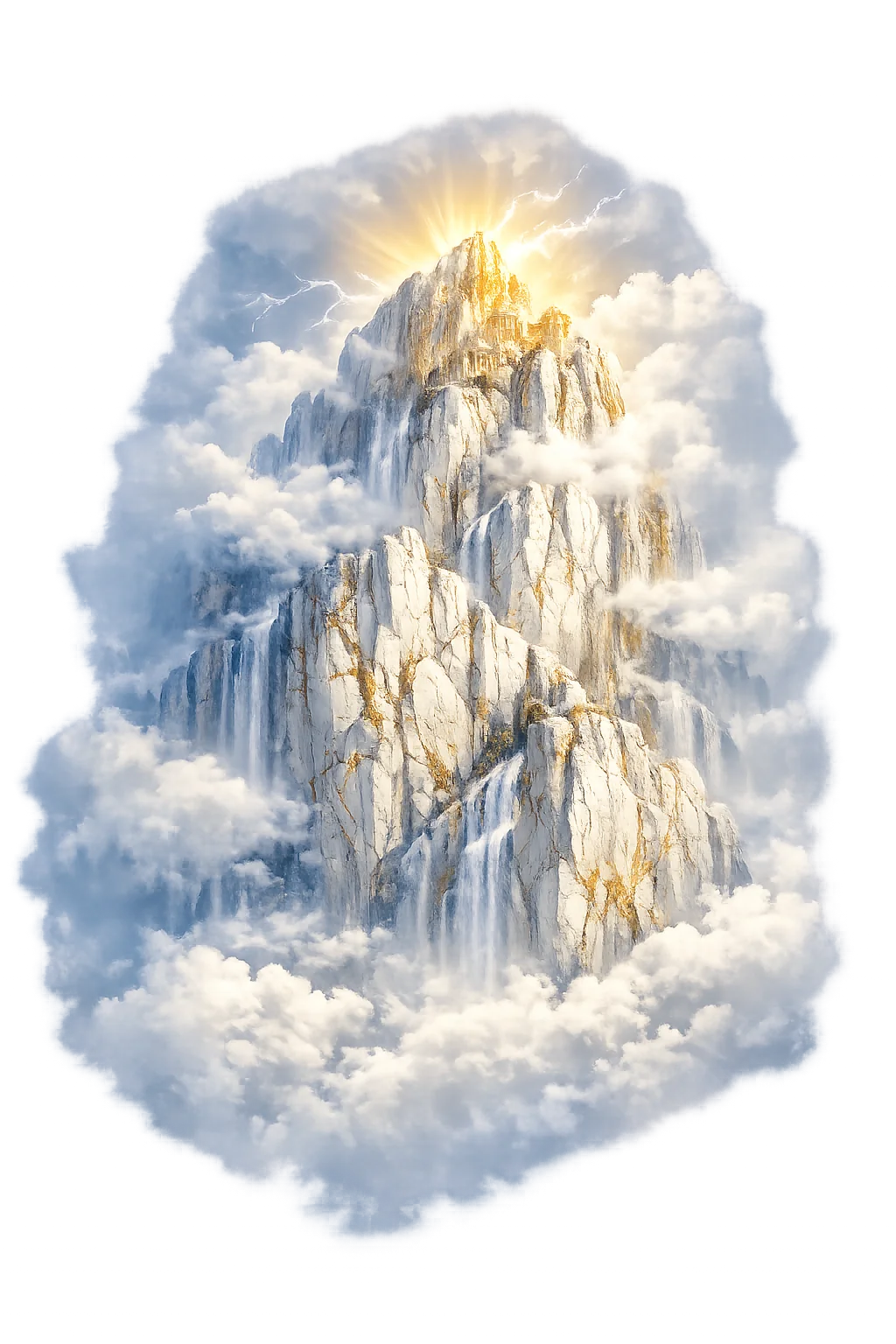
Ólympos — Mountain of the Gods
01

Quick Facts

Essential information about Ólympos, Mountain of the Gods

Original ScriptὌλυμπος
Unicode RestorationÓlympos
Reconstructed Pronunciation/ˈo.lyn.pos/
PantheonGreek Location
DomainMountain of the Gods
MeaningBright, shining mountain
ClassificationTier 2
Primary DomainÓlympos.com
Sacred SymbolsCloud-throne of Zeus, Golden house of the gods, Aegis and thunderbolt, Ambrosia and nectar, Eagle of Zeus
02

Etymology & Word Family

From original script to Unicode restoration

Proto-indo-european *ol-um- sky, luminous
Original Script Ὄλυμπος Ólympos — "Bright, shining mountain"
Unicode Restoration Ólympos Restored stress, length, and script
Modern ASCII olympos Plain-ASCII fallback

Possibly from λύμη "light" or pre-Greek. The mountain of the gods.

03

Unicode Character Breakdown

Character-by-character philological analysis

CharacterUnicodeNameBlockPhonetic Role
ÓU+00D3Latin Capital Letter O with AcuteLatin-1 SupplementAcute on omicron
lU+006CLatin Small Letter LBasic LatinLambda
yU+0079Latin Small Letter YBasic LatinUpsilon
mU+006DLatin Small Letter MBasic LatinMu
pU+0070Latin Small Letter PBasic LatinPi
oU+006FLatin Small Letter OBasic LatinShort omicron
sU+0073Latin Small Letter SBasic LatinSigma

The Tier 2 classification reflects how much of the original phonology this restoration preserves — stress and vowel length for Greek names, distinctive letters and diacritics for every other tradition.

04

Cultural Significance

From ancient cult to modern memory

Ólympos in Later Traditions

Rome took the mountain over as a word: in Latin verse from Ennius to Ovid, Olympus simply means 'heaven' — the abode of the gods as a region, no peak required — and the borrowing fixed Olympus in every Western language as the generic home of the gods. Christian writers inverted the geography: for the apologists, 'Olympus' became shorthand for the whole fabricated pantheon, and the emptying of the mountain was a favorite proof of the new faith's victory. The Greek world had meanwhile multiplied the name — Mysia, Lycia, Cyprus, and Lesbos each had an Ólympos — which let local cults claim Olympian standing without disputing the Thessalian original. Byzantine monks later retreated to the real mountain's flanks, and when Renaissance painters rebuilt the palace in fresco, they were painting a heaven Rome had already dematerialized.

Modern Legacy

Ólympos is among the most productive names in the modern world — though not always through this mountain. The Olympic Games are named for Olympia in Elis, the sanctuary of Zeus there, not for the gods' home; the two are perpetually confused, and the distinction is itself a lesson in how Greek cult geography worked. The mountain lends its name to the tallest volcano in the solar system (Olympus Mons on Mars) and to an entire camera company that chose the peak as its emblem of aspiration, and to countless hotels and firms trading on its altitude. The mountain itself — summit Mytikas, 2,917 metres — is Greece's first national park, and its climbers knowingly or not retrace the oldest ambition in Europe: to stand where the gods are said to sit.

In the Earth

The divine mountain's real counterpart anchors two rich sites. At its foot lies Díon, the Macedonian sanctuary city of Zeus Olympios — excavated since 1928, with the great temple's colonnades, a Hellenistic theatre, Roman baths, and the mosaics of the villa of Dionysos — the working base of Olympian cult, where Philip II and Alexander staged their victories. High on the mountain, on the plateau of Agios Antonios just below the summits, investigators have identified an ancient open-air sanctuary of Zeus with votive material — the closest archaeology comes to the cloud-hidden palace, proof that someone carried offerings above the treeline to the peak itself. The twelve named summits of the massif — Mytikas highest at 2,917 metres — and the Skala ridge keep the myth legible on the landscape.

05

The Meditation

What Ólympos means — beyond the dictionary

Ólympos solves a problem every religion faces: where does the government sit? The Greeks answered with a real mountain, the highest they could see, and then added that the palace is a little above the peak, in the cloud — near enough to point at, far enough to be unbothered. The mountain is thus the perfect image of legitimate power: geographically rooted, meteorologically aloof. It is also, significantly, a place nobody visits; Olympus has no epic of ascent, only of exclusion — Bellerophon's fall, the Aloadae's failed scaffolding. Authority, the Greeks seem to say, is real, nearby, and permanently off-limits. Every modern 'summit' of leaders, every 'Olympian' calm, every brand that borrows the peak is borrowing that same solution: to be above it all, and visible from everywhere.

06

Frequently Asked Questions

Common questions about Ólympos, Mountain of the Gods, and Unicode restoration

01How do you pronounce Ólympos?

In reconstructed pronunciation, Ólympos is /ˈo.lyn.pos/ — approximately 'OH-lu-poss' — the first syllable is short and stressed, the 'y' is rounded like French u, and the name ends in a crisp 'poss'.

02What does Ólympos mean?

Ólympos means Bright, shining mountain in the greek-location tradition.

03What are the symbols of Ólympos?

Ólympos is associated with Cloud-throne of Zeus (The peak where the king of gods sits enthroned above the weather), Golden house of the gods (The luminous dwellings built by Hephaestus on the mountain), Aegis and thunderbolt (The weapons of Zeus, stored and wielded from the Olympian summit), Ambrosia and nectar (The divine foods that confirm Olympian immortality), Eagle of Zeus (The bird that bears his thunderbolts and serves as his messenger).

04Why restore Ólympos in Unicode?

Plain ASCII olympos strips the stress, length, and script that make the name specific. Unicode restoration returns the name to its original written dignity.

05What is the most important myth about Ólympos?

“The Palace of the Gods” — Ólympos is the mountain that became a palace, the palace that became a government, and the government that became a metaphor for supreme authority. Homer places the gods on its cloud-hidden summit, feasting on ambrosia while the Muses sing; Hesiod makes it the muster-ground of the war against the Titans. Ancient Greeks knew several peaks named Ólympos, but the Thessalian mountain — the highest in Greece — became canonical, and its poets set the divine court just above the snowline: a real place, and never quite reachable. The full telling lives on the lore page.

07

Scholarly Sources

The philological foundations of this restoration

Every claim on this page is grounded in established scholarship. The orthographic restorations follow disciplinary convention. The etymological chain follows the best available reference works. This is not invention — it is resurrection through scholarship.

Lexicography & Philology

  • Pape, W., & Benseler, G. E. Wörterbuch der griechischen Eigennamen. Braunschweig: Vieweg, 1884.
  • Barrington

Primary Texts

  • Homer, Iliad — Olympus as the gods' seat (e.g. 1.194, 8.3–27)
  • Homer, Odyssey 6.41–47 (the gods' weatherless home); 11.305–320 (the Aloadae)
  • Hesiod, Theogony 390–403, 687ff (the muster at Olympus; the Titanomachy)
  • Pindar, Pythian Odes (Olympus as the bright seat of the gods)
  • Apollodorus, Bibliotheca 1.7.4 (the piling of Ossa and Pelion)

Archaeology & Art History

  • Material evidence — iconography, inscriptions, and temple archaeology — for Ólympos and related cults.

Religious Studies

  • Beekes, R. S. P., Etymological Dictionary of Greek, s.v. Ὄλυμπος (the name likely pre-Greek)
Return

The Surface Awaits

You have traced the name from its earliest attestation to its Unicode restoration. Now return to the myth. The story is where the name lives.

Back to Lore
Ólympos mascot