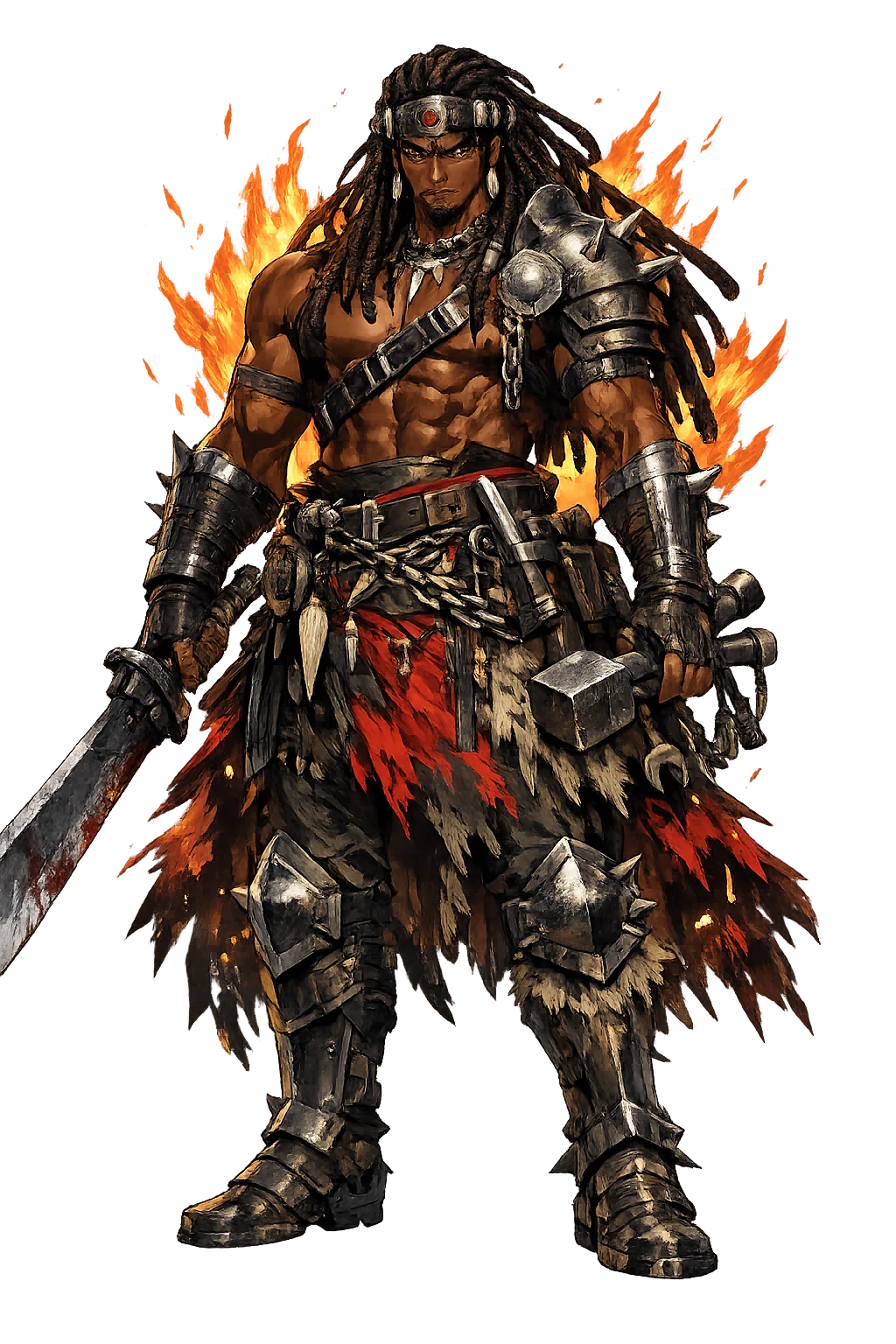
Ògún is the god of the tool in the hand. Every technology is his: the blade that clears the road and the blade that clears the town are the same iron, and only the wielder's self-command decides which road it opens. He asks the maker's question, which is also the warrior's and the surgeon's: what does your strength serve — and who stands in the way when it slips?
Every driver who splashes gin on a bumper in Lagos, every mechanic who taps the anvil before the first weld, is keeping his liturgy without needing its name: tools are moral — they open roads or open wounds — and the hand must be steadier than the blade. Ògún's myth admits what no other war-god's does: that the rage is his own. The road-opener who cut down his own town is the honest patron of a technological age: the strength is real, the forest is real, and so is the apology owed when the blade turns.
Soyinka, his greatest modern devotee, calls him the god of the road and of transition — the patron of everyone who makes a path where none existed, and the warning that every path is cut through something. In the diaspora's forge-altars the lesson survives translation: iron does not apologize, but it must be answered for. The road-opener asks of every builder, coder, and driver the same question his own myth could not escape: when the forest is cleared, what will you plant — and whom did the clearing cost?
The anvil rings, the day's first iron is cut, and the road — his road — opens another meter. The forest always grows back; that is why the clearing is a daily act, and why the god of the cutlass is worshipped not once but every working morning.