
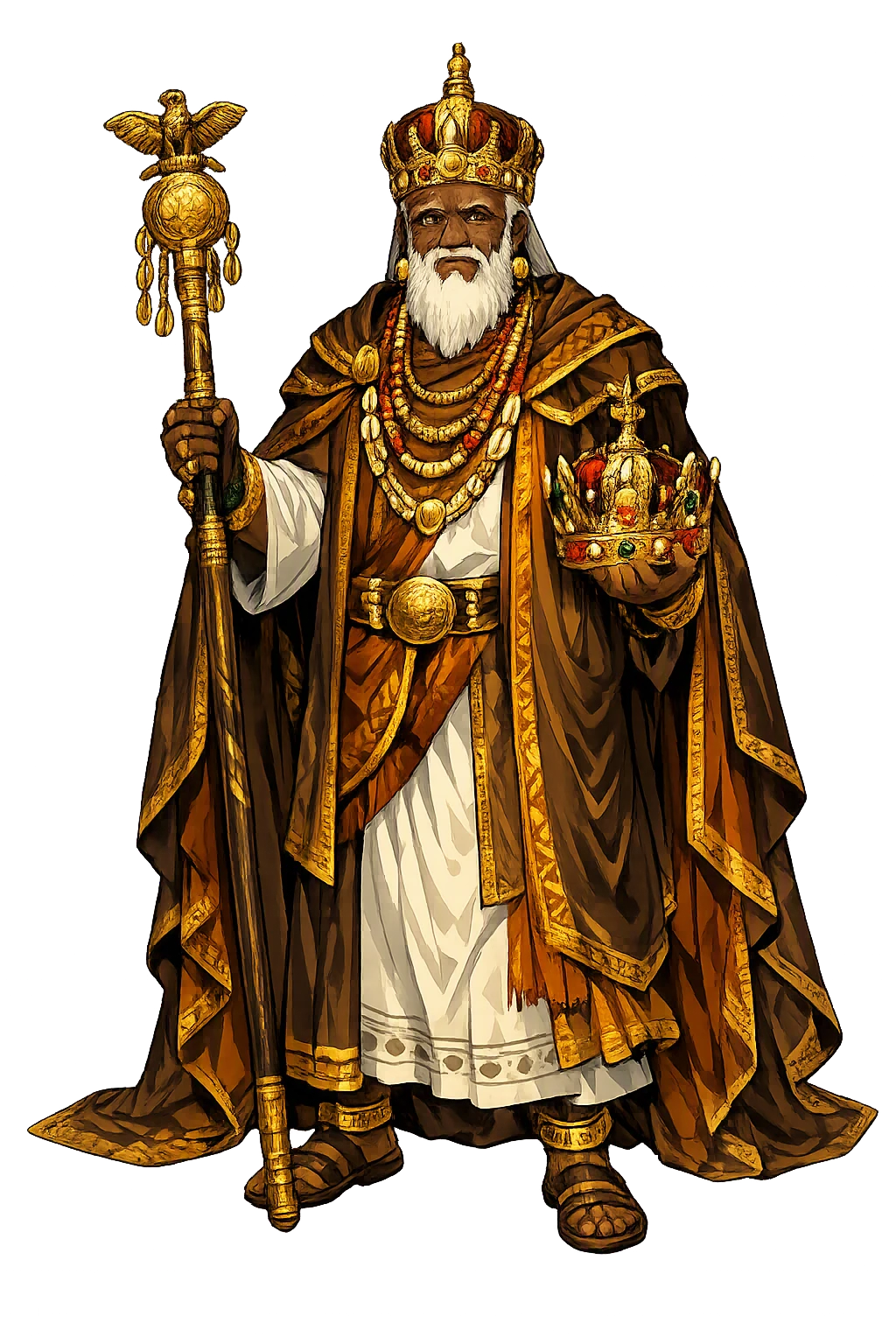
The Cult
Odùduwà is a god still fed, and his cult's center is a city: Ilé-Ifẹ̀, the spiritual capital of the Yoruba world. His shrine stands within the palace quarter, tended by the priests of Ifẹ̀ under the Oòni, who is at once his descendant and his chief votary; dynastic tradition names the terracotta and bronze heads excavated at Ifẹ̀ as the shrine images of past Oònis, so the founder's cult has always been served through the dynasty he founded. The year's great rite is Olojo, when the Oòni emerges wearing the Aare crown, revered as the founder's own, kept locked in the palace and brought out but once a year; the festival draws the diaspora home and re-enacts the founding as a living charter. Everyday cult is kingship itself: libations of palm wine and kola to the ancestor open public ceremonies, and no Yoruba king's legitimacy is complete without a lineage road back to Ifẹ̀. This is not revival — the continuity is among the least interrupted in the catalog — and a century of ethnographers, from Bascom onward, has observed it working.