PuniCodex

Extended Lore

Ọ̀ṣọ́ọ̀sì Ọṣọọsì

Etymology · Orthography · Cult · Iconography · Reception · Sources

Tier 1 Ọṣọọsì.com
Ọṣọọsì — Hunting, Forest, Justice
01

Quick Facts

Essential information about Ọṣọọsì, Hunting, Forest, Justice

Original ScriptỌ̀ṣọ́ọ̀sì
Unicode RestorationỌṣọọsì
Reconstructed Pronunciation/ɔ̀.ʃɔ́.ɔ̀.sì/
PantheonYoruba
DomainHunting, Forest, Justice
MeaningThe hunter — orisha of the hunt, the forest, and deliberate strategy (standard Yoruba Ọ̀ṣọ́ọ̀sì; Cuban Ochosi, Brazilian Oxóssi)
ClassificationTier 1
Primary DomainỌṣọọsì.com
Sacred SymbolsThe bow and arrow, The forest, The single shot
02

Etymology & Word Family

From original script to Unicode restoration

Original Script Ọ̀ṣọ́ọ̀sì Ọṣọọsì — "The hunter — orisha of the hunt, the forest, and deliberate strategy (standard Yoruba Ọ̀ṣọ́ọ̀sì; Cuban Ochosi, Brazilian Oxóssi)"
Unicode Restoration Ọṣọọsì Restored stress, length, and script
Modern ASCII ochosi Plain-ASCII fallback

The name Ọṣọọsì carries the orthographic signature of the yoruba tradition: Ọ̀ṣọ́ọ̀sì. Unicode restoration recovers what ASCII flattens.

03

Unicode Character Breakdown

Character-by-character philological analysis

CharacterUnicodeNameBlockPhonetic Role
ỌU+1ECCLatin Capital Letter O with Dot BelowUnknownO with dot below: open /ɔ/
ṣU+1E63Latin Small Letter S with Dot BelowUnknownS with dot below: /ʃ/ (Santería ch = Yoruba ṣ)
ọU+1ECDLatin Small Letter O with Dot BelowUnknownO with dot below: open /ɔ/
sU+0073Latin Small Letter SBasic LatinSame
ìU+00ECLatin Small Letter I with GraveLatin-1 SupplementGrave: low tone

The Tier 1 classification reflects how much of the original phonology this restoration preserves — stress and vowel length for Greek names, distinctive letters and diacritics for every other tradition.

04

Cult & Worship

How the sacred was kept — rites, sanctuaries, remains

The Cult

The hunter orisha is served through Ifá divination, praise-song, and the maintenance of forest shrines rather than through monumental temples. Devotees receive implements of iron and wood—bow, arrow, and hunting horn—and make offerings at the edge of cultivated land where forest meets field, often in alliance with Ọ̀gún. In Cuban Regla de Ocha and Brazilian Candomblé he has his own caminos and festival days, preserved by initiated families. The cult is therefore decentralized, oral, and bound to the practical lore of the hunt.

In the Earth

The hunter orisha's record is oral and liturgical rather than monumental: his corpus is the Ifá verse tradition, the oríkì preserved by praise-singers, and the ethnographies of Abraham, Idowu, Bascom, and Verger. His material culture is real but perishable — bows, iron implements, and forest shrines — and his oldest durable monuments are the diaspora's: the terreiros of Bahia, some a century and more old, the casa-templos of Havana, and the January streets of Rio on São Sebastião's day.

05

Iconography

How Ọṣọọsì was imaged across the ages

The Image

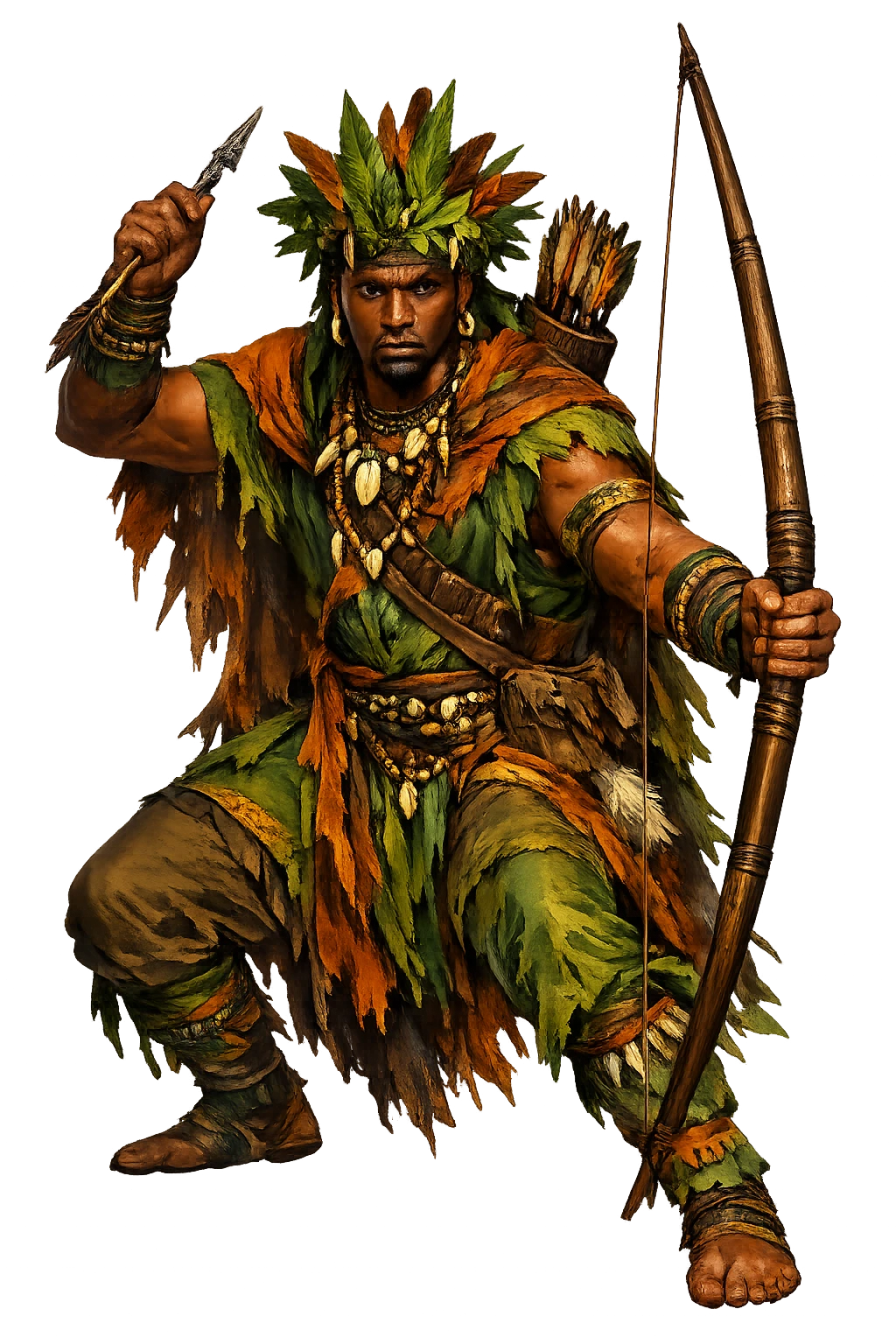
Ọ̀ṣọ́ọ̀sì’s visual record is perishable and symbolic: iron tools, antelope horns, animal pelts, and forest offerings stand in for the hunter. Diaspora altars display beaded implements, small metal figures, embroidered cloth panels, printed posters, sacred rattles, and the colors of the forest, while Afro-Brazilian terreiros may show him with bow and arrow. There are no ancient colossal statues or codex portraits; his image is carried by ritual objects and by the colors and emblems assigned to him in orisha houses.

06

Reception & Transformation

The name after its own age — transmission, translation, survival

Afterlives

The deportation of Yoruba speakers to Cuba and Brazil carried Ọ̀ṣọ́ọ̀sì into Lukumí and Candomblé, where he was syncretized with Catholic saints and given a recognized place in orisha lineages and in initiation ceremonies. Twentieth-century scholars such as Bascom, Idowu, Verger, and Mason recorded his oríkì and ritual associations, documenting a cult that left few durable monuments. The Black Atlantic revival has reclaimed him as a symbol of African knowledge, strategy, and resistance. Capoeira lyrics, Candomblé praise songs, and Lukumí beadwork all carry his memory across generations, while contemporary music, visual art, and diaspora spirituality continue to invoke the forest hunter. His reception thus links colonial survival with modern identity politics and with a growing ecological consciousness in contemporary African diaspora arts.

Identifications Across Traditions

The diaspora rebuilt him with local materials and never lost the pattern. Cuba gave him the Guerreros and the courtroom; Brazil gave him São Sebastião's feast-day and the caboclos of Umbanda; Trinidad, Haiti, and the United States received the Lukumí lineages intact. Scholars from Bascom to Verger mapped the route: the Ketu nation's Oxóssi, the Oyo-heritage hunter, and the Yoruba Ọ̀ṣọ́ọ̀sì of Abraham's dictionary are one figure wearing three orthographies. His closest cousins abroad are the other divine hunters — but none of them shoots only once.

Modern Legacy

Ọṣọọsì is a living god, not a memory: his festivals still fill the terreiros of Bahia, his initiates still receive the Guerreros in Havana and Miami, and his oríkì are still sung in the tonal Yoruba that the written restoration tries to honor. The single arrow has become the tradition's own emblem of Afro-diasporic resilience — patience, precision, and provision against every odds. The spelling Ọṣọọsì keeps the marked vowels of the language the praise-poems were made in.

07

The Meditation

What Ọṣọọsì means — beyond the dictionary

Ọṣọọsì teaches the economics of the one shot: that most waste is noise, that readiness looks like stillness, and that the forest feeds the one who has already done the waiting. In an age of volume, he is the orisha of the opposite — the deliberate act, the counted arrow, the case prepared so well it needs to be made only once.

08

Frequently Asked Questions

Common questions about Ọṣọọsì, Hunting, Forest, Justice, and Unicode restoration

01How do you pronounce Ọṣọọsì?

In reconstructed pronunciation, Ọṣọọsì is /ɔ̀.ʃɔ́.ɔ̀.sì/ — approximately aw-shaw-AW-sih — the dotted ọ is the open 'aw' of 'law'; ṣ is 'sh'; the tones run low-high-low-low.

02What does Ọṣọọsì mean?

Ọṣọọsì means The hunter — orisha of the hunt, the forest, and deliberate strategy (standard Yoruba Ọ̀ṣọ́ọ̀sì; Cuban Ochosi, Brazilian Oxóssi) in the yoruba tradition.

03What are the symbols of Ọṣọọsì?

Ọṣọọsì is associated with The bow and arrow (Skill married to patience: the whole doctrine of the hunt in one image), The forest (The realm of the provider — game, leaves, and the tests that make a tracker), The single shot (Strategy as worship: preparation so complete that one attempt suffices).

04Why are there different spellings of Ọṣọọsì?

Each form is a historically attested restoration rather than a mistake: Ọ̀ṣọ́ọ̀sì is the alt form (Standard Yoruba orthography, fully tone-marked). PUNICODEX registers the full set so the tradition is preserved under every defensible spelling.

05Why restore Ọṣọọsì in Unicode?

Plain ASCII ochosi strips the stress, length, and script that make the name specific. Unicode restoration returns the name to its original written dignity.

06What is the most important myth about Ọṣọọsì?

“The Hunter Who Kills Once” — the Oríkì story that anchors the mythology of Ọṣọọsì, told in full on the lore page.

09

Scholarly Sources

The philological foundations of this restoration

Every claim on this page is grounded in established scholarship. The orthographic restorations follow disciplinary convention. The etymological chain follows the best available reference works. This is not invention — it is resurrection through scholarship.

◈

Lexicography & Philology

  • Abraham
  • Bascom
  • Idowu
◎

Primary Texts

  • The Ifá divination corpus; ọ̀rọ̀ àṣà and oríkì traditions; Abraham’s Dictionary of Modern Yoruba.
◉

Archaeology & Art History

  • Material evidence — iconography, inscriptions, and temple archaeology — for Ọṣọọsì and related cults.
✦

Religious Studies

  • Ifá Corpus
  • Oríkì Tradition
  • Abraham, Dictionary of Modern Yoruba
  • Idowu, Olódùmarè: God in Yoruba Belief
  • Bascom, Ifa Divination
  • Verger, Orixás
Return

The Surface Awaits

You have traced the name from its earliest attestation to its Unicode restoration. Now return to the myth. The story is where the name lives.

Back to Lore
Ọṣọọsì mascot