PuniCodex

Extended Lore

Ọbà Ọbà

Etymology · Orthography · Cult · Iconography · Reception · Sources

Tier 1 Ọbà.com
Ọbà — River, Devotion, Sanctuary
01

Quick Facts

Essential information about Ọbà, River, Devotion, Sanctuary

Original ScriptỌbà
Unicode RestorationỌbà
Reconstructed Pronunciation/ɔ̀.bà/
PantheonYoruba
DomainRiver, Devotion, Sanctuary
MeaningThe river orisha Ọba — co-wife of the thunder god, lady of the sacred waters
ClassificationTier 1
Primary DomainỌbà.com
Sacred SymbolsThe covered ear, The crown of the hidden ear, The brass bracelet, The red parrot feather, The river Ọba
02

Etymology & Word Family

From original script to Unicode restoration

Original Script Ọbà Ọbà — "The river orisha Ọba — co-wife of the thunder god, lady of the sacred waters"
Unicode Restoration Ọbà Restored stress, length, and script
Modern ASCII oba Plain-ASCII fallback

The name Ọbà carries the orthographic signature of the yoruba tradition: Ọbà. Unicode restoration recovers what ASCII flattens.

03

Unicode Character Breakdown

Character-by-character philological analysis

CharacterUnicodeNameBlockPhonetic Role
ỌU+1ECCLatin Capital Letter O with Dot BelowUnknownO with dot below: open /ɔ/
bU+0062Latin Small Letter BBasic LatinSame
àU+00E0Latin Small Letter A with GraveLatin-1 SupplementGrave: low tone

The Tier 1 classification reflects how much of the original phonology this restoration preserves — stress and vowel length for Greek names, distinctive letters and diacritics for every other tradition.

04

Cult & Worship

How the sacred was kept — rites, sanctuaries, remains

The Cult

Ọbà is served by priestesses and priests along the river that bears her name, especially at Ọṣogbo and the Ọba lake in Ọyọ country, where shrines receive offerings of white cloth, cool water, and kola. Her devotees keep her oríkì alive in domestic ritual and in the yearly cycles of the river. The diaspora carried her to Cuban and Brazilian orisha houses, where she is honored as the faithful wife and the orisha of marital sacrifice. No imperial temple economy is attested; her cult is local, domestic, and orally maintained.

In the Earth

Her river rises in the hills of the Ọyọ country, and her cult-centers at Ọṣogbo and the Ọba lake preserve her shrines and her priests; the brass and terracotta figures of the covered-ear goddess are documented in museum collections from Ifẹ̀ to Havana. The oríkì of the three wives, recorded by Bascom and others, is among the finest domestic myth-cycles in the Yoruba corpus — an archive kept not in stone but in living recitation, which is precisely the kind of evidence this tradition chose to leave.

05

Iconography

How Ọbà was imaged across the ages

The Image

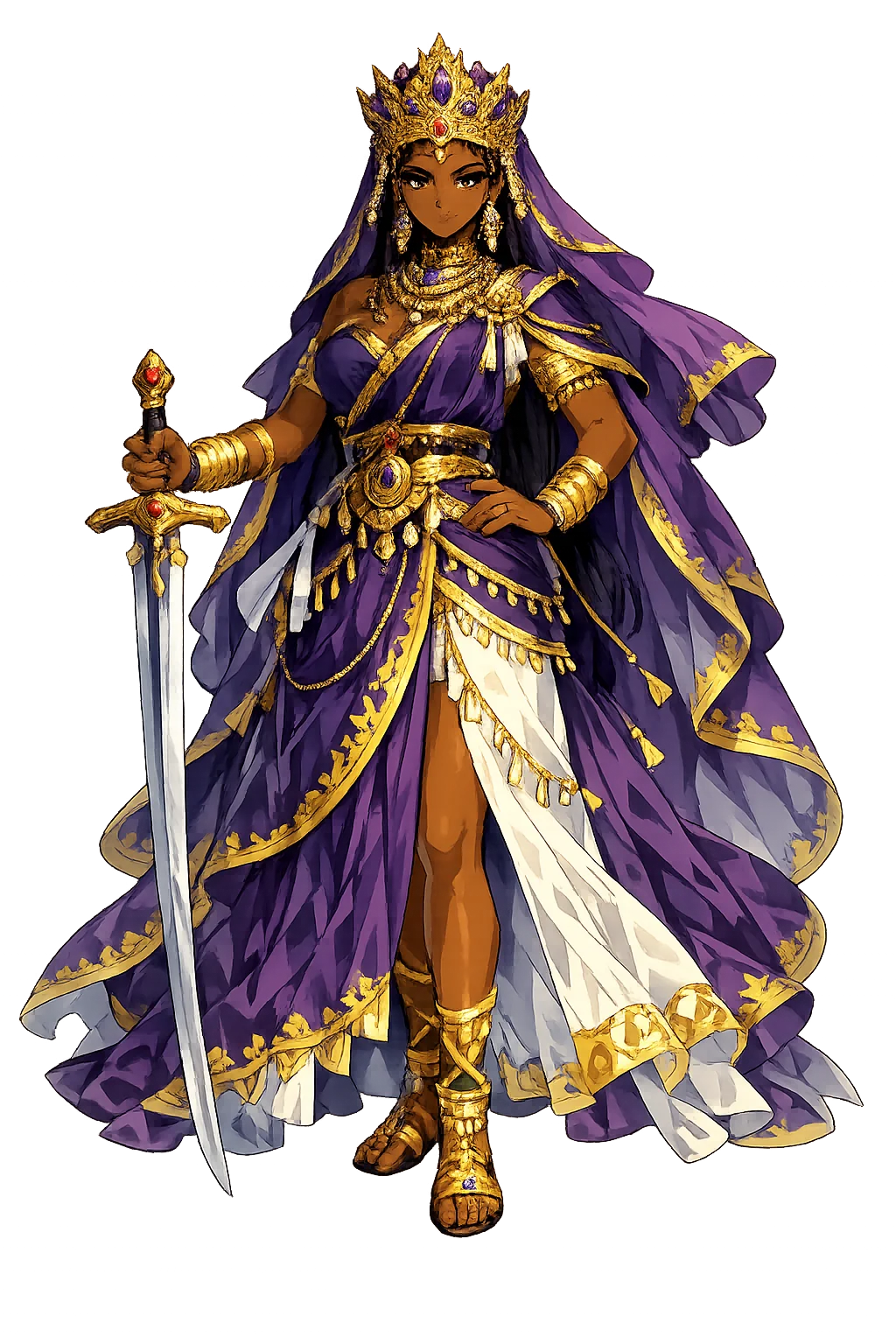
Her image is anchored in the story of the severed ear: brass and terracotta figures document a goddess whose single covered or missing ear alludes to her fatal attempt to win Ṣàngó. Museums from Ifẹ̀ to Havana hold such metalwork, while diaspora altars display beaded vessels, white cloth, small calabash offerings, and cowrie-shell necklaces in both temple and domestic shrines. Unlike state deities with colossal statues, Ọbà’s visual tradition is small-scale, portable, and narrative, tied to the oríkì rather than to monumental architecture.

06

Reception & Transformation

The name after its own age — transmission, translation, survival

Afterlives

The transatlantic slave trade carried the worship of Ọbà to the Americas, where it was preserved in Cuban Lukumí and Brazilian Candomblé alongside the other co-wives of Ṣàngó. There she is often syncretized with Saint Rita or with other Catholic figures, adapting her story to new devotional settings. Twentieth-century ethnographers such as Bascom, Verger, and Mason recorded her praise-names and altar practices, giving her a documented place in the academic study of Yoruba religion and its diaspora. Today she is invoked in traditional orisha houses, in contemporary African diaspora spirituality, and in scholarly feminist readings of the three-wives cycle. Her relative absence from the glossy pantheon of popular orisha books reflects how local river cults, sustained by women and oral memory, travel yet remain partly hidden from outside observers.

Identifications Across Traditions

In Cuba's Santería she is Obá, syncretized with Santa Catalina de Alejandría (Saint Catherine, whose wheel she shares) — her cult strong in Matanzas; in Brazil's Candomblé, Obá keeps her river and her covered ear, the devotee-dancers' hair arranged to hide what the king did. The three-wife cycle (Ọba-Ọṣun-Ọya) is the diaspora's standard parable of the polygamous household, told wherever the orisha went — and the co-wives' ritual incompatibility, the rule that Ọba and Ọya never share a shrine, was carried across the Atlantic as faithfully as any scripture. Thompson's Flash of the Spirit traces her iconography through Lucumí altars from Havana to Miami: the covered ear is one of the most durable images in the African-Atlantic world, a wound turned into regalia by four centuries of women's hands.

Modern Legacy

Her image — the crowned figure hiding her ears — is one of Yoruba art's most intimate: the wound as regalia. The co-wives' cycle structures the orisha households of two continents; her river in Yorubaland keeps her shrines active; and the 'Obá' of Cuban Santería is beloved as the most patient of the female orisha — the one who teaches that endurance is also a form of power. The brass bracelet of her marriage and the red parrot feather of her household appear in shrine and carnival alike, and the forward-combed hair of her initiates remains, in Thompson's phrase, a liturgy anyone can read: everyone who has dressed carefully on a difficult morning knows her rite. The quiet one, her cult insists, was the permanent one all along.

07

The Meditation

What Ọbà means — beyond the dictionary

Ọba is the goddess of what remains when the shouting is over. The storm-wives got the thunder; she got the river — and rivers outlive storms by definition. Her crown covers her ear, not her shame: the difference is everything. She asks the question the senior wife knows best: after the injustice, what do you cover, what do you keep, and what do you let become a lake?

The priests say her crown was made to her own design, after the flight — the first piece of regalia in the corpus that exists to hide a wound and to honor it at once. The river does not hide; it covers, and continues. Reconciliation is not mandatory in her tellings, but endurance is possible, and her lake holds its annual mourners quietly, without demanding anyone forgive.

08

Frequently Asked Questions

Common questions about Ọbà, River, Devotion, Sanctuary, and Unicode restoration

01How do you pronounce Ọbà?

In reconstructed pronunciation, Ọbà is /ɔ̀.bà/ — approximately aw-bah — open o, low-low melody.

02What does Ọbà mean?

Ọbà means The river orisha Ọba — co-wife of the thunder god, lady of the sacred waters in the yoruba tradition.

03What are the symbols of Ọbà?

Ọbà is associated with The covered ear (Wounds hidden and endured — dignity after injury; her images never show the ears), The crown of the hidden ear (Regalia redesigned around the wound — the only crown in the corpus that exists to hide and honor at once), The brass bracelet (Her marriage-token from the thunder-king, kept after the palace cast her out), The red parrot feather (Her sign beside the other wives' red — the household's colors she was never allowed to outshine), The river Ọba (Her name made water — the stream in Yorubaland that keeps her longer than any palace could).

04Why are there different spellings of Ọbà?

Each form is a historically attested restoration rather than a mistake: Ọba is the owned form (Previous owned form; the current primary adds the final low tone (Ọbà)). PUNICODEX registers the full set so the tradition is preserved under every defensible spelling.

05Why restore Ọbà in Unicode?

Plain ASCII oba strips the stress, length, and script that make the name specific. Unicode restoration returns the name to its original written dignity.

06What is the most important myth about Ọbà?

“Three Wives, One Storm” — the The oral corpus story that anchors the mythology of Ọbà, told in full on the lore page.

09

Scholarly Sources

The philological foundations of this restoration

Every claim on this page is grounded in established scholarship. The orthographic restorations follow disciplinary convention. The etymological chain follows the best available reference works. This is not invention — it is resurrection through scholarship.

◈

Lexicography & Philology

  • Idowu
  • Bascom
  • Abraham
  • Folklore
  • Cambridge
  • Oxford
◎

Primary Texts

  • The Ifá divination corpus; ọ̀rọ̀ àṣà and oríkì traditions; Abraham’s Dictionary of Modern Yoruba.
◉

Archaeology & Art History

  • Material evidence — iconography, inscriptions, and temple archaeology — for Ọbà and related cults.
✦

Religious Studies

  • William Bascom, African Folktales (1975) — the three-wives cycle
  • Wande Abimbola, Ifá: An Exposition of Ifá Literary Corpus (1976)
  • Robert Farris Thompson, Flash of the Spirit (1983)
  • John Mason, Orin Orisa: Songs for Selected Heads (1992)
  • Henry John Drewal, John Pemberton III, and Rowland Abiodun, Yoruba: Nine Centuries of African Art and Thought (1989)
  • R. C. Abraham, Dictionary of Modern Yoruba (1958)
Return

The Surface Awaits

You have traced the name from its earliest attestation to its Unicode restoration. Now return to the myth. The story is where the name lives.

Back to Lore
Ọbà mascot