PuniCodex

Extended Lore

ᚾᛁᚢᚱᚦᚱ Njǫrðr

Etymology · Orthography · Cultural Legacy · Reception · Primary Sources

Tier 1 Njǫrðr.com
Njǫrðr — Sea, Wind, Fishing, Wealth
01

Quick Facts

Essential information about Njǫrðr, Sea, Wind, Fishing, Wealth

Original Scriptᚾᛁᚢᚱᚦᚱ
Unicode RestorationNjǫrðr
Reconstructed Pronunciation/ˈnjɔrðr/
PantheonNorse
DomainSea, Wind, Fishing, Wealth
MeaningVigorous (from *nerþuz)
ClassificationTier 1
Primary DomainNjǫrðr.com
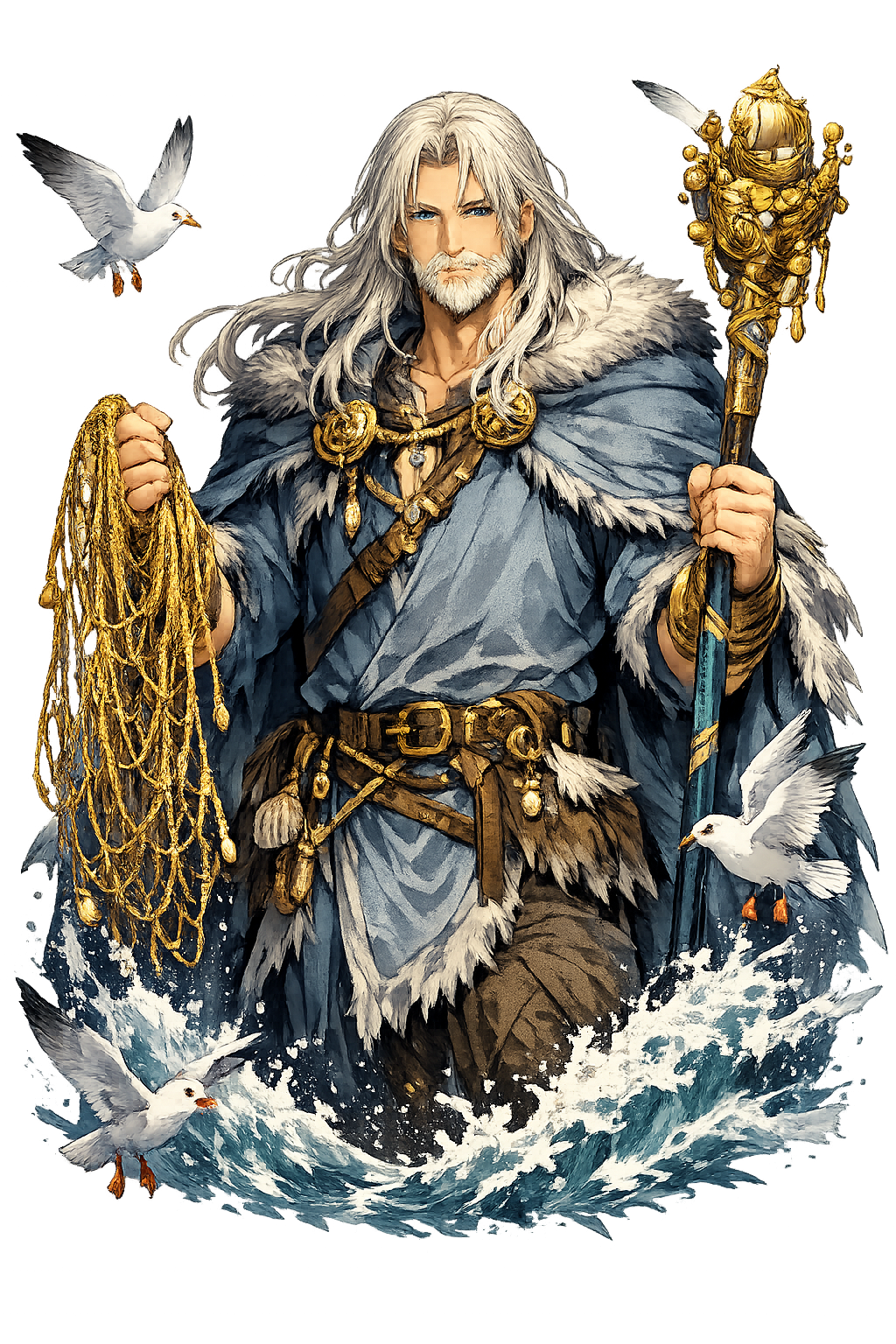
Sacred SymbolsShip, Fish and net, Gull, Gold and cargo, Wagon or cart
02

Etymology & Word Family

From original script to Unicode restoration

Proto-indo-european *nerþuz Vigorous
Original Script ᚾᛁᚢᚱᚦᚱ Njǫrðr — "Vigorous (from *nerþuz)"
Unicode Restoration Njǫrðr Restored stress, length, and script
Modern ASCII njordr Plain-ASCII fallback

Vigorous (from *nerþuz)

03

Unicode Character Breakdown

Character-by-character philological analysis

CharacterUnicodeNameBlockPhonetic Role
NU+004ELatin Capital Letter NBasic LatinSame
jU+006ALatin Small Letter JBasic LatinSame
ǫU+01EBLatin Small Letter O with OgonekLatin Extended-BO-hook: short /ɔ/ vowel
rU+0072Latin Small Letter RBasic LatinSame
ðU+00F0Latin Small Letter EthLatin-1 SupplementEth: voiced dental fricative
rU+0072Latin Small Letter RBasic LatinSame

The Tier 1 classification reflects how much of the original phonology this restoration preserves — stress and vowel length for Greek names, distinctive letters and diacritics for every other tradition.

04

Cultural Significance

From ancient cult to modern memory

Njǫrðr in Later Traditions

The strongest comparative case is the deity Nerthus described by Tacitus in Germania 40: a fertility figure drawn in a cart through the Germanic countryside, associated with peace and a hidden lake. The name Nerthus is the Latinized feminine counterpart of Proto-Germanic *Nerþuz, the pre-form of Njǫrðr, and most scholars accept a historical connection. Yet Tacitus's Nerthus is an earth-goddess, while Njǫrðr is a male sea-god. The mismatch may reflect regional variation, a shift from chthonic to maritime spheres, or the fusion of two related cults. Romans later identified Njǫrðr with Neptune or with maritime Mercury; in medieval Iceland, Christian learned authors euhemerized him as a king of Vanaheimr. The modern Icelandic name Njörður preserves the same phonological core.

Modern Legacy

Njǫrðr left his name on the Norwegian coast and in Scandinavian place-names such as Njarðarlog and Njarðey. He survives less visibly in popular culture than Óðinn or Þórr, yet his domain — the sea as livelihood — shaped the Viking world more directly than any battlefield. Modern fishermen, sailors, and coastal communities still sense the old logic: the ocean is not an enemy to be conquered but a power to be propitiated. In contemporary heathenry and Norse-inspired fantasy, Njǫrðr appears as the quiet god of harbors, the father of Freyr and Freyja, and the patient negotiator between land and sea.

In the Earth

Direct depictions of Njǫrðr are elusive, but his world is visible in the material record. The Dejbjerg wagons from Iron-Age Denmark — ceremonial carts deposited in a bog — are often interpreted as vehicles of the Nerthus procession described by Tacitus, the strongest continental parallel to the Norse god. Scandinavian place-names such as Njarðarlog in Sweden and Njarðey / Nærdøy in Norway preserve his cult on coasts and islands. Boat offerings in wetlands (Nydam, Skuldelev) and coastal grave fields testify to a maritime religious economy in which safe passage and full nets were paramount. Viking-Age Mjǫllnir amulets and ship-shaped grave goods do not name Njǫrðr directly, but they map the seafaring culture whose prosperity he was believed to secure.

05

The Meditation

What Njǫrðr means — beyond the dictionary

Njǫrðr is the god of practical peace. Unlike Óðinn, who buys wisdom with violence, or Þórr, who hammers disorder into submission, Njǫrðr prospers by accommodation. He is the hostage who becomes family, the sea-god who learns the mountain's language, the father whose children eclipse him in fame without diminishing his care.

His realm is the shoreline, the most liminal of places: neither land nor sea, yet where both become useful. There is a wisdom in that liminality. To live well is not always to dominate; sometimes it is to read the wind, mend the net, know when the swell will ease, and accept the terms the world offers. Njǫrðr asks no one to hang on a tree or fight a world-serpent. He asks only that the sailor remember which god stills the wave.

06

Frequently Asked Questions

Common questions about Njǫrðr, Sea, Wind, Fishing, Wealth, and Unicode restoration

01How do you pronounce Njǫrðr?

In reconstructed pronunciation, Njǫrðr is /ˈnjɔrðr/ — approximately "NYORTH" — like 'nyore' with a short o, ending in the 'th-r' sound of 'father' plus a quick rolled r.

02What does Njǫrðr mean?

Njǫrðr means Vigorous (from *nerþuz) in the norse tradition.

03What are the symbols of Njǫrðr?

Njǫrðr is associated with Ship (The longship and the merchant vessel, the vehicles of his domain and his blessing), Fish and net (The daily harvest of the sea and the skill that turns water into food), Gull (The cry Skaði hated and the sailor loves, a bird of harbors and hauls), Gold and cargo (The wealth that arrives by water, the 'rich god' made tangible), Wagon or cart (The continental Nerthus cult's procession vehicle, echoed uncertainly in his older heritage).

04Why restore Njǫrðr in Unicode?

Plain ASCII njordr strips the stress, length, and script that make the name specific. Unicode restoration returns the name to its original written dignity.

05What is the most important myth about Njǫrðr?

“The Calmer of Sea and Flame” — Njǫrðr's myths are stories of arrival and accommodation: the hostage who becomes indispensable, the sea-god who marries the mountain, the father of the two most beloved gods of the Viking Age. His drama is quieter than Óðinn's or Þórr's, but it turns on the same cosmic question — how do unlike powers share one world? The full telling lives on the lore page.

07

Scholarly Sources

The philological foundations of this restoration

Every claim on this page is grounded in established scholarship. The orthographic restorations follow disciplinary convention. The etymological chain follows the best available reference works. This is not invention — it is resurrection through scholarship.

Lexicography & Philology

  • Cleasby-Vigfusson
  • Zoëga

Primary Texts

Archaeology & Art History

  • Material evidence — iconography, inscriptions, and temple archaeology — for Njǫrðr and related cults.

Religious Studies

  • Tacitus, Germania 40 (Nerthus and the continental *Nerþuz cult)
  • Cleasby & Vigfusson, An Icelandic-English Dictionary (1874), s.v. Njörðr
Return

The Surface Awaits

You have traced the name from its earliest attestation to its Unicode restoration. Now return to the myth. The story is where the name lives.

Back to Lore
Njǫrðr mascot