PuniCodex

Extended Lore

Nisien

Etymology · Phonology · Orthography · Cultural Legacy · Primary Sources

Tier 2 Nisien
Nisien — Peace, Brother of Efnysien
01

Quick Facts

Essential information about Nisien, Peace, Brother of Efnysien

Scholarly TransliterationNisien
Unicode RestorationNisien
Reconstructed Pronunciation/ˈnɪsɪɛn/
PantheonCeltic
DomainPeace, Brother of Efnysien
MeaningPeaceful one
ClassificationTier 2
Primary DomainNisien
Sacred SymbolsThe paired sentence, The twin's shadow, The house of Euroswydd, The mutilated horses, The silent presence
02

Etymology & Word Family

From original script to Unicode restoration

Scholarly Transliteration Nisien Nisien — "Peaceful one"
Unicode Restoration Nisien Restored stress, length, and script
Modern ASCII nisien Plain-ASCII fallback

Nisien is Tier 2 by the mechanical rule: the normalized Middle Welsh form is already plain ASCII — there is no diacritic and no distinctive letter for the ASCII alphabet to lose. The manuscripts write Nissyen; the modern standard writes Nisien; only the capital distinguishes the temple form from the input. The traditional gloss 'peaceful one' suits the character exactly, but the philology behind the name is honestly uncertain, and the handbooks record rather than resolve it.

03

Unicode Character Breakdown

Character-by-character philological analysis

CharacterUnicodeNameBlockPhonetic Role
NU+004ELatin Capital Letter NBasic LatinSame, capitalized
iU+0069Latin Small Letter IBasic LatinSame
sU+0073Latin Small Letter SBasic LatinSame
iU+0069Latin Small Letter IBasic LatinSame
eU+0065Latin Small Letter EBasic LatinSame
nU+006ELatin Small Letter NBasic LatinSame

The Tier 2 classification reflects how much of the original phonology this restoration preserves — stress and vowel length for Greek names, distinctive letters and diacritics for every other tradition.

04

Cultural Significance

From ancient cult to modern Unicode

Ancient Domain

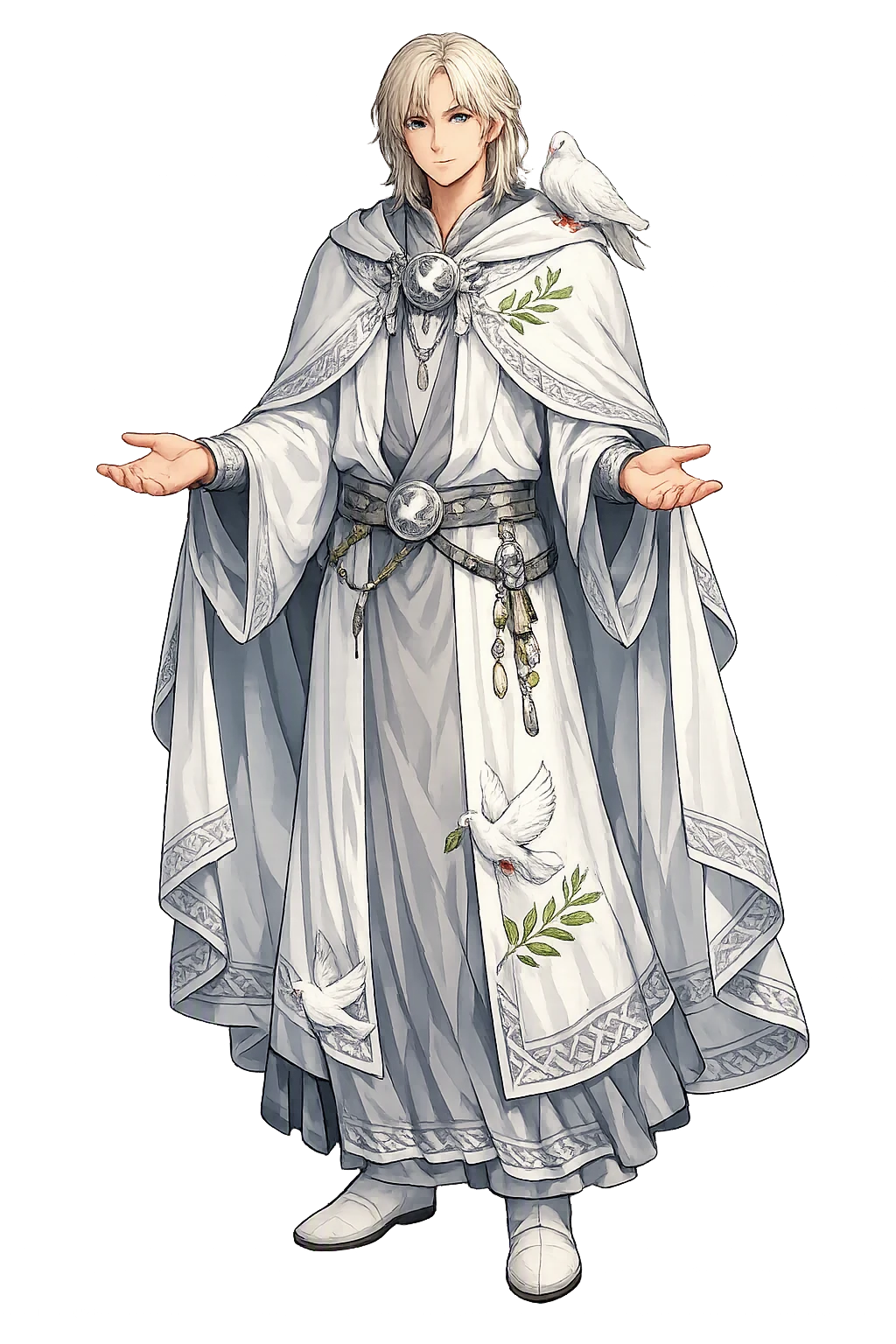
Nisien is one half of the strangest doublet in the Mabinogi: twin brothers, sons of Euroswydd, whom the Second Branch introduces with a single matched sentence — Nisien, the good man who would make peace between two armies when they were most furious; Efnysien, who would set two loving brothers fighting to the death. The tale then gives the whole war to the cruel twin and keeps the gentle one as its standing might-have-been: peace personified, present at the court that marches to Ireland, and never once allowed to prevail.

Nisien in Later Traditions

Nisien has no counterpart anywhere, and the honesty of that fact is part of his record. No Irish figure bears his name or his office: the Irish cycles know war-goddesses and peace-breaking satirists in abundance, but no personified peace-twin, and Sims-Williams's survey of Irish influence on Welsh literature — which finds deep Irish strata in the Second Branch itself, from the giant king who wades the sea to the cauldron of revival — supplies no Irish original for the sons of Euroswydd. The twins look like the Welsh redactor's own construction. The nearest comparisons are structural, drawn from inside the lexicon: his brother [[efnysien|Efnysien]], the necessary other half of the antithesis; [[manawydan|Manawydan]], his half-brother, whose own branch turns on patience and forbearance rather than force; and [[matholwch|Matholwch]], the wronged king whose horses his brother maimed. Beyond the Mabinogi the antithesis device has famous analogues — the paired forces of other traditions — but the Welsh pair needs no borrowing to explain: peace and strife as twin brothers is the sort of idea a mature prose tradition can invent in a single sentence, and the Second Branch is exactly that tradition.

Modern Legacy

Nisien's afterlife is as quiet as his dossier. Lady Charlotte Guest's translation of the Mabinogion (1838–49) carried the twins into English, and every retelling of Branwen since has kept the paired sentence — it is the one line of the Second Branch that anthologies quote whole. The scholarly tradition made the antithesis canonical: Mac Cana's study of the Mabinogi and MacKillop's dictionary fixed the reading of the twins as personified peace and strife, and the pair now serves Celtic studies as the standard example of the Welsh redactor's art of definition-by-contrast. Nisien himself never became a cult figure, a comic-book antihero, or a given name in the way louder Mabinogi figures did — Efnysien, the interesting twin, took all of that. The gentle brother's legacy is the sentence itself: in a tale about a war no one could stop, Welsh literature wrote its peace-maker in one clause and let the silence around him say the rest.

Unicode Restoration as Cultural Act

Restoring Nisien in a domain name is more than orthographic accuracy. It is a statement that the internet should recognize the full range of human writing — not only the ASCII keyboard.

05

Frequently Asked Questions

Common questions about Nisien, Peace, Brother of Efnysien, and Unicode restoration

01How do you pronounce Nisien?

In reconstructed pronunciation, Nisien is /ˈnɪsɪɛn/ — approximately 'NISS-yen' — stress the middle syllable, keep every vowel short, and never let the s soften into a z..

02What does Nisien mean?

Nisien means Peaceful one in the celtic tradition.

03What are the symbols of Nisien?

Nisien is associated with The paired sentence (The Second Branch's balanced character note — peace and strife defined as twin brothers, one clause each), The twin's shadow (Efnysien's cruelty measured against Nisien's gentleness — each brother the other's definition), The house of Euroswydd (The second father-line of Penarddun's children — the gentler inheritance beside the children of Llŷr), The mutilated horses (His brother's unprovoked outrage against Matholwch's team — the act of strife that no peace in the tale can undo), The silent presence (The peace-maker carried with the host to Ireland and given no scene — the might-have-been that haunts the branch).

04Why restore Nisien in Unicode?

Plain ASCII nisien strips the stress, length, and script that make the name specific. Unicode restoration returns the name to its original written dignity.

05What is the most important myth about Nisien?

The Second Branch introduces the twins in a single balanced construction, the most quoted sentence either brother ever gets. Nisien, the tale says, was a good man: he would bring about peace between two armies when they were at the height of their fury. Efnysien would bring about a quarrel between two brothers when they loved each other most. They are twins, sons of Euroswydd by Penarddun — and so half-brothers to Brân the Blessed, Branwen, and Manawydan, Penarddun's children by Llŷr.The construction is the whole point: Welsh prose has no other pair like it. The tradition does not describe two temperaments; it defines two forces — peace and strife — as brothers born in one hour, and then sets them loose in the same household. Every reader of the branch knows, before the horses are harmed, exactly which twin will act and which will stand by.

06

Scholarly Sources

The philological foundations of this restoration

Every claim on this page is grounded in established scholarship. The orthographic restorations follow disciplinary convention. The etymological chain follows the best available reference works. This is not invention — it is resurrection through scholarship.

Lexicography & Philology

  • Mabinogion
  • MacKillop

Primary Texts

  • The Immram Brain (Voyage of Bran); Tochmarc Étaíne; Cóir Anmann; medieval Irish saga literature.

Archaeology & Art History

  • Material evidence — iconography, inscriptions, and temple archaeology — for Nisien and related cults.
  • Nisien is a purely textual figure: no inscription, votive deposit, or cult site names him, and the early inscribed stones of Wales — the Latin and ogham memorials of roughly the fifth to seventh centuries — record personal names in funerary formulae, not theonyms or tale-figures. His evidence is manuscript evidence. The Four Branches survive complete in the White Book of Rhydderch (Aberystwyth, NLW Peniarth MSS 4–5, c. 1350) and the Red Book of Hergest (Oxford, Jesus College MS 111, c. 1382–1410), with earlier fragments in Peniarth 6; the tales' date of composition is argued rather than documented, with current scholarship generally holding a range around 1060–1120. The geography of his branch is real: Aberffraw, where the wedding and the outrage are set, was the historic principal seat of the kings and later princes of Gwynedd on Anglesey, and the Alaw, where Branwen dies of her broken heart, is an Anglesey river. The giant who wades the sea and the cauldron of revival belong to the tale's mythic furniture; the courts and the crossings are drawn from the Welsh world the redactor knew.

Religious Studies

  • Branwen ferch Llŷr (the Second Branch of the Mabinogi), trans. Sioned Davies, The Mabinogion (Oxford, 2007) — the paired character note; the mutilation of Matholwch's horses; the war and the cauldron
  • Williams, Ifor, ed., Pedeir Keinc y Mabinogi (Cardiff: University of Wales Press, 1930) — the standard Welsh text
  • Guest, Lady Charlotte, trans., The Mabinogion (1838–49) — the first English translation
  • Mac Cana, Proinsias, The Mabinogi, 2nd ed. (Cardiff: University of Wales Press, 1992) — the twins as personified antithesis
  • Mac Cana, Proinsias, Celtic Mythology (London: Hamlyn, 1970)
  • MacKillop, James, Dictionary of Celtic Mythology (Oxford: Oxford University Press, 1998), s.vv. Nisien, Efnysien — the lexicon's own cited authority
  • Koch, John T., ed., Celtic Culture: A Historical Encyclopedia, 5 vols. (Santa Barbara: ABC-CLIO, 2006), s.vv. Nisien, Efnysien, Branwen ferch Llŷr
  • Sims-Williams, Patrick, Irish Influence on Medieval Welsh Literature (Oxford: Oxford University Press, 2011) — the Irish strata of the Second Branch; no Irish original for the twins
  • Geiriadur Prifysgol Cymru / A Dictionary of the Welsh Language (Cardiff: University of Wales Press, 1950–2002), s.v. Nisien — the uncertain etymology
Return

The Surface Awaits

You have traced the name from its earliest attestation to its Unicode restoration. Now return to the myth. The story is where the name lives.

Back to Lore
Nisien mascot