PuniCodex

Extended Lore

𒀭𒊩𒌆𒅁 Ninurta

Etymology · Phonology · Orthography · Cultural Legacy · Primary Sources

Tier 2 Ninurta
Ninurta — War, Agriculture, Storms
01

Quick Facts

Essential information about Ninurta, War, Agriculture, Storms

Original Script𒀭𒊩𒌆𒅁
Unicode RestorationNinurta
Reconstructed Pronunciation/niˈnur.ta/
PantheonMesopotamian
DomainWar, Agriculture, Storms
MeaningLord of the earth
ClassificationTier 2
Primary DomainNinurta
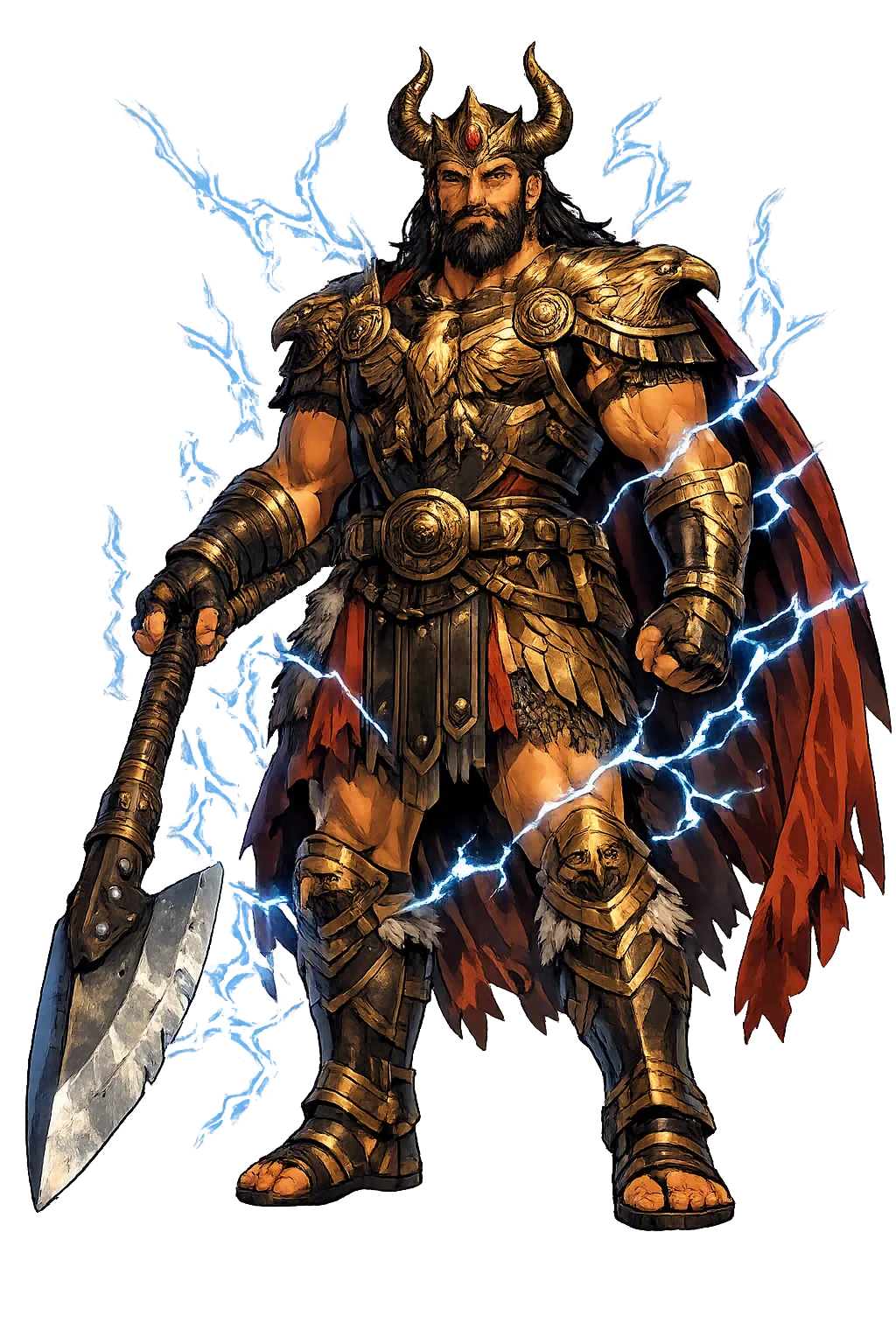
Sacred SymbolsMace Sharur, Thunderbolt and storm-wind, Plough and furrow, Mountain and stone, Lion or bird-griffin (Anzû)
02

Etymology & Word Family

From original script to Unicode restoration

Original Script 𒀭𒊩𒌆𒅁 Ninurta — "Lord of the earth"
Unicode Restoration Ninurta Restored stress, length, and script
Modern ASCII ninurta Plain-ASCII fallback

Ninurta is Tier 2: the Unicode restoration N-I-N-U-R-T-A preserves only the capitalized ASCII form and carries no distinctive diacritic or non-ASCII letter that the ASCII form loses. It is a straightforward philological capitalization, not a phonological reconstruction hub. Standard Assyriology writes Ninurta; the PuniCodex form simply gives the name its proper noun shape.

03

Unicode Character Breakdown

Character-by-character philological analysis

CharacterUnicodeNameBlockPhonetic Role
NU+004ELatin Capital Letter NBasic LatinSame, capitalized
iU+0069Latin Small Letter IBasic LatinSame
nU+006ELatin Small Letter NBasic LatinSame
uU+0075Latin Small Letter UBasic LatinSame
rU+0072Latin Small Letter RBasic LatinSame
tU+0074Latin Small Letter TBasic LatinSame
aU+0061Latin Small Letter ABasic LatinSame

The Tier 2 classification reflects how much of the original phonology this restoration preserves — stress and vowel length for Greek names, distinctive letters and diacritics for every other tradition.

04

Cultural Significance

From ancient cult to modern Unicode

Ancient Domain

Ninurta is the Mesopotamian deity in whom the weapons of war and the tools of the field are not opposites but a single office. His name is usually interpreted as 'lord of the earth' (Sumerian nin 'lord/lady' + urta/urša 'earth'), and his cult spans the storm-mace, the plough, and the stone quarry. In the Sumerian poems Lugal-e and Angimdimma, and in the Akkadian Anzû Epic, he is the champion the great gods summon when order has been stolen or the mountain rebels.

Unlike the remote sovereignty of Anû or the atmospheric kingship of Enlīl, Ninurta acts. He hunts the rebel Anzû through the mountains, recovers the Tablet of Destinies, and afterward assigns every defeated stone its place in the human economy. His mythology is therefore a charter myth for metallurgy, agriculture, and kingship alike: the god who breaks the enemy also names the useful rock.

Ninurta in Later Traditions

Ninurta's profile overlaps with several Mesopotamian and neighboring deities, sometimes as identity, sometimes as delegated function.

In the south, Ningirsu of Girsu was gradually merged with Ninurta, while retaining a distinct local cult well into the second millennium BCE. In the north, the Assyrian national god Aššur absorbed many of Ninurta's martial traits, so that temple hymns from Assur praise Aššur as the slayer of Anzû. Marduk of Babylon later inherited Ninurta's storm-combat role in the Enuma Elish, where Marduk defeats Tiamat with winds and bonds — a victory that parallels Ninurta's over Asag. The Hittite storm-god Teššub and the Canaanite Baꜥal share the same Indo-Mediterranean storm-warrior type. There is no direct Greek equivalent, though Árēs overlaps in war and Hēphaistos in craft; Ninurta's combination of battlefield and forge is distinctively Mesopotamian.

Modern Legacy

Ninurta's legacy survives in the idea of the ordered earth as the fruit of conflict.

The long catalog of stones in Lugal-e is one of the earliest surviving examples of a learned encyclopedic text in cuneiform — a precursor to later Mesopotamian lexical lists and perhaps to the genre of technical handbook. His association with the plough and irrigation underlies the Mesopotamian doctrine that kingship secures fertility: the king wages war so that the peasant may plough. In modern fantasy and games, Ninurta appears as a storm-warrior or earth-shaker, often conflated with generic 'Thunderbird Slayer' archetypes. PuniCodex preserves the name in its simple ASCII form as a Tier-2 display, honoring the fact that for this theonym the canonical tradition has passed down a plain Latin transliteration without a recoverable distinctive mark. The name still means: the lord who turns battle into harvest.

Unicode Restoration as Cultural Act

Restoring Ninurta in a domain name is more than orthographic accuracy. It is a statement that the internet should recognize the full range of human writing — not only the ASCII keyboard.

05

Frequently Asked Questions

Common questions about Ninurta, War, Agriculture, Storms, and Unicode restoration

01How do you pronounce Ninurta?

In reconstructed pronunciation, Ninurta is /niˈnur.ta/ — approximately 'nee-NOOR-tah' — stress the second syllable; the final a is open and level, not drawn out..

02What does Ninurta mean?

Ninurta means Lord of the earth in the mesopotamian tradition.

03What are the symbols of Ninurta?

Ninurta is associated with Mace Sharur (The talking weapon that seeks out the enemy; divine intelligence married to force.), Thunderbolt and storm-wind (The meteorological aspect of the warrior; the south wind and the hurricane are his.), Plough and furrow (The transformation of war into agriculture; the same hand that breaks stone opens the field.), Mountain and stone (The Kur, the hostile mountain, defeated and catalogued into useful minerals.), Lion or bird-griffin (Anzû) (The defeated chaos-bird becomes his emblem; the lion marks his martial sovereignty.).

04Why restore Ninurta in Unicode?

Plain ASCII ninurta strips the stress, length, and script that make the name specific. Unicode restoration returns the name to its original written dignity.

05What is the most important myth about Ninurta?

In the Akkadian Anzû Epic, the storm-bird Anzû steals the ṭuppi šīmāti, the Tablet of Destinies, from Enlīl while the high god bathes. Without it, the gods lose their power to decree fates. Anu first asks Adad, then Girra, then Shara to recover it; each refuses when he sees Anzû wearing the tablet. Ninurta alone accepts. He rides to battle on his storm-chariot, hurls winds and arrows, and finally sends his enchanted mace Sharur to strike Anzû's heart. The tablet is restored to Enlīl, and Ninurta's supremacy among the warrior gods is proclaimed. The story is preserved in the Standard Babylonian version from Nineveh (Tablet I–III) and older Akkadian fragments.

06

Scholarly Sources

The philological foundations of this restoration

Every claim on this page is grounded in established scholarship. The orthographic restorations follow disciplinary convention. The etymological chain follows the best available reference works. This is not invention — it is resurrection through scholarship.

Lexicography & Philology

  • ETCSL
  • Black-Green

Primary Texts

  • Enuma Elish (Marduk's assumption of Ninurta-type storm-combat functions)

Archaeology & Art History

  • Material evidence — iconography, inscriptions, and temple archaeology — for Ninurta and related cults.
  • Archaeological evidence for Ninurta centers on temples at Nippur (the Ekur complex, where he is Enlīl's warrior son), Girsu/Telloh (the sanctuary of Ningirsu, patron of the Lagaš state), and Kalhu/Nimrud, where Ashurnasirpal II dedicated a major Ninurta temple whose reliefs show the god as an archer. Foundation figurines, votive mace-heads, and royal inscriptions of kings from Gudea to the Assyrian emperors invoke Ninurta as the source of martial success and agricultural prosperity.

Religious Studies

  • ETCSL
  • CAD
  • AHw
  • Black & Green, Gods, Demons and Symbols of Ancient Mesopotamia
  • Jacobsen, The Treasures of Darkness
  • Anzû Epic (Standard Babylonian version from Nineveh)
  • Lugal-e (ETCSL 4.27.2: Ninurta's exploits against Asag and the stones)
  • Angimdimma (ETCSL 4.27.3: Ninurta's return to Nippur)
  • Gudea Cylinder A and B (inscriptions of the ensi of Lagaš on the rebuilding of Ningirsu's temple)
Return

The Surface Awaits

You have traced the name from its earliest attestation to its Unicode restoration. Now return to the myth. The story is where the name lives.

Back to Lore
Ninurta mascot