PuniCodex

Extended Lore

ᚾᛁᚠᛚᚼᛁᛘᚱ Niflheimr

Etymology · Phonology · Orthography · Cultural Legacy · Primary Sources

Tier 2 Niflheimr
Niflheimr — Mist World, Realm of Ice
01

Quick Facts

Essential information about Niflheimr, Mist World, Realm of Ice

Original Scriptᚾᛁᚠᛚᚼᛁᛘᚱ
Unicode RestorationNiflheimr
Reconstructed Pronunciation/ˈnivlˌhɛimr̩/
PantheonNorse
DomainMist World, Realm of Ice
MeaningMist-home
ClassificationTier 2
Primary DomainNiflheimr
Sacred SymbolsHvergelmir, the roaring kettle, The Élivágar, The rime fog
02

Etymology & Word Family

From original script to Unicode restoration

Original Script ᚾᛁᚠᛚᚼᛁᛘᚱ Niflheimr — "Mist-home"
Unicode Restoration Niflheimr Restored stress, length, and script
Modern ASCII niflheimr Plain-ASCII fallback

Niflheimr is Tier 2 by the mechanical rule: the normalized Old Norse form is already plain ASCII — no diacritic and no distinctive letter for the ASCII alphabet to lose. Only the capital distinguishes the restored form from the input; the mist-world was never hard to type, only hard to imagine.

03

Unicode Character Breakdown

Character-by-character philological analysis

CharacterUnicodeNameBlockPhonetic Role
NU+004ELatin Capital Letter NBasic LatinSame, capitalized
iU+0069Latin Small Letter IBasic LatinSame
fU+0066Latin Small Letter FBasic LatinSame
lU+006CLatin Small Letter LBasic LatinSame
hU+0068Latin Small Letter HBasic LatinSame
eU+0065Latin Small Letter EBasic LatinSame
iU+0069Latin Small Letter IBasic LatinSame
mU+006DLatin Small Letter MBasic LatinSame
rU+0072Latin Small Letter RBasic LatinSame

The Tier 2 classification reflects how much of the original phonology this restoration preserves — stress and vowel length for Greek names, distinctive letters and diacritics for every other tradition.

04

Cultural Significance

From ancient cult to modern Unicode

Ancient Domain

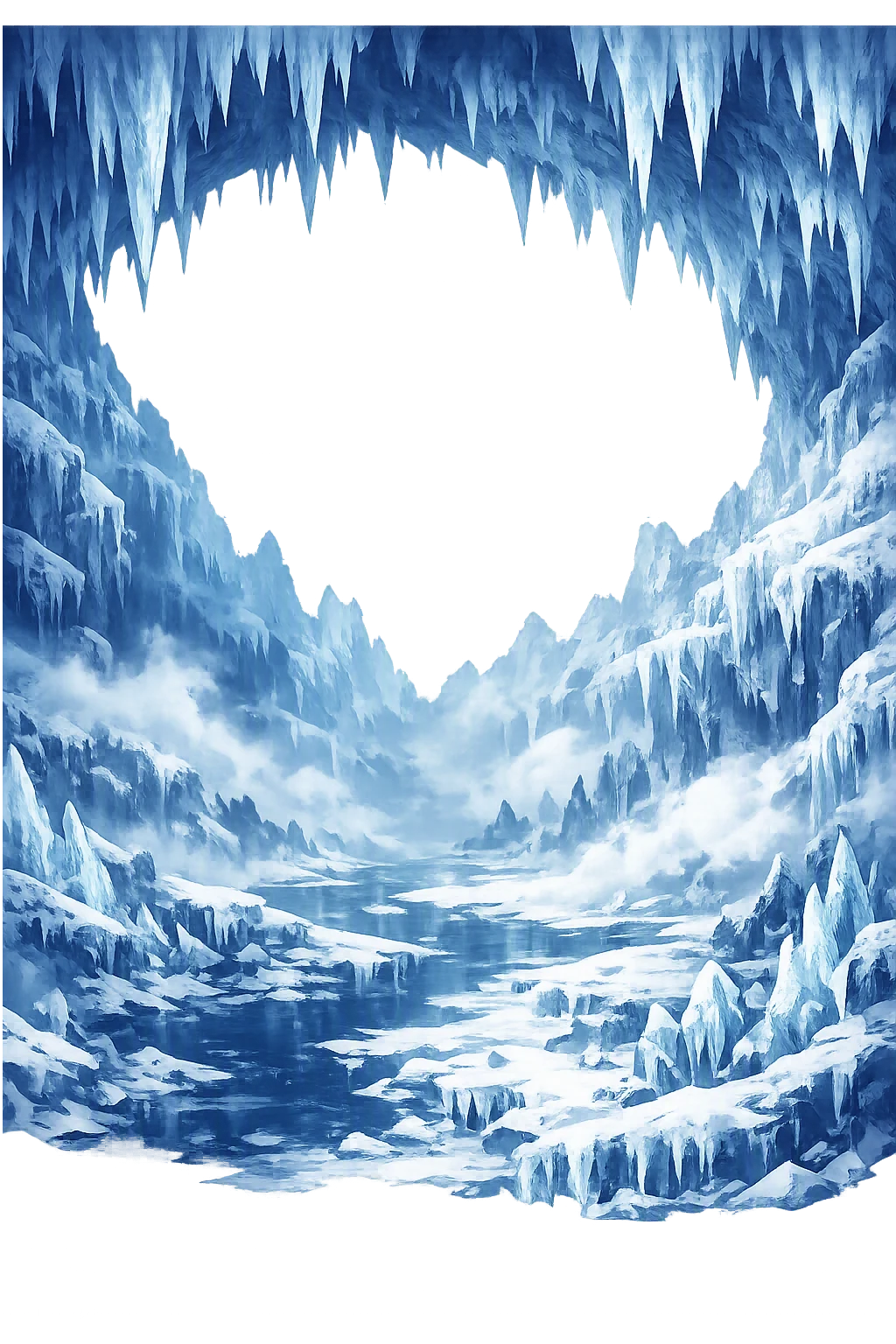
Niflheimr is the oldest address in the Norse cosmos: the world of fog and rime that existed, Snorri says, many ages before the earth was made — the cold northern pole of the yawning gap, from whose roaring well every river in creation flows and from whose poisoned ice the first living thing quickened.

Niflheimr in Later Traditions

Niflheimr needs no borrowing to be explained: its first element is one of the most securely inherited words in the Germanic vocabulary, the same mist that Greek keeps in nephélē, Latin in nebula, and Sanskrit in nábhas — three daughter languages and the North all descended from the same cloud. The genuine scholarly argument is internal. Niflheimr is a prose word: the poems overwhelmingly know niflhel, mist-Hel, and several handbooks treat Snorri's fully mapped Niflheimr — with its well, its eleven rivers, and its place opposite Muspellsheimr — as a thirteenth-century systematization raised on genuinely older material, since Hvergelmir and the Élivágar are Eddic and attested in Grímnismál and Vafþrúðnismál centuries before the Prose Edda. The comparative pattern is common enough: a pole of cold set against a pole of fire at the beginning of things — but the Norse version is unusual in making the cold not merely older than the gods but older than the earth itself.

Modern Legacy

The mist-world's afterlife runs through every retelling that needs a bottom floor for the cosmos. Wagner rebuilt it as Nibelheim, the smoke-filled subterranean forge-realm of Alberich in Das Rheingold — a conflation of Niflheimr with the Nibelung dwarf-lore that no saga ever made, and one of the most consequential mistranslations in myth reception. Modern fantasy keeps the map: Marvel's comics and films count 'Niffleheim' among their Nine Realms, and games from the God of War series to a dozen smaller titles send players trudging through its fog as the endgame of cold. In Iceland the word never needed reviving — Niflheimur is simply the old word, still in service. What survives beneath every adaptation is the Edda's strangest idea: that the first thing was not light but fog, and that everything warm is a late arrival.

Unicode Restoration as Cultural Act

Restoring Niflheimr in a domain name is more than orthographic accuracy. It is a statement that the internet should recognize the full range of human writing — not only the ASCII keyboard.

05

Frequently Asked Questions

Common questions about Niflheimr, Mist World, Realm of Ice, and Unicode restoration

01How do you pronounce Niflheimr?

In reconstructed pronunciation, Niflheimr is /ˈnivlˌhɛimr̩/ — approximately NIVL-haym-r — the f is soft, sounding as v; the second element glides like 'aim' with an h in front; end with a light trilled r that carries its own syllable..

02What does Niflheimr mean?

Niflheimr means Mist-home in the norse tradition.

03What are the symbols of Niflheimr?

Niflheimr is associated with Hvergelmir, the roaring kettle (The source beneath all sources: every river in the world is one of its children), The Élivágar (The ice-waves older than the earth — water carrying the venom that froze into the first flesh), The rime fog (Cold as a substance, not an absence: the raw material the warm south breathed on until it lived).

04Why restore Niflheimr in Unicode?

Plain ASCII niflheimr strips the stress, length, and script that make the name specific. Unicode restoration returns the name to its original written dignity.

05What is the most important myth about Niflheimr?

Snorri's chronology begins not with a god but with a climate. Niflheimr, he says, was made many ages before the earth was created, and in its middle is the well called Hvergelmir, from which flow the rivers: Svöl the cool, Gunnþrá the battle-defiant, Fjörm the swift, Fimbulþul the loud-babbling, Slíðr the fearsome and Hríð the storming, Sylgr and Ylgr, Víð the broad, and Leiptr the flashing — and Gjöll, the resounding, which runs nearest the gate of Hel. Before there was a world to water, the mist-world already had its watershed.

06

Scholarly Sources

The philological foundations of this restoration

Every claim on this page is grounded in established scholarship. The orthographic restorations follow disciplinary convention. The etymological chain follows the best available reference works. This is not invention — it is resurrection through scholarship.

Lexicography & Philology

  • Prose Edda
  • Cleasby-Vigfusson

Primary Texts

  • Poetic Edda: Vafþrúðnismál 20–21 (the Élivágar and the venom-drops that grew into Ymir), 31 (Aurgelmir), 43 (nine worlds below Niflhel); Grímnismál 26 (Eikþyrnir dripping into Hvergelmir, whence all waters flow), 27–29 (the river lists), 34–35 (the serpents under Yggdrasill, Níðhöggr); Baldrs draumar 2 (Óðinn's ride down to Niflhel)
  • Snorri Sturluson, Prose Edda: Gylfaginning 3 (evil men go to Hel, thence to Niflhel in the ninth world), 4 (Niflheimr made before the earth; Hvergelmir; the eleven rivers), 5–8 (Muspellsheimr; the rime and the quickening of Ymir), 15–16 (the third root over Niflheimr, Hvergelmir beneath, Níðhöggr gnawing)

Archaeology & Art History

  • Material evidence — iconography, inscriptions, and temple archaeology — for Niflheimr and related cults.
  • Niflheimr is a textual world: it has no cult, no toponym, and no carved witness — unsurprising for a cosmographical term rather than a deity. Its attestation is manuscriptal: Grímnismál and Vafþrúðnismál in the Codex Regius of the Poetic Edda (c. 1270) preserve Hvergelmir and the Élivágar; Baldrs draumar, with its ride down to Niflhel, hangs by the single thread of AM 748 I 4to (early 14th c.); and the fully mapped Niflheimr of Gylfaginning survives in the thirteenth- and fourteenth-century codices of the Prose Edda. No runic inscription records the word, and the image tradition is indirect at most: scholars have been tempted to see the world-tree's serpent-gnawed roots on Scandinavian picture stones and church carvings, but nothing is labelled, and the mist-world itself — a climate, not a figure — was never the kind of thing a Viking Age carver set in stone.

Religious Studies

  • Cleasby–Vigfusson, An Icelandic-English Dictionary, s.v. nifl-heimr, nifl-hel, heimr, hver-gelmir, él
  • Zoëga, A Concise Dictionary of Old Icelandic, s.v. niflheimr, niflhel, hvergelmir
  • de Vries, Altnordisches etymologisches Wörterbuch, s.v. nifl- (the *nebh- cognates: nebula, nephélē, nábhas), heimr
  • Simek, Dictionary of Northern Mythology; Lindow, Norse Mythology: A Guide; Orchard, Dictionary of Norse Myth and Legend — s.v. Niflheim, Niflhel, Hvergelmir, Élivágar (the debate over Snorri's systematization)
Return

The Surface Awaits

You have traced the name from its earliest attestation to its Unicode restoration. Now return to the myth. The story is where the name lives.

Back to Lore
Niflheimr mascot