
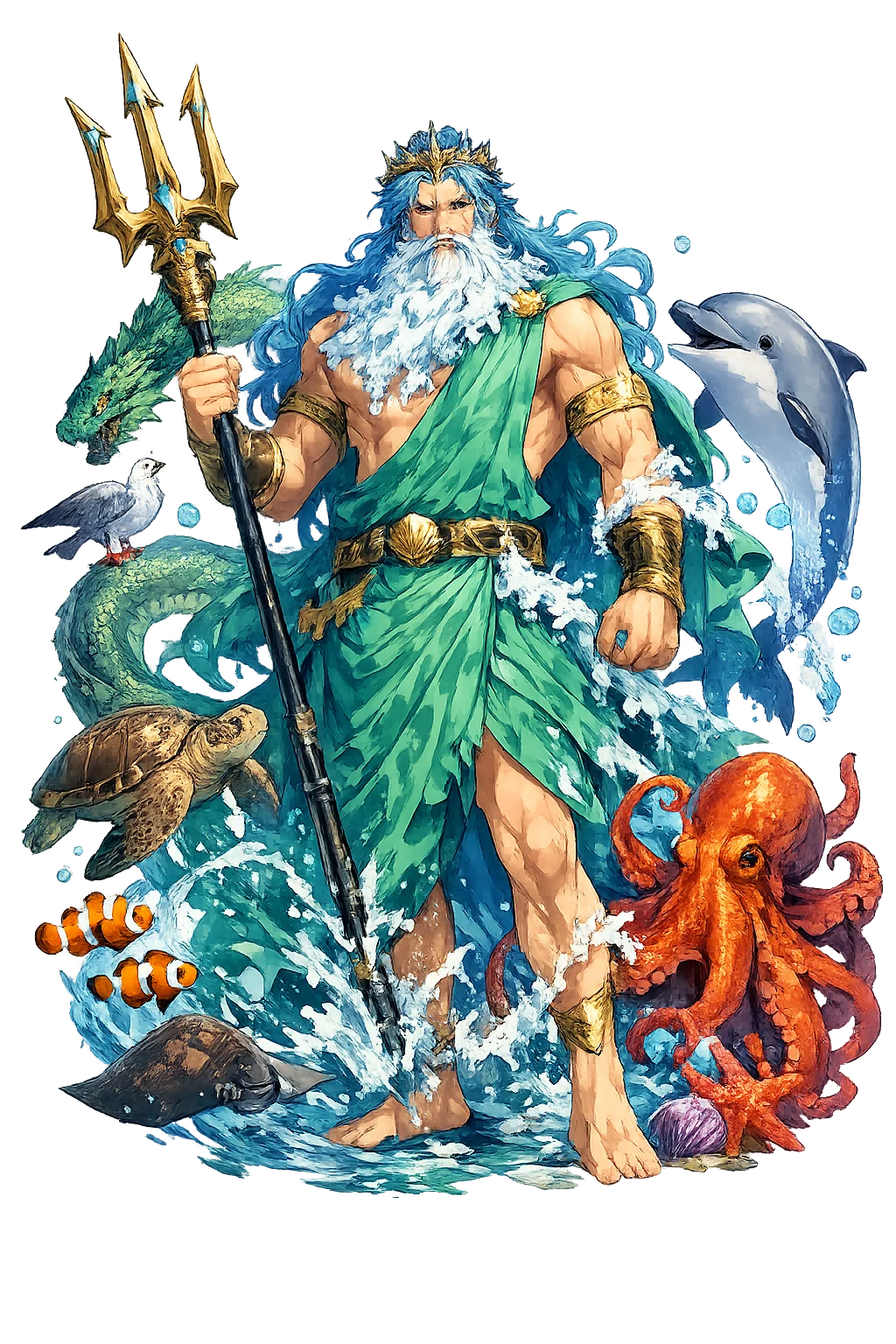
The Cult
Rome worshipped Neptūnus with festivals rather than myth. The oldest is the Neptunalia of 23 July, kept — Festus records — in huts woven of living branches against the year's worst heat, a water-prayer built of shade; it still stood in the calendar of 354 CE. His temple rose in the Circus Flaminius, vowed by Gnaeus Domitius Calvinus on a Gaulish battlefield in 206 BCE (Livy 28.11) and famous enough to name the district. As Neptūnus Equester he shared an underground altar with Consus beside the Circus Maximus — stored grain and hidden water honored together — and the Consualia garlanded the horses he claimed. When Rome became a sea-power the cult went maritime: after Naulochus the Senate struck the rostral crown for Agrippa, and by the high empire altars to Neptune stood wherever soldiers met water they could not master — on the Tyne at Newcastle and South Shields, at Chichester — every harbour a sailor's vow made stone.