PuniCodex

Extended Lore

𒀭𒉆𒋻 Namtar

Etymology · Orthography · Cult · Iconography · Reception · Sources

Tier 2 Namtar
Namtar — Fate, Death Demon
01

Quick Facts

Essential information about Namtar, Fate, Death Demon

Original Script𒀭𒉆𒋻
Unicode RestorationNamtar
Reconstructed Pronunciation/namˈtar/
PantheonMesopotamian
DomainFate, Death Demon
MeaningFate, destiny
ClassificationTier 2
Primary DomainNamtar
Sacred SymbolsCuneiform wedge, Stylus and tablet, Pestilence cloud, Threshold of the underworld, Knife or sickle
02

Etymology & Word Family

From original script to Unicode restoration

Original Script 𒀭𒉆𒋻 Namtar — "Fate, destiny"
Unicode Restoration Namtar Canonical scholarly spelling — ASCII-identical
Modern ASCII namtar Plain-ASCII fallback

The name Namtar reaches the modern world through scholarly transliteration of the mesopotamian tradition. Because the conventional spelling uses only Latin letters, its Unicode and ASCII forms coincide — the tradition it carries is in the name itself, not in diacritics.

03

Unicode Character Breakdown

Character-by-character philological analysis

CharacterUnicodeNameBlockPhonetic Role
NU+004ELatin Capital Letter NBasic LatinSame, capitalized
aU+0061Latin Small Letter ABasic LatinSame
mU+006DLatin Small Letter MBasic LatinSame
tU+0074Latin Small Letter TBasic LatinSame
aU+0061Latin Small Letter ABasic LatinSame
rU+0072Latin Small Letter RBasic LatinSame

The Tier 2 classification here reflects fidelity to the attested tradition, not recovered diacritics: every character of Namtar already survives in ASCII. What the restoration preserves is the canonical spelling itself — the form scholarship standardised.

04

Cult & Worship

How the sacred was kept — rites, sanctuaries, remains

The Cult

No temple, priesthood, or festival of Namtar is known, and the evidence suggests there never were any: he was never a city god like Nergal of Kutha but an officer of the underworld throne, worshipped — if the word applies — through the rites that managed him. His congregation was the exorcist-priest, the āšipu, whose apotropaic liturgies name the hand of Namtar among the causes of disease and negotiate with it as one negotiates a decree: patiently, and through proper form. In the medical tradition, diagnosis was his true liturgy — the Diagnostic Handbook reads symptoms as his sentence — and the appeasement was the cure itself. The cult of Namtar, in short, was the entire apparatus of Mesopotamian healing magic, in which the patient propitiated the minister of death every time fever answered to incantation.

In the Earth

Cuneiform tablets from Nineveh, Assur, and Sippar preserve the Standard Babylonian versions of Nergal and Ereškigal and the Descent of Ištar, both of which cast Namtar as the queen's executive minister. Medical and apotropaic tablets in the Diagnostic Handbook (SA.GIG) and the udug-hul incantation series name 'the hand of Namtar' as a cause of disease. Sumerian literary tablets from Nippur and Ur include references to Namtar in city laments and underworld compositions.

05

Iconography

How Namtar was imaged across the ages

The Image

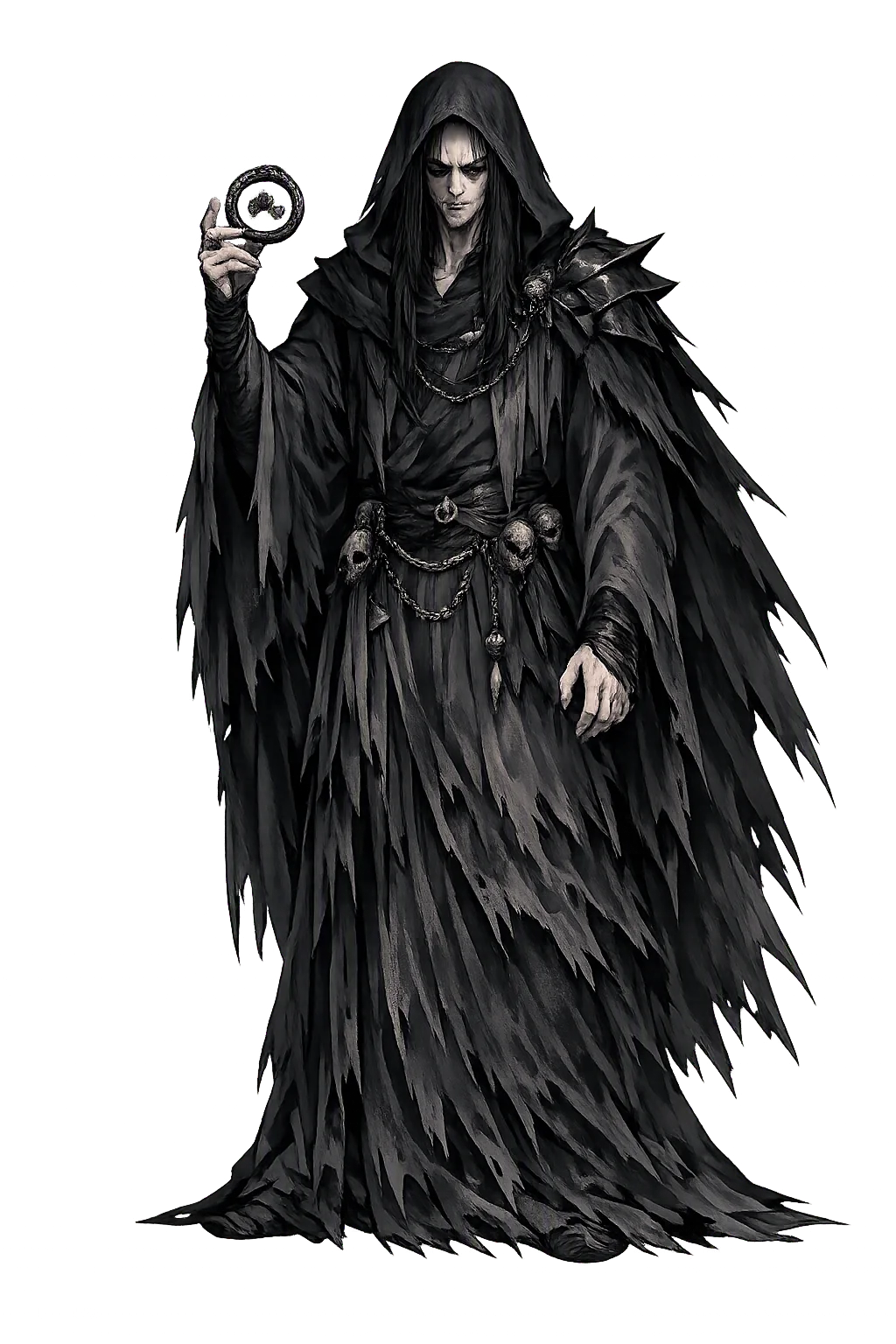
No image of Namtar has been securely identified, and Mesopotamian art seems never to have given him a face. The texts supply his attributes instead: the stylus and tablet on which destinies are recorded, the cutting edge hidden in his name, the invisible cloud of pestilence he carries — an iconography of office rather than of body. Seal-cutters and plaque-makers lavished images on his underworld associates, and amulet-makers gave Lamashtu and Pazuzu grim portraits in bronze and stone, but the vizier of the dead kept his bureaucratic invisibility: a name on a tablet rather than a figure on a seal. His one certain image is cuneiform itself — the wedges of 𒀭𒈾𒀭𒋻, where the god hides inside his own noun.

06

Reception & Transformation

The name after its own age — transmission, translation, survival

Afterlives

Namtar's afterlife runs through clay and then through the library of Ashurbanipal into modern scholarship. His myths slept in the ruins of Nineveh until the excavations of Layard and Rassam (1845–1854) brought the Kuyunjik tablets to the British Museum; George Smith's Chaldean Account of Genesis (1876) introduced the Descent of Ištar — with it the minister who sprinkles the water of life — to the Victorian public. The twentieth century gave him a philology: the Chicago Assyrian Dictionary fixed the range of namtāru, Thorkild Jacobsen read him as fate personified, and Stephanie Dalley and Benjamin Foster carried him into the standard teaching anthologies. René Labat's edition of the Diagnostic Handbook (1951), and in our century the Berlin BabMed project's digital study of the medical corpus, have re-read 'the hand of Namtar' as a document in the history of medicine — the demon becomes, on rereading, a diagnosis.

Identifications Across Traditions

Namtar did not travel as widely as Ištar or Marduk, but his type — the personal minister of death — became one of the most durable figures in religious imagination.

The Sumerian concept of nam-tar as 'decided destiny' underlies later Mesopotamian fatalism: the gods themselves are bound by the decrees written at the beginning. In apotropaic magic, Namtar appears alongside other death demons such as Lamashtu and Pazuzu, though he is less a predator than an executor. The biblical and later figure of the destroying angel who passes through Egypt (Exodus 12) and the Qur'ānic Malak al-Mawt share Namtar's function as the agent who delivers a divine death-sentence, even if no direct historical continuity can be proved. In modern Assyriology, Namtar remains the clearest personification of the ancient Near Eastern belief that death is not chaotic but procedural: a decree carried out by an official who knows the contents of the tablet.

Modern Legacy

The idea that death arrives by appointment, administered by an official who cannot be bribed, has never left human culture.

Namtar's legacy lives in the figure of the psychopomp, the recording angel, and the bureaucratic demon who keeps the ledger of lives. The Sumerian word namtar survived in Akkadian as both a demon and the abstract concept of fate, influencing Persian and later Gnostic ideas of an appointed end. In fantasy and horror, his descendants are the reapers, auditors, and plague-bearers who arrive with paperwork and patience. PuniCodex presents Namtar in plain ASCII transliteration not because the name lacks depth, but because its scholarly form needs no reconstructed diacritic to be philologically defensible. The name still means: the cut that cannot be undone.

07

The Meditation

What Namtar means — beyond the dictionary

Every civilization invents a functionary for the moment when life stops being negotiable. The Sumerians called theirs Namtar. He is not the lord of the underworld — that is Ereškigal — nor its wild gatekeeper, but its vizier: the one who reads the tablet, delivers the message, and inflicts the stroke. To name him is to acknowledge that death, in the ancient imagination, was less a monster than a memo.

The etymology is ruthless. Nam is what is fixed; tar is the blade that fixes it. There is no appeal from a cut. Yet Namtar's mythology also contains reversal: in Ištar's descent he inflicts sixty diseases and then sprinkles the water of life. The underworld does not forgive; it processes. When the proper forms are observed, even death can be made to release its prisoner — temporarily. The temple of Namtar is therefore a temple of documents, of symptoms, of the instant when possibility becomes record. Its silence is not empty; it is the silence of a clerk who has already turned the page.

08

Frequently Asked Questions

Common questions about Namtar, Fate, Death Demon, and Unicode restoration

01How do you pronounce Namtar?

In reconstructed pronunciation, Namtar is /namˈtar/ — approximately 'nahm-TAHR' — stress the second syllable and let the final r breathe, as though the word itself were being cut short.

02What does Namtar mean?

Namtar means Fate, destiny in the mesopotamian tradition.

03What are the symbols of Namtar?

Namtar is associated with Cuneiform wedge (The written sign (𒋻 tar) that marks the cutting or deciding of fate), Stylus and tablet (The bureaucratic instruments of the underworld minister who records destinies), Pestilence cloud (The invisible affliction carried by 'the hand of Namtar' in incantations), Threshold of the underworld (The boundary Namtar guards and crosses as Ereškigal's messenger), Knife or sickle (The cutting tool implied by tar — the moment fate is severed from possibility).

04Why restore Namtar in Unicode?

Namtar is written entirely in ASCII letters, so its restoration is about canonical fidelity rather than recovered diacritics: the temple fixes the name in its scholarly standard spelling, attested in the source tradition, instead of leaving it to drift.

05What is the most important myth about Namtar?

“The Name that Cuts Destiny” — the The Name story that anchors the mythology of Namtar, told in full on the lore page.

09

Scholarly Sources

The philological foundations of this restoration

Every claim on this page is grounded in established scholarship. The orthographic restorations follow disciplinary convention. The etymological chain follows the best available reference works. This is not invention — it is resurrection through scholarship.

◈

Lexicography & Philology

  • ETCSL
  • Black-Green
◎

Primary Texts

◉

Archaeology & Art History

  • Material evidence — iconography, inscriptions, and temple archaeology — for Namtar and related cults.
✦

Religious Studies

  • ETCSL
  • CAD (Chicago Assyrian Dictionary)
  • Black & Green, Gods, Demons and Symbols of Ancient Mesopotamia
  • Jacobsen, The Treasures of Darkness
  • Foster, Before the Muses
  • Dalley, Myths from Mesopotamia
  • Nergal and Ereškigal (Standard Babylonian version)
  • Descent of Ištar to the Underworld (Akkadian)
  • Sumerian-Akkadian incantation series against evil demons (udug-hul)
  • Diagnostic Handbook (SA.GIG) references to 'the hand of Namtar'
Return

The Surface Awaits

You have traced the name from its earliest attestation to its Unicode restoration. Now return to the myth. The story is where the name lives.

Back to Lore
Namtar mascot