
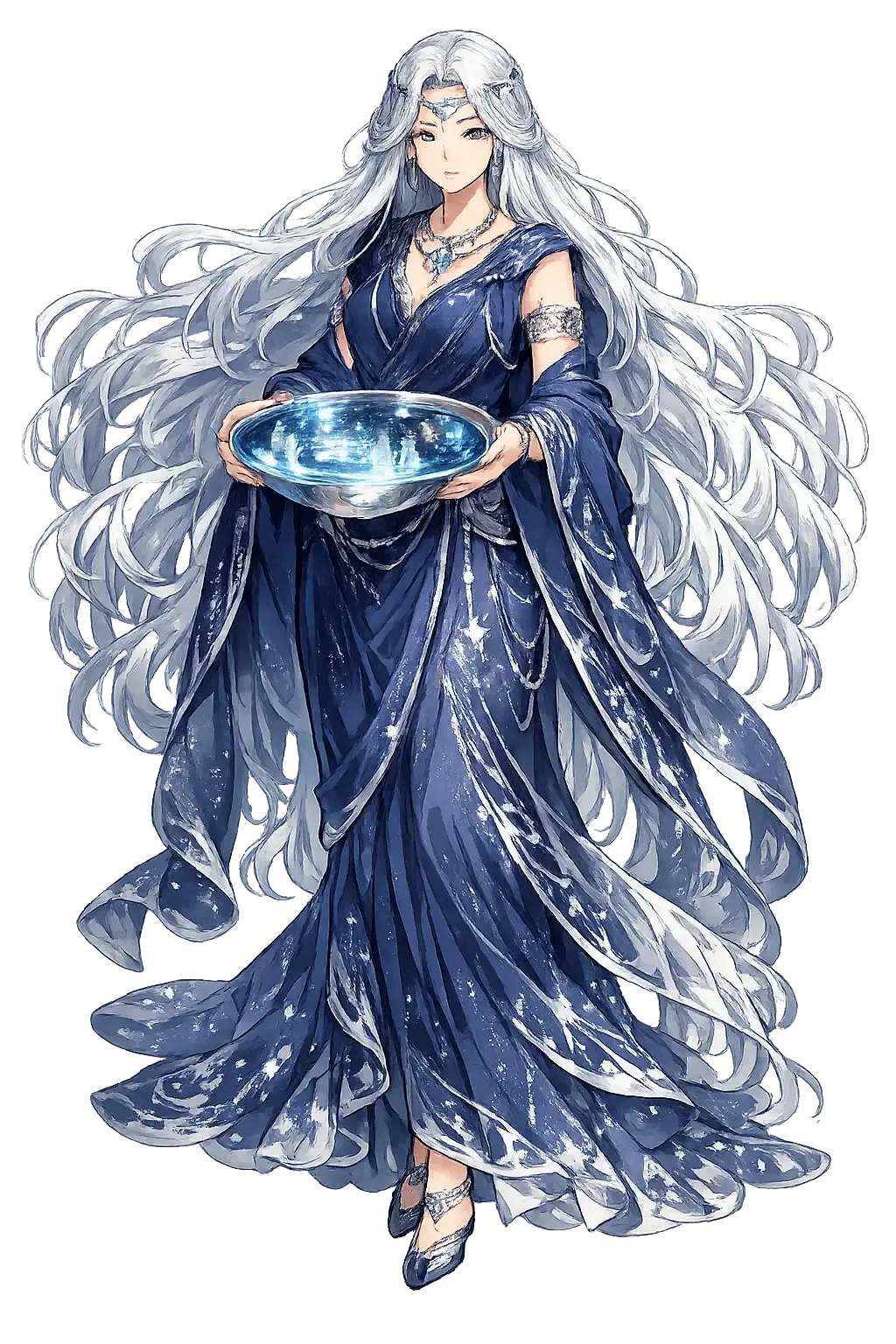
The Cult
No city ever built Mnēmosýnē a great temple; her cult was folded into her daughters'. The liveliest seat of her worship was the grove of the Muses in the valley of the Muses on Mount Helicon near Thespiai, where Pausanias walked in the second century CE among statues, votive tripods and the iron chair said to be Hesiod's; she presided as the Muses' mother, receiving libations before their images. Stranger and more intimate was her role at the oracle of Trophonios at Lebadeia: Pausanias describes her statue standing by the sacred spring, and the inquirer, before descending to the god, drank from the water of Lḗthē to forget and then from the water of Mnēmosýnē to remember what the god would show — ritual memory as the instrument of revelation. The golden burial tablets from southern Italy and Thessaly make her spring the soul's last refreshment. Dedications rarely invoke her alone; she is honored as the silent condition of all the arts.