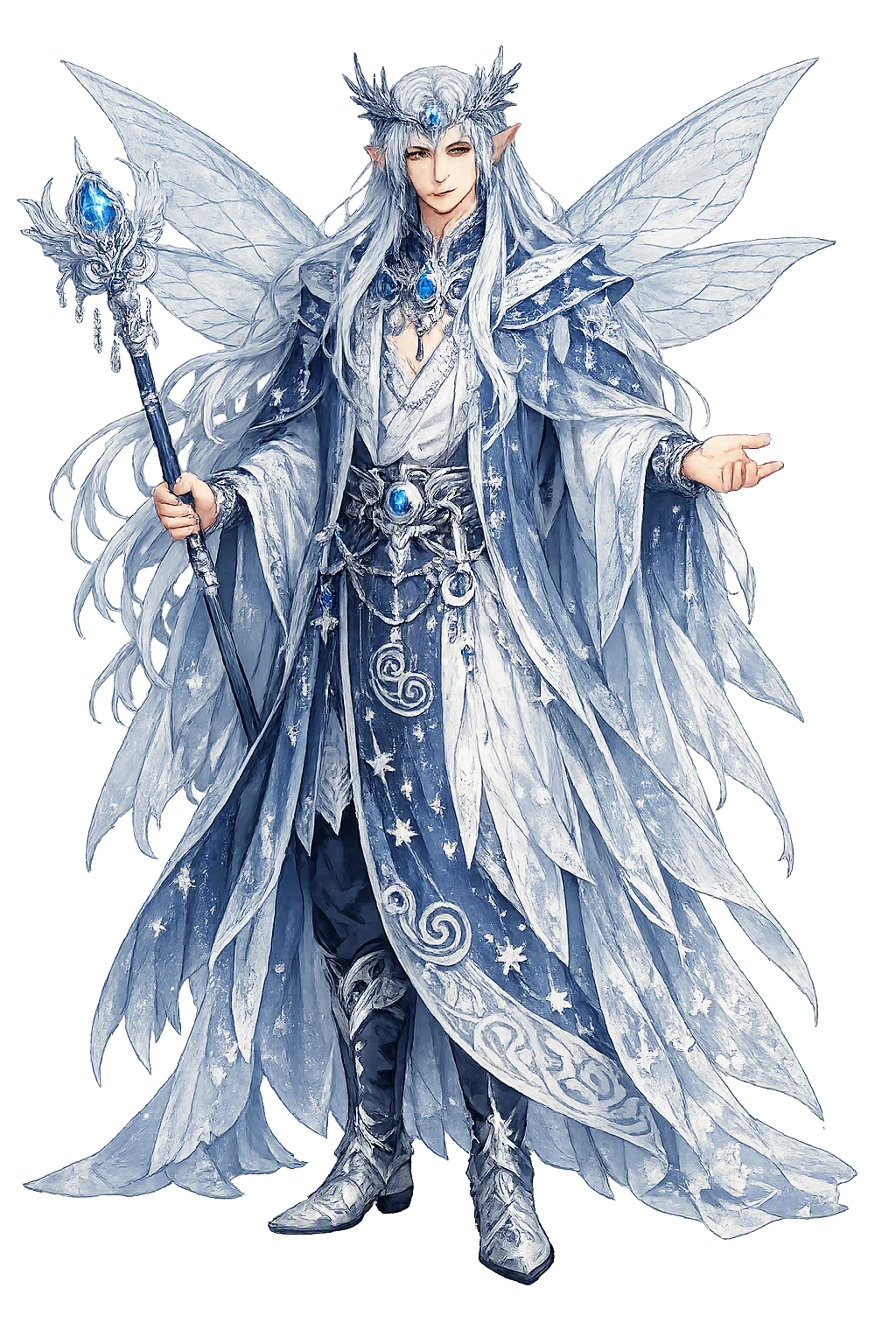
PuniCodex

Extended Lore

Midir

Etymology · Phonology · Orthography · Cultural Legacy · Primary Sources

Tier 2 Midir
Midir — Underworld, Fairy King
01

Quick Facts

Essential information about Midir, Underworld, Fairy King

Scholarly TransliterationMidir
Unicode RestorationMidir
Reconstructed Pronunciation/ˈmʲiː.ðʲɪɾʲ/
PantheonCeltic
DomainUnderworld, Fairy King
MeaningJudge
ClassificationTier 2
Primary DomainMidir
Sacred SymbolsThe fidchell board, The silver chain, The sloe-thorn, Brí Léith, The fifty women in one likeness
02

Etymology & Word Family

From original script to Unicode restoration

Scholarly Transliteration Midir Midir — "Judge"
Unicode Restoration Midir Restored stress, length, and script
Modern ASCII midir Plain-ASCII fallback

Midir is Tier 2 by the mechanical rule: the temple form is plain ASCII, with no diacritic and no distinctive letter for the restoration to rescue. The fada in Mídir belongs to modern editorial convention, not to the manuscript norm that the project follows, and the mechanical rule judges the restored form, not the editorial one. The capital alone distinguishes the temple form from the input; the god's standing in the tradition is beside the point.

03

Unicode Character Breakdown

Character-by-character philological analysis

CharacterUnicodeNameBlockPhonetic Role
MU+004DLatin Capital Letter MBasic LatinSame, capitalized
iU+0069Latin Small Letter IBasic LatinSame
dU+0064Latin Small Letter DBasic LatinSame
iU+0069Latin Small Letter IBasic LatinSame
rU+0072Latin Small Letter RBasic LatinSame

The Tier 2 classification reflects how much of the original phonology this restoration preserves — stress and vowel length for Greek names, distinctive letters and diacritics for every other tradition.

04

Cultural Significance

From ancient cult to modern Unicode

Ancient Domain

Midir — Old Irish Mídir, styled the Proud — is the lord of the síd of Brí Léith, the Otherworld mound by Ardagh in Longford, and the central figure of Tochmarc Étaíne, the Wooing of Étaín. His dossier is the strangest kind of kingship in the Irish corpus: not the spear or the plunder, but the board game, the wager, and the patience that spans a thousand and twelve years and two births of the same woman. He fostered [[aengus|Óengus]], the son of the young; he won Étaín Echraide by her father's impossible labors; he lost her to jealousy, found her again in another lifetime, and took her from the high king of Ireland at a game of fidchell played in the middle of Tara. Where other gods take what they want, Midir stakes, loses, waits, and wins.

Midir in Later Traditions

Midir has no cross-border witness of his own, and the honest comparison is typological rather than genetic. No Gaulish altar names him and no scholar has proposed one; where the Dagda can be set beside Sucellos on the strength of club and cauldron, Midir's dossier — the wager, the hunted bride, the mound that is a court — belongs to the Otherworld-king figure-type that Mac Cana and Sjoestedt trace through the Celtic materials without anchoring it to any single epigraphic god. Within Ireland his structural kin are the síd-lords of the neighboring tales: Bodb Derg of the Munster síde, who answers the Dagda's search in the Aislinge, and [[manannan|Manannán]], the sea-going master of the Otherworld's glamour. The Welsh corpus offers only a functional parallel — [[arawn|Arawn]], the lord of Annwn who likewise binds a mortal king by a bargain with a hidden edge — and the parallel is a pattern, not a pedigree. The comparisons instruct; none of them identifies him.

Modern Legacy

Midir's afterlife is the afterlife of Tochmarc Étaíne itself, the tale that never let him go. P. W. Joyce carried 'The Wooing of Etain' into modern English in Old Celtic Romances (1879), and Lady Gregory made the fidchell game and the swans part of the Celtic revival's furniture in Gods and Fighting Men (1904). James Stephens gave the story its strangest modern retelling in In the Land of Youth (1924), where Midir's arrival at Tara is staged as high comedy turning to awe. Bergin and Best's edition in Ériu (1938) fixed the text for scholarship, and Jeffrey Gantz's Penguin translation (1981) put the whole dossier on the general reader's shelf, where it has stayed: the fidchell game is now the standard citation whenever Irish literature wants to prove that its gods play a longer game than its kings. The name itself took no second path — no Angus, no Brigit: Midir never became a given name, a place, or a pub, and remains what the manuscripts made him, a proper noun with a single bearer.

Unicode Restoration as Cultural Act

Restoring Midir in a domain name is more than orthographic accuracy. It is a statement that the internet should recognize the full range of human writing — not only the ASCII keyboard.

05

Frequently Asked Questions

Common questions about Midir, Underworld, Fairy King, and Unicode restoration

01How do you pronounce Midir?

In reconstructed pronunciation, Midir is /ˈmʲiː.ðʲɪɾʲ/ — approximately 'MEE-thir' — a long 'ee', the soft 'th' of 'this' for the d, and a whispered palatal r at the end. The modern Irish Mídír keeps essentially this sound..

02What does Midir mean?

Midir means Judge in the celtic tradition.

03What are the symbols of Midir?

Midir is associated with The fidchell board (The game of kings played at Tara — patience staked as strategy, and a wager that was really a judgment), The silver chain (The link between the two swans that rose through the smoke-hole of Tara — the bond the high king's host could not break), The sloe-thorn (The flying thorn that put out his eye at the Brug and set the whole wooing in motion — Dían Cécht healed the wound), Brí Léith (His síd by Ardagh in Longford, the mound the tales make his and the host of Ireland dug open to take Étaín back), The fifty women in one likeness (The riddle of resemblance at the mound's surrender — the deadliest answer the Otherworld ever gave a spade).

04Why restore Midir in Unicode?

Plain ASCII midir strips the stress, length, and script that make the name specific. Unicode restoration returns the name to its original written dignity.

05What is the most important myth about Midir?

Midir of Brí Léith was the foster-father of Óengus, and he came to Brú na Bóinne to visit his fosterling. While the boys of the Brug were at their hurling, a sloe-thorn sprang from the play and put out Midir's eye; he stayed a year in the mound while Dían Cécht, the physician of the Túatha Dé Danann, made him whole. For his reward and his heart's desire he named Étaín Echraide, daughter of Ailill, the fairest woman in Ireland — and it was Óengus who went to win her.Her father Ailill mac Máta, king of the Ulaid, set a bride-price no mortal could pay: twelve plains cleared of their stones and wood, and twelve rivers led out of the land to the sea. Óengus performed the labors with the Dagda's strength behind him, and Midir brought Étaín home to Brí Léith as his wife. The tale's arithmetic is exact: the god's first possession of Étaín was bought by service, the price of a wounded eye — and it was the one part of the story that ended peaceably.

06

Scholarly Sources

The philological foundations of this restoration

Every claim on this page is grounded in established scholarship. The orthographic restorations follow disciplinary convention. The etymological chain follows the best available reference works. This is not invention — it is resurrection through scholarship.

Lexicography & Philology

  • Irish folklore
  • MacKillop

Primary Texts

  • The Immram Brain (Voyage of Bran); Tochmarc Étaíne; Cóir Anmann; medieval Irish saga literature.

Archaeology & Art History

  • Material evidence — iconography, inscriptions, and temple archaeology — for Midir and related cults.
  • Midir is a textual god — no ogham stone names him and no votive inscription invokes him — but both halves of his mythic geography are real and visitable. Brí Léith is a hill by Ardagh in County Longford, the mound the Dindsenchas names as his síd, and the surrounding Longford bogland preserves one of the showpiece monuments of the Irish Iron Age: the Corlea Trackway, a massive oak togher across the bog a few miles south of Ardagh, excavated under Barry Raftery and fixed by dendrochronology to 148–147 BCE — a road of the very centuries in which the síd-lord's landscape was being imagined. The tale's other stage is Tara in County Meath, where the earthworks of Ráith na Rí, the Forrad, and the long banquet-hall trench called Tech Midchúarta still ridge the hill on which Eochaid Airem kept his court and lost his wager. The manuscript witnesses are exact: Tochmarc Étaíne is preserved, incompletely, in the twelfth-century Lebor na hUidre (RIA MS 23 E 25) and completed in the fifteenth-century Yellow Book of Lecan, the twin bases of Bergin and Best's edition; the companion Aislinge Óenguso survives in the fifteenth-century British Library MS Egerton 1782, the basis of Shaw's.

Religious Studies

  • Tochmarc Étaíne (The Wooing of Étaín), ed. and trans. Bergin and Best, Ériu 12 (1938), 137–196 — the whole dossier: the eye, the bride-price, the fly, the fidchell game, the digging of the síds
  • Aislinge Óenguso (The Dream of Óengus), ed. Francis Shaw (1934) — the world of the fosterage; Bodb Derg and the síd-lords
  • De Gabáil in t-Sída (The Taking of the Síd), ed. Hull, ZCP 19 (1933) — Óengus fostered with Midir; the division of the mounds
  • Lebor Gabála Érenn, ed. and trans. R. A. S. Macalister — the genealogical tradition of the Dagda's line
  • The prose Dindsenchas, ed. Stokes, Revue Celtique 15–16 — Brí Léith among the storied places
  • Dictionary of the Irish Language (eDIL), s.v. midithir; Vendryes, Lexique étymologique de l'irlandais ancien, s.v. med- — the 'judge' etymology, hedged as the handbooks hedge it
  • Mac Cana, Celtic Mythology; Sjoestedt, Gods and Heroes of the Celts — the Otherworld-king figure-type
  • MacKillop, A Dictionary of Celtic Mythology, s.v. Midir — 'Mídir the Proud'; the standard handbook entry
  • Koch, ed., Celtic Culture: A Historical Encyclopedia, s.v. Mídir, Tochmarc Étaíne
  • Gantz, Early Irish Myths and Sagas (Penguin, 1981) — the tale in modern English
Return

The Surface Awaits

You have traced the name from its earliest attestation to its Unicode restoration. Now return to the myth. The story is where the name lives.

Back to Lore
Midir mascot