
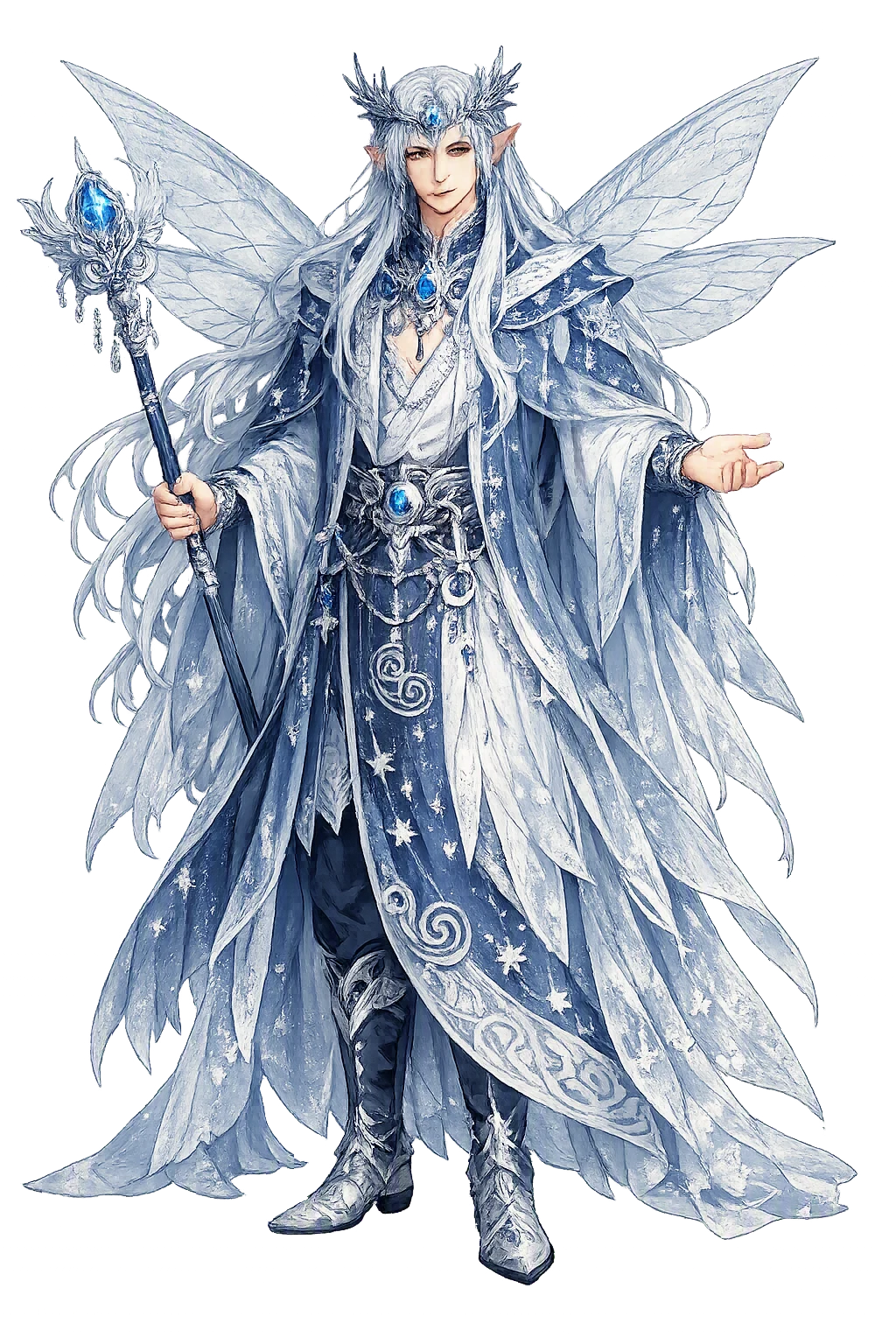
From Celtic transcription to canonical spelling: the journey of Midir
Long before it became a digital address, this name travelled through scripts. Midir reaches us through scholarly transliteration, and arrives in a Latin form that needs no special encoding. Each stage preserves some information and requires some judgment. This post follows that journey: the original evidence, the reconstructed pronunciation, the mythological record, the material remains, and the reviewed spelling used by the temple.
At a Glance
- Canonical name: Midir
- ASCII form: midir
- Meaning: "Judge"
- Domain of influence: Underworld, Fairy King
- Pantheon: Celtic
- Restoration: ASCII-equivalent form
Overview
Midir (midir) — Underworld, Fairy King · Judge — is the lord of the síd of Brí Léith, the Otherworld mound by Ardagh in Longford, and the central figure of Tochmarc Étaíne, the Wooing of Étaín: foster-father of Óengus, husband of Fuamnach and of Étaín, and the player of the most consequential board game in Irish literature — the fidchell match at Tara in which he won Étaín from Eochaid Airem, high king of Ireland.
The tradition styles him Mídir the Proud, and the handbooks gloss his name, with due caution, as 'judge' — a reading that fits a god whose whole dossier is a wager conducted like a verdict: he loses stake after stake until the board is set for the one prize he came for. The genealogical tradition makes him a son of the Dagda, and De Gabáil in t-Sída makes his fosterage of Óengus the hinge on which the division of the síd-mounds turns.
PuniCodex restores the name as Midir — identical to the ASCII input, because normalized Old Irish writes no diacritic in this name; the fada of modern editorial Mídir is a convention, not the manuscript norm. The mechanical rule therefore leaves it a plain form: nothing distinctive is lost in transit, a statement about orthography and never about the god. No domain is claimed: the plain-ASCII midir.com is registered to a third party outside the collection and is watched for release.
The Name
The theonym is attested in Old and Middle Irish as Midir, the spelling Bergin and Best print from Lebor na hUidre; many modern editors add the fada — Mídir — to mark the long vowel, an editorial convention rather than the manuscript norm. The handbooks keep his standing epithet: Mídir the Proud, the proud host of the síd of Brí Léith.
The etymology is genuinely open, and this edition keeps it open. The reading the reference works register derives the name from the root med-, 'to judge, to measure, to rule' — Old Irish midithir, 'judges', is the comparand — yielding a name that would suit the god of the wager down to the ground. The derivation is hedged in the dictionaries themselves, and the hedge is part of the record.
The ASCII form midir loses nothing, because the normalized Old Irish spelling is already plain Latin letters; the restoration is therefore a matter of canonical reference, not rescued diacritics, and the name is a plain restoration by the project's mechanical rule.
The letter-by-letter transformation runs:
- m → M — Same, capitalized
- i → i — Same
- d → d — Same
- i → i — Same
- r → r — Same
The project holds no domain for this name: midir.com is registered to a third party outside the PuniCodex collection and is watched for release. The temple lives at its canonical lexicon address.
The Original Script
The name is preserved in medieval Irish manuscripts in the Latin alphabet as Midir — Old Irish / Middle Irish in Insular script, attested in the great codices that preserve Tochmarc Étaíne, above all the twelfth-century Lebor na hUidre, completed by the Yellow Book of Lecan. The earlier monumental alphabet, ogham, predates the manuscript tradition, but no attestation of this theonym has ever been read on an ogham stone; the manuscript form is the primary witness.
The scholarly rendering proceeds step by step:
- Old Irish was written in the Latin alphabet using Insular minuscule from the early medieval period; the spelling Midir requires no diacritic.
- Many modern editors add the fada and print Mídir to mark the long vowel — an editorial convention, not the manuscript norm; the project follows the manuscript form.
- The medial d is lenited in pronunciation — [ð], the soft 'th' of this — but the orthography writes plain d; nothing distinctive is lost in ASCII.
- The canonical restoration Midir is therefore identical to the ASCII form apart from the capital; the temple form is a canonical reference, not a rescued spelling.
One caution attaches to the record: the handbooks' gloss 'judge' — from med-, with Old Irish midithir, 'judges', as the comparand — is hedged in the dictionaries themselves, and this edition keeps the hedge.
Pronunciation
The reconstructed pronunciation of the name is /ˈmʲiː.ðʲɪɾʲ/ — Old Irish Reconstruction.
Phoneme by phoneme:
- M- — Slender (palatalized) bilabial nasal [mʲ], the tongue arched toward the hard palate; Old Irish distinguished slender from broad consonants throughout
- -í- — Long close front [iː], the long vowel modern editors mark with a fada
- -d- — Lenited dental [ð], the soft voiced 'th' of English this; the orthography writes a plain d
- -ir — Short unstressed [ɪ] closing in a slender (palatalized) tap [ɾʲ]
For the modern speaker, the closest approximation is: 'MEE-thir' — a long 'ee', the soft 'th' of this for the d, and a whispered palatal r at the end; the modern Irish Mídír keeps essentially this sound.
Kindred and historical forms of the name:
- Old Irish — Midir of Brí Léith; the genealogical tradition makes him a son of the Dagda
- Manuscript form — Midir, as printed by Bergin and Best from Lebor na hUidre
- Modern Irish — Mídír, with the fada marking the long vowel
- Epithet — Mídir the Proud, the handbooks' standing rendering of his style
- Anglicized — none: unlike Angus, the name never wore down into a living given name
Midir is a simpler restoration because the restoration preserves nothing ASCII loses: the letters of the manuscript form are the letters of the keyboard. The capital alone marks the temple form.
Mythology
Midir's mythology is a single long courtship told in two lifetimes, preserved entire in Tochmarc Étaíne — the fullest Otherworld dossier in the Irish corpus.
The Sloe and the Bride-Price (Tochmarc Étaíne I)
Midir of Brí Léith, foster-father of Óengus, came to Brú na Bóinne to visit his fosterling; a sloe-thorn sprang from the boys' hurling-play and put out his eye, and he stayed a year in the mound while Dían Cécht made him whole. For his reward he named Étaín Echraide, daughter of Ailill, the fairest woman in Ireland. Óengus won her from her father Ailill mac Máta, king of the Ulaid, by performing the demanded labors — twelve plains cleared, twelve rivers led to the sea — with the Dagda's strength behind him, and Midir brought her home to Brí Léith.
The Fly in the Crystal Bower (Tochmarc Étaíne II)
Fuamnach, Midir's first wife and foster-daughter of Bresal the druid, struck her rival with a rod of scarlet quicken-tree: Étaín became a pool of water, a worm, and a purple fly. The fly went with Midir for seven years and he knew her in her shape; she found refuge in Óengus's crystal bower at the Brug until Fuamnach's wind swept her across Ireland for seven years more, to fall into the cup of Étar's wife at the Bay of Cíú and be born again a thousand and twelve years after her first birth — Étaín, daughter of Étar.
The Long Game at Tara (Tochmarc Étaíne III)
In her second life Étaín married Eochaid Airem, high king at Tara. Midir came first in the likeness of the king's love-sick brother Ailill Anglonnach, lying beside her three nights without touching her; then he revealed himself, and she answered that she would not go without her husband's leave. He took the leave at the fidchell board: game after game he lost, paying stakes without stint, until the final stake was named — an embrace and a kiss from Étaín — and Midir won. When the month's deferral was out he appeared in the midst of the barred and guarded hall, sang to her the invitation to the wondrous land, and the two rose through the smoke-hole as two swans linked by a silver chain.
The Fifty Women in One Likeness (Tochmarc Étaíne III)
Eochaid answered with the spade, digging up the síd-mounds of Ireland until the host stood over Brí Léith. Midir came to the parley; fifty women in Étaín's exact likeness came out of the mound, and the king was told to choose. He chose his own daughter, born to Étaín in the síd and hidden in her mother's likeness — the unwitting union from which came Mess Búachalla, grandmother of Conaire Mór. When Midir revealed the deception he returned the true Étaín, and kept the last word.
The Foster-Father of the Young God (De Gabáil in t-Sída)
Behind the wooing stands the fosterage: when the Dagda divided the síd-mounds of Ireland, Óengus was away with Midir at Brí Léith and received nothing — the absence that led to the day-and-night quibble and the winning of Brú na Bóinne. The tradition ties the two mounds together from the beginning: the young god reared at Brí Léith, the proud god's eye healed at the Brug.
Symbols & Iconography
Midir's attributes are the instruments of his patience — a board, a chain, a thorn, a hill, and a riddle of faces:
- The fidchell board — The game of kings played at Tara: patience staked as strategy, and a wager that was really a judgment
- The silver chain — The link between the two swans that rose through Tara's smoke-hole: the bond the high king's host could not break
- The sloe-thorn — The flying thorn that put out his eye at the Brug and set the whole wooing in motion; Dían Cécht healed the wound
- Brí Léith — His síd by Ardagh in Longford, the mound the Dindsenchas names as his and the host of Ireland dug open to take Étaín back
- The fifty women in one likeness — The riddle of resemblance at the mound's surrender: the Otherworld's coldest answer to the spade
Archaeology & Evidence
Midir is a textual god — no ogham stone names him and no votive inscription invokes him — but both halves of his mythic geography are real and visitable. Brí Léith is a hill by Ardagh in County Longford, the mound the Dindsenchas names as his síd, and the surrounding Longford bogland preserves one of the showpiece monuments of the Irish Iron Age: the Corlea Trackway, a massive oak togher across the bog a few miles south of Ardagh, excavated under Barry Raftery and fixed by dendrochronology to 148–147 BCE — a road of the very centuries in which the síd-lord's landscape was being imagined.
The tale's other stage is Tara in County Meath, where the earthworks of Ráith na Rí, the Forrad, and the long banquet-hall trench called Tech Midchúarta still ridge the hill on which Eochaid Airem kept his court and lost his wager. The manuscript witnesses are exact: Tochmarc Étaíne is preserved, incompletely, in the twelfth-century Lebor na hUidre (RIA MS 23 E 25) and completed in the fifteenth-century Yellow Book of Lecan, the twin bases of Bergin and Best's edition; the companion Aislinge Óenguso survives in the fifteenth-century British Library MS Egerton 1782, the basis of Shaw's.
Realm & Domain
Midir is catalogued under the domain 'Underworld, Fairy King' — two terms that map onto the two halves of his dossier, the mound he rules and the host he commands.
Underworld
The Irish Otherworld enters this dossier from below: Brí Léith is a hollow hill, a síd, and the tale's great set-piece is its excavation — Eochaid's host digging up the mounds of Ireland one by one until the war of spades reached Midir's own roof. The underworld here is not a place of punishment but of plenty and music, the wondrous land of Midir's song to Étaín, hidden under a real Longford hill.
Fairy King
The síd-lord is the medieval original of the later fairy king: the proud host of the mound, master of glamour and shape-changing, whose bargains bind mortal kings. The continuity from Midir's court to the fairy-faith of the Irish countryside is the tradition's own, documented in the folklore collections long after the manuscripts.
The Wager as Judgment
The handbooks' cautious gloss of the name — 'judge' — meets the tale at the fidchell board: the game at Tara is conducted like a court, the stakes schooling the king's greed until the final stake is named and the verdict lands.
Across Cultures
Midir has no cross-border witness of his own, and the honest comparison is typological rather than genetic. No Gaulish altar names him and no scholar has proposed one; where the Dagda can be set beside Sucellos on the strength of club and cauldron, Midir's dossier — the wager, the hunted bride, the mound that is a court — belongs to the Otherworld-king figure-type that Mac Cana and Sjoestedt trace through the Celtic materials without anchoring it to any single epigraphic god.
Within Ireland his structural kin are the síd-lords of the neighboring tales: Bodb Derg of the Munster síde, who answers the Dagda's search in the Aislinge Óenguso, and Manannán, the sea-going master of the Otherworld's glamour. The Welsh corpus offers only a functional parallel — Arawn, the lord of Annwn who likewise binds a mortal king by a bargain with a hidden edge — and the parallel is a pattern, not a pedigree. The comparisons instruct; none of them identifies him.
Cultural Legacy
Midir's afterlife is the afterlife of Tochmarc Étaíne itself, the tale that never let him go. P. W. Joyce carried 'The Wooing of Etain' into modern English in Old Celtic Romances (1879), and Lady Gregory made the fidchell game and the swans part of the Celtic revival's furniture in Gods and Fighting Men (1904). James Stephens gave the story its strangest modern retelling in In the Land of Youth (1924), where Midir's arrival at Tara is staged as high comedy turning to awe.
Bergin and Best's edition in Ériu (1938) fixed the text for scholarship, and Jeffrey Gantz's Penguin translation (1981) put the whole dossier on the general reader's shelf, where it has stayed: the fidchell game is now the standard citation whenever Irish literature wants to prove that its gods play a longer game than its kings. The name itself took no second path — no Angus, no Brigit: Midir never became a given name, a place, or a pub, and remains what the manuscripts made him, a proper noun with a single bearer.
The Scholarly Record
The account of Midir given in this edition rests on the witnesses and reference works listed below. Tochmarc Étaíne supplies the entire narrative spine; De Gabáil in t-Sída the fosterage; the Dindsenchas the hill; the dictionaries secure the name's open etymology; the comparative material is cited for pattern only.
- Bergin, Osborn, and R. I. Best, ed. and trans., 'Tochmarc Étaíne', Ériu 12 (1938), 137–196.
- Hull, Vernam, ed. and trans., 'De Gabáil in t-Sída', Zeitschrift für celtische Philologie 19 (1933).
- Shaw, Francis, ed., Aislinge Óenguso (Dublin: Browne and Nolan, 1934).
- Macalister, R. A. S., ed. and trans., Lebor Gabála Érenn, 5 vols. (Dublin: Irish Texts Society, 1938–56).
- Stokes, Whitley, ed. and trans., 'The Prose Tales in the Rennes Dindsenchas', Revue Celtique 15–16 (1894–95), s.v. Brí Léith.
- Dictionary of the Irish Language (Dublin: Royal Irish Academy, 1913–76; electronic ed. eDIL 2019), s.v. Midir, midithir.
- Vendryes, Joseph (gen. ed.), Lexique étymologique de l'irlandais ancien (Dublin: Dublin Institute for Advanced Studies, 1959–96), s.v. med-.
- Thurneysen, Rudolf, A Grammar of Old Irish, trans. D. A. Binchy and Osborn Bergin (Dublin: Dublin Institute for Advanced Studies, 1946).
- Mac Cana, Proinsias, Celtic Mythology (London: Hamlyn, 1970).
- Sjoestedt, Marie-Louise, Gods and Heroes of the Celts, trans. Myles Dillon (London: Methuen, 1949).
- MacKillop, James, A Dictionary of Celtic Mythology (Oxford: Oxford University Press, 1998), s.v. Midir.
- Koch, John T., ed., Celtic Culture: A Historical Encyclopedia, 5 vols. (Santa Barbara: ABC-CLIO, 2006), s.v. Mídir, Tochmarc Étaíne, Tara.
- Gantz, Jeffrey, trans., Early Irish Myths and Sagas (Harmondsworth: Penguin, 1981).
A Meditation
Midir is the god of the long game, and the tradition tells you so in his name before it tells you in his story: the handbooks gloss it, cautiously, as judge — and a judge is exactly what a wager needs. Watch how he plays Eochaid. He loses, and loses, and pays without stint, because the losses are the lesson: the king is being taught that the man across the board can afford anything, that the stakes are a language, and that the only sentence being written is the last one. When the final stake is named — an embrace, a kiss — the game has already been won for a month. The fidchell board is a court, and the house always already holds the verdict.
That patience is the Otherworld's whole tempo. A mortal wooing is measured in seasons; Midir's spans a thousand and twelve years, two births of the same woman, and a war of spades against his own roof — and he never hurries, because time is the one currency his kind does not spend. His foster-son Óengus parses time into a loophole and holds a mound on a day without a term; the foster-father plays time into a stake and holds a woman across two lifetimes. Between them the síd of Ireland teaches the same doctrine: the hollow hills do not take what they want. They wait until the wanting itself concedes.
The Canonical Spelling
Midir is the canonical spelling used by this temple. The plain ASCII form midir contains the same letters, so there are no lost diacritics to recover and no special encoding transition to explain. What the temple preserves is the reviewed reference form: capitalization, conventional romanization, original evidence, and a stable place to inspect them. The value here is not added decoration; it is fidelity to the attested record.
Why This Record Matters
Every stage from the tradition's original language to the canonical Latin spelling was an act of care: the scribe who first recorded the name, the lexicographer who glossed it, the editor who fixed the convention, and the scholar who documented the reconstruction. The temple is the latest stage, not the last word. Its principle remains simple: a name deserves to be written in the form its evidence supports. Midir is that principle made accessible.
Explore Further
This post is one doorway into the temple. The home page carries the full character breakdown and the ambient canvas; the lore page tells the myths in long form; the Scholarly Edition preserves the sources, pronunciation data, and revision history; and the patron wall supports the restoration directly. For the wider map, browse the Lexicon, explore the Pantheon, or return to the PuniCodex blog.
Related Names
Sources
The full scholarly apparatus — every citation, revision, and review — lives in the Scholarly Edition. Key references for this post:
- Bergin, Osborn, and R. I. Best, ed. and trans., 'Tochmarc Étaíne', Ériu 12 (1938), 137–196.
- MacKillop, James, A Dictionary of Celtic Mythology (Oxford: Oxford University Press, 1998), s.v. Midir.
- Hull, Vernam, ed. and trans., 'De Gabáil in t-Sída', Zeitschrift für celtische Philologie 19 (1933).
- Dictionary of the Irish Language (Dublin: Royal Irish Academy, 1913–76; electronic ed. eDIL 2019), s.v. Midir.
- Lexicon authorities for this entry: Irish folklore, MacKillop.