
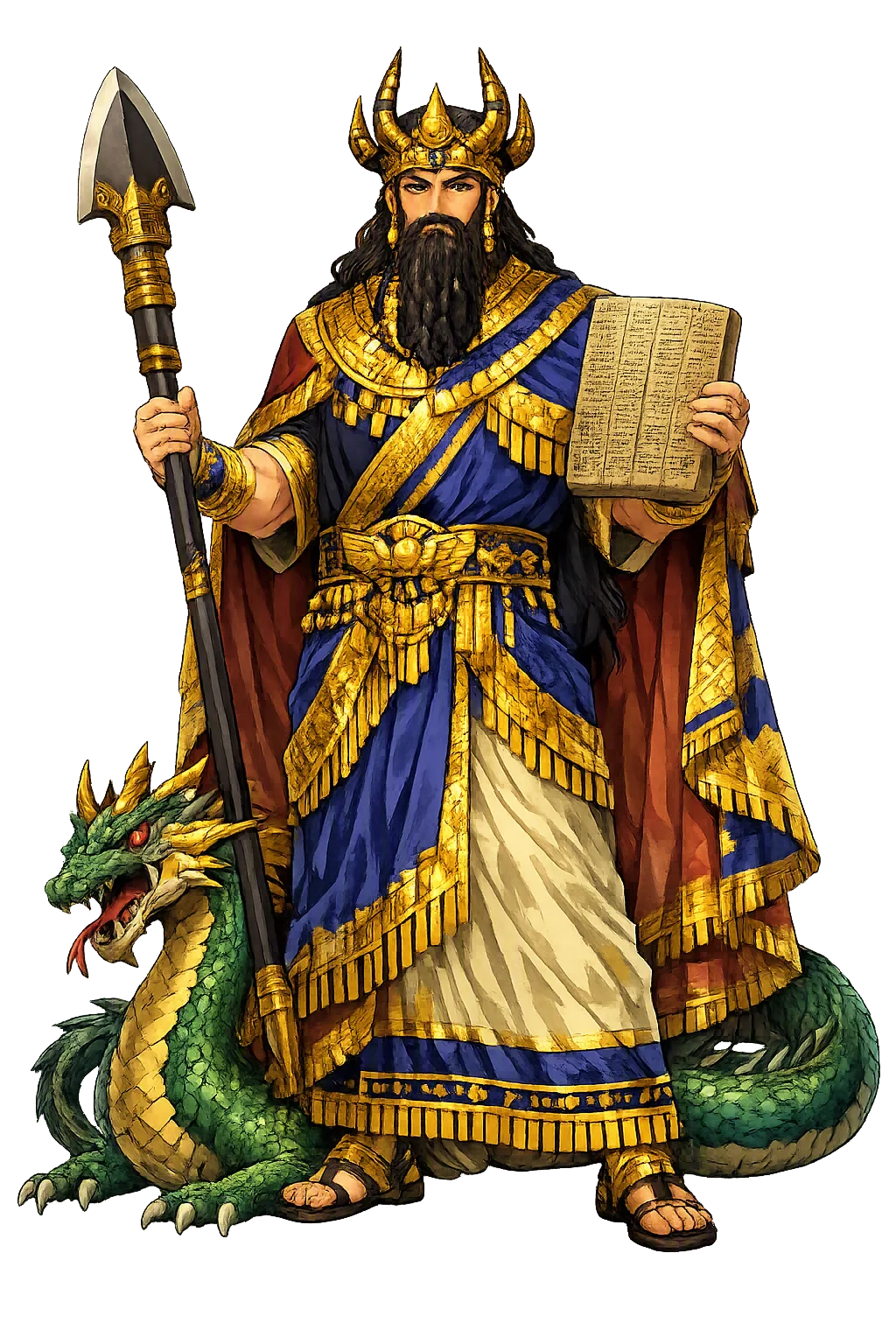
The Cult
Marduk's cult was the civic liturgy of Babylon itself. Its center was Esagila, the great temple at the foot of the ziggurat Etemenanki — 'House of the Foundation-Platform of Heaven and Earth' — whose precinct Koldewey's excavations recovered in 1899–1917. At the New Year festival, the akītu of the month Nisannu, the god's golden statue left Esagila in procession, passed down the Processional Way flanked by his glazed mušḫuššu dragons, and traveled to the festival house beyond the walls, where the Enuma Elish was recited and sovereignty renewed — the king's legitimacy re-staged annually before the assembly of the gods. The high priest, the šešgallu, administered the temple's great estates; the king himself ritually took the hand of Marduk. The cult's fragility is equally documented: Sennacherib sacked Babylon in 689 BCE and carried the statue to Assyria, and Esarhaddon reinstalled it in 668 with full ceremony — a theology in which the god's presence had a street address.