PuniCodex

Extended Lore

मार Māra

Etymology · Orthography · Cult · Iconography · Reception · Sources

Tier 1 Māra.com
Māra — Death, Temptation, Illusion
01

Quick Facts

Essential information about Māra, Death, Temptation, Illusion

Original Scriptमार
Unicode RestorationMāra
Reconstructed Pronunciation/ˈmɑː.rɐ/
PantheonBuddhist
DomainDeath, Temptation, Illusion
Meaning‘death, the tempter’, the personification of death and desire who assailed the Buddha under the Bodhi tree (from √mṛ ‘to die’), MW.
ClassificationTier 1
Primary DomainMāra.com
Sacred SymbolsThe tenfold army, The flower arrows, The shadow at the seat, The deva of the Vasavattī heaven
02

Etymology & Word Family

From original script to Unicode restoration

Original Script मार Māra — "‘death, the tempter’, the personification of death and desire who assailed the Buddha under the Bodhi tree (from √mṛ ‘to die’), MW."
Unicode Restoration Māra Restored stress, length, and script
Modern ASCII mara Plain-ASCII fallback

The name Māra carries the orthographic signature of the buddhist tradition: मार. Unicode restoration recovers what ASCII flattens.

03

Unicode Character Breakdown

Character-by-character philological analysis

CharacterUnicodeNameBlockPhonetic Role
MU+004DLatin Capital Letter MBasic LatinSame, capitalized
āU+0101Latin Small Letter A with MacronLatin Extended-AMacron: long /aː/
rU+0072Latin Small Letter RBasic LatinSame
aU+0061Latin Small Letter ABasic LatinSame

The Tier 1 classification reflects how much of the original phonology this restoration preserves — stress and vowel length for Greek names, distinctive letters and diacritics for every other tradition.

04

Cult & Worship

How the sacred was kept — rites, sanctuaries, remains

The Cult

No organized cult of Māra is attested in canonical Buddhism; he is the adversary to be overcome, not the object of devotional worship. His role is instead ritualized through commemoration of the Buddha's victory: pilgrims at Bodh Gayā re-enact the assault and the earth-witnessing gesture, and Vesākha festivals dramatize the triumph over temptation. In later Mahāyāna and Vajrayāna practice, Māra's forces are subsumed into the obstacles dismantled by protective deities and maṇḍala rites. The absence of temples or priesthoods is theologically precise — devotion would contradict the figure's function as personified death and desire.

In the Earth

The assault on the Bodhi seat is among the oldest narrative scenes in Buddhist art: Gandhāran schist panels of the first centuries CE — now in Peshawar, Lahore, and Western collections — show the demon host shrinking from the seated figure, and the Pāla-period steles of the eight great events put the Māra-vijaya at the center of the sacred biography. The bhūmisparśa image that records the victory became the default Buddha of mainland Southeast Asia; Thai, Lao, and Khmer temple murals added the earth-goddess Thoranī wringing the flood from her hair; and Bodh Gayā itself — the vajrāsana, the "diamond throne" beneath the descendant of the very tree — remains the one site on earth where his defeat has a postal address.

05

Iconography

How Māra was imaged across the ages

The Image

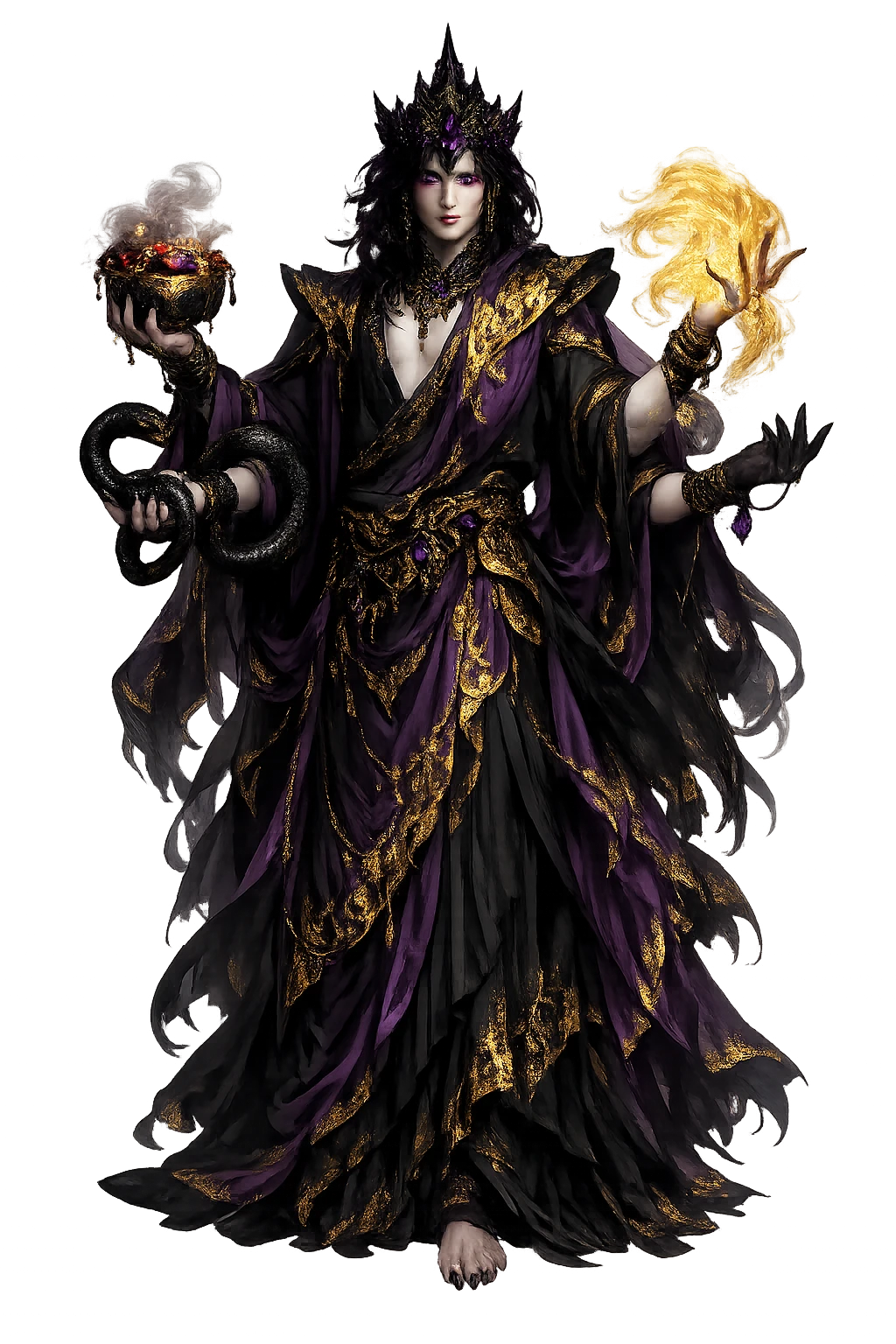
The assault on the Buddha under the Bodhi tree is one of the most durable scenes in Buddhist art. Gandhāran schist panels of the first centuries CE show the demon host shrinking from the seated Buddha, while Pāla-period steles of the eight great events place Māra's defeat at the center. The bhūmisparśa mudrā itself becomes the iconographic signature of victory. Māra may appear as a crowned demon king mounted on an elephant, accompanied by bow-wielding troops and seductive daughters, or simply as an army of grotesques hurled against the immovable sage.

06

Reception & Transformation

The name after its own age — transmission, translation, survival

Afterlives

Māra entered Buddhist narrative as a personification of death and desire rooted in the Vedic god of death, Yama, and the verb √mṛ, 'to die.' The Padhāna Sutta and Buddhacarita shaped the canonical temptation story, which was then carried across Asia in Pāli, Sanskrit, Chinese, and Tibetan versions. In medieval Japan, the Tengu and other demons absorbed aspects of Māra's disruptive role. Modern psychology and popular culture have reinterpreted him as a symbol of internal temptation, while Buddhist studies treat the Māra cycle as a literary crystallization of the obstacles to awakening.

Identifications Across Traditions

His oldest document is Vedic: Namuci, the asura of the Ṛgveda whom Indra slew with the foam of the waters, survived in the Pāli canon as Māra's other name — a borrowing as old as the texts themselves. Indian religion lent him Kāma's iconography, the sugarcane bow and flower arrows of the love-god, for desire was his first army. The scholastics then multiplied him: the Mahāyāna handbooks count four Māras — the aggregates, the defilements, death, and the god — turning the tempter into a complete theory of bondage. And the comparison with Satan, inevitable since the first missionaries, is inexact in the instructive way: Māra is no eternal adversary but a god of the highest desire-realm heaven, the Vasavattī, himself mortal, himself subject to the wheel — the ceiling of samsāra, not its enemy.

Modern Legacy

Māra gave Buddhism its psychology of the inner adversary: modern teachers from forest masters to mindfulness clinicians read the ten armies as the mind's own defenses against stillness, and "the Blessed One knows me" as the moment every compulsion loses power — when it is seen. His assault is the most-painted scene in Buddhist art, from Gandhāran panels to the murals of a thousand Thai wats, where the earth-goddess Thoranī wrings a flood from her hair to drown his host. And his name still does its original work: in the teaching languages of three continents, māra remains the common noun for what kills.

07

The Meditation

What Māra means — beyond the dictionary

Māra is the only adversary who is defeated exclusively by being identified. No sūtra has the Buddha out-argue him, out-pray him, or out-fight him: he is seen, and he is finished — "I see you, Māra" — and his own epitaph is "the Blessed One knows me." Every craving, every fear, every vanity keeps his treaty: unnamed, it commands; named, it kneels like Girimekhala. The tradition offers no other weapon because none has ever been needed.

08

Frequently Asked Questions

Common questions about Māra, Death, Temptation, Illusion, and Unicode restoration

01How do you pronounce Māra?

In reconstructed pronunciation, Māra is /ˈmɑː.rɐ/ — approximately MAH-ruh — the ā is long; two syllables, no ornament.

02What does Māra mean?

Māra means ‘death, the tempter’, the personification of death and desire who assailed the Buddha under the Bodhi tree (from √mṛ ‘to die’), MW. in the buddhist tradition.

03What are the symbols of Māra?

Māra is associated with The tenfold army (The taxonomy of temptation: every assault on resolve sorted by battalion), The flower arrows (Desire's camouflage: the shafts that arrive looking like gifts), The shadow at the seat (His claim on the Bodhi throne: the ego's final argument, "this place is mine"), The deva of the Vasavattī heaven (Māra is no devil from below but a god of the highest desire-realm — the ceiling of saṃsāra, himself subject to the wheel; his terror is that even the tempter ends).

04Why restore Māra in Unicode?

Plain ASCII mara strips the stress, length, and script that make the name specific. Unicode restoration returns the name to its original written dignity.

05What is the most important myth about Māra?

“The Ten Armies” — the Padhāna Sutta (Sn 3.2) story that anchors the mythology of Māra, told in full on the lore page.

09

Scholarly Sources

The philological foundations of this restoration

Every claim on this page is grounded in established scholarship. The orthographic restorations follow disciplinary convention. The etymological chain follows the best available reference works. This is not invention — it is resurrection through scholarship.

◈

Lexicography & Philology

  • MW
  • Buddhist texts
◎

Primary Texts

  • The Larger Sukhāvatī-vyūha Sūtra; the Smaller Sukhāvatī-vyūha Sūtra; the Amitāyurdhyāna Sūtra; the Lotus Sūtra.
◉

Archaeology & Art History

  • Material evidence — iconography, inscriptions, and temple archaeology — for Māra and related cults.
✦

Religious Studies

  • Padhāna Sutta (Sutta Nipāta 3.2)
  • Māradhītu Sutta (SN 4.25)
  • Mahāparinibbāna Sutta (DN 16)
  • Aśvaghoṣa, Buddhacarita, canto XIII
  • Nidānakathā (Jātaka commentary, introduction)
  • Monier-Williams, Sanskrit-English Dictionary s.v. māra
Return

The Surface Awaits

You have traced the name from its earliest attestation to its Unicode restoration. Now return to the myth. The story is where the name lives.

Back to Lore
Māra mascot