
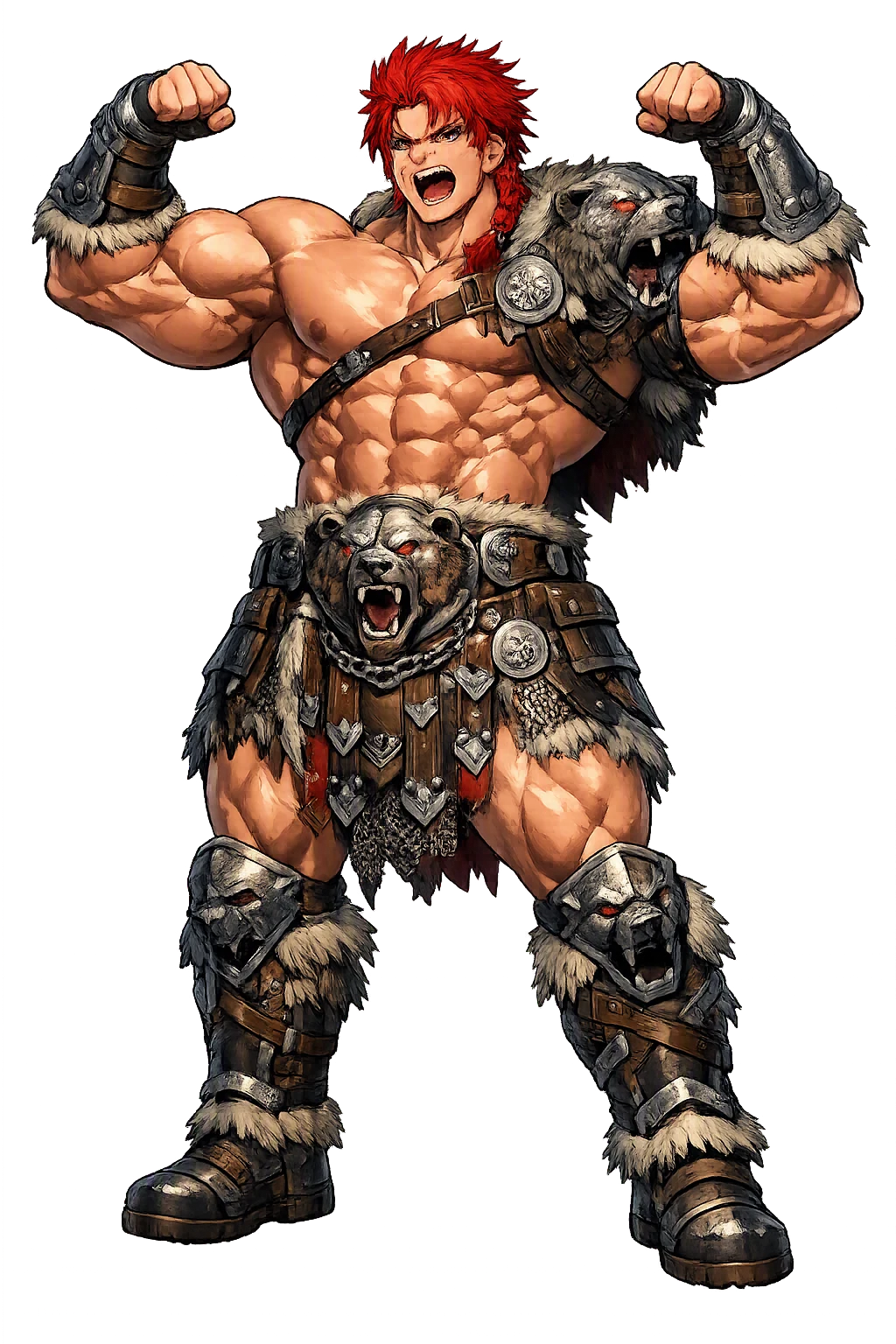
The name Magni and the world it opens
A name is a door. Magni opens onto an entire world: the domain of strength, son of thor, a Norse tradition, and centuries of storytelling, worship, and scholarship. This post walks through that world room by room — the name and its roots, the original script, the sound of it, the myths, the symbols, the sites, the afterlife across cultures — and ends at the newest room of all: a Unicode domain that makes the whole structure addressable. magni gets you to the same building, but only the restored form tells you why it was built.
At a Glance
- Restored name: Magni
- ASCII form: magni
- Meaning: "The strong one"
- Domain of influence: Strength, Son of Thor
- Pantheon: Norse
- Classification: Tier 2
- Original script: ᛘᛅᚴᚾᛁ (Younger Futhark)
Overview
Magni (magni) — Strength, Son of Thor · The Strong One — is the prodigy of the Norse corpus: the son of Þórr and the giantess Járnsaxa who, at three nights old, freed his father from under the fallen Hrungnir's leg when all the Æsir together could not move it.
Old Norse Magni is the common noun magn/megn 'strength, might' made personal: 'the strong one'. The sources know him in two scenes and a promise — the lifting at Grjótúnagarðar, the gift of the gold-maned horse Gullfaxi that Óðinn reproved, and the prophecy of Vafþrúðnismál that after Ragnarǫk Magni and his brother Móði shall have Mjǫllnir, the hammer of their fallen father.
PuniCodex restores the name as Magni — identical to the ASCII input, because normalized Old Norse writes no diacritic in this name. The mechanical rule therefore places it in Tier 2: nothing distinctive is lost in transit, a statement about orthography and never about the god. The temple is domain-less: the plain-ASCII magni.com is held by a third party outside the collection and watched for release; no form of the name is owned, and this temple claims none.
The Name
The name is attested in Old Norse as Magni (nominative; genitive Magna, as in Hárbarðsljóð 53: Magna faðir, 'Magni's father'). It is a transparent formation on the Old Norse common noun magn/megn 'strength, might, main' — hence 'the strong one' — from Proto-Germanic maginą 'strength, power'. The same root gives Old English mægen 'strength, force' (surviving in the phrase 'with might and main') and stands beside the verb magan 'be able', the ancestor of English may and might*.
Unlike Þórr or Baldr, the name ends in -i: it is a weak ja-stem formation, so it carries no nominative -r. The ASCII fallback magni therefore loses nothing at all — no diacritic, no distinctive letter, no ending — and the mechanical tier rule places the name in Tier 2 on a purely orthographic report.
The letter-by-letter transformation runs:
- m → M — Same, capitalized
- a → a — Same
- g → g — Same
- n → n — Same
- i → i — Same
No domain is held for this name. Because Magni is pure ASCII, magni.com was registered long ago in the ordinary way and is held by a third party outside the PuniCodex collection; the project watches it for release, and this temple claims no address it does not own.
The Original Script
The name is preserved in medieval Icelandic manuscripts in the Latin alphabet as Magni — Old Norse (North Germanic), attested 13th c. CE in the Codex Regius of the Poetic Edda and of the Prose Edda, recording material centuries older. Before the Latin bookhand, Old Norse names were carved in the younger futhark; the god's name is not attested in runes, but as a human name Magni does occur in the inscriptional record, so the runic rendering is more than a theoretical exercise.
The scholarly rendering proceeds step by step:
- The name is a ja-stem formation on magn/megn 'strength', ending in -i; there is no nominative -r as in Þórr or Baldr.
- Old Norse orthography writes no diacritic in this name: five plain Latin letters.
- In the Younger Futhark the name runs ᛘᛅᚴᚾᛁ (m-a-k-n-i); the ᚴ rune writes both k and g, and the short a and i need no qualification.
- The ASCII form magni therefore loses nothing — the restoration differs from the input only by the capital, which is why the mechanical rule places the name in Tier 2.
Pronunciation
The reconstructed pronunciation of the name is /ˈmɑɣ.ni/ — Old Norse Reconstruction.
Phoneme by phoneme:
- Ma- — Voiced bilabial nasal [m] and short open back [ɑ]; stress falls on the first syllable, as in every Old Norse word
- -gni — The medial g is the voiced velar fricative [ɣ], softer than the English stop; then dental nasal [n] and short close [i]
For the modern speaker, the closest approximation is: 'MAHG-ni' — a short open 'ah', the g softened between the vowels. Modern Icelandic, where the name is still living, hardens the g to [k]: 'MAHK-ni'.
Kindred and historical forms of the name:
- Old Norse — Magni, 'the strong one', son of Þórr and Járnsaxa
- Younger Futhark — ᛘᛅᚴᚾᛁ (m-a-k-n-i); the ᚴ rune writes g, and there is no nominative -r to carve
- Proto-Germanic — *maginą, 'strength, power'
- Modern Icelandic — Magni, unchanged in spelling for a thousand years
Magni is Tier 2 because the restoration preserves nothing the ASCII form loses — no diacritic, no distinctive letter, no lost ending. The strongest boy in the Edda has one of its plainest names.
Mythology
Magni's mythology is two scenes and a promise, told across both Eddas with unusual economy: the lifting of Hrungnir's leg, the gift of Gullfaxi, and the inheritance of the hammer after the end of the world.
The Duel at Grjótúnagarðar (Skáldskaparmál 17)
The background is one of Þórr's greatest fights. The stone-hearted giant Hrungnir rode his gold-maned stallion Gullfaxi into Ásgarðr on the heels of Óðinn's wager over whose horse was fastest; feasted, he drank and boasted he would carry off Valhǫll and kill every god but Freyja and Sif. Þórr was summoned, and the duel was set at Grjótúnagarðar, the stone courts. The giants built Hrungnir a companion of clay, Mǫkkurkálfi, nine leagues tall and with a mare's heart that failed him; Hrungnir himself came with heart, shield, and weapon all of stone. Þjálfi tricked him into standing on his shield, and Þórr hurled Mjǫllnir through the raised whetstone — a shard lodged in Þórr's own head — and Hrungnir crashed forward, his leg across Þórr's neck.
Three Nights Old (Skáldskaparmál 17)
Þjálfi could not lift the leg, and when all the Æsir had come, none of them could move it either. Then Magni arrived — the son of Þórr and the giantess Járnsaxa, and he was three nights old — and he flung the leg off his father, saying it was a shame he had not come sooner: he thought he could have struck the giant dead with his bare fist. Þórr gave him Gullfaxi, the horse Hrungnir had ridden; Óðinn said Þórr did wrong to give so fine a horse to the son of a giantess and not to his own father. It is the whole of Magni's boyhood in one scene — and the only childhood the Edda gives any of the gods.
The Hammer After (Vafþrúðnismál 51)
In the wisdom-contest, when Óðinn has wrung the fates of the gods from the giant Vafþrúðnir, one answer carries the brothers past the end of the world: 'Móði and Magni shall have Mjöllnir when Vingnir's fighting is done.' Vingnir is Þórr's own name. The prophecy does not flinch from what it costs — the father falls — and it states the inheritance plainly: the weapon passing whole into the hands of the sons.
The Sons at Íðavöllr (Gylfaginning 51, 53)
At Ragnarǫk Þórr meets Jǫrmungandr, the Midgard serpent, and strikes it dead — and walks nine paces before he falls to its venom. But the world does not end there: in Snorri's vision of the green earth after the fire, the survivors gather at Íðavöllr — Baldr and Höðr return from Hel, reconciled, and 'Þórr's sons Móði and Magni shall come there, and they shall have Mjöllnir.' The hammer survives the god.
The Father's Boast (Hárbarðsljóð 53)
The Poetic Edda's other notice of Magni is genealogical: trading insults with the disguised ferryman, Þórr names himself at full strength — 'I am Óðinn's son, Meili's brother, and Magni's father' (Magna faðir). Of all his titles, the name he closes with is his son's. Skáldskaparmál's kennings agree, styling Þórr 'father of Magni and Móði and Þrúðr'.
Symbols & Iconography
Magni's iconography is narrative rather than cultic — the corpus gives him no temple and no regalia of his own, but his two scenes fixed a small set of attributes:
- Hrungnir's leg — The stone giant's fallen limb across Þórr's neck: the weight no god could move, and the boy's single feat
- Gullfaxi — 'Gold-mane', Hrungnir's stallion, given to Magni as the prize of the lifting — the gift that drew Óðinn's reproof: so fine a horse should not go to a giantess's son
- Mjǫllnir — Not yet his: the hammer he inherits with Móði after Ragnarǫk, the one treasure of the old world promised to the new
- The whetstone shard — The fragment of Hrungnir's weapon lodged in Þórr's head at the same duel: the scar that remained when the leg was lifted
- Móði — 'Wrath', his brother, named with him in both inheritance passages: the Edda never lets the heirs be counted singly
Archaeology & Evidence
Magni is a purely textual figure: no runestone invokes him as a god, no votive deposit or place-name can be securely tied to his cult, and no picture stone has been convincingly read as the lifting of Hrungnir's leg. The material record keeps only his name's raw material: Magni occurs as an ordinary human personal name in Viking-Age runic inscriptions, built on the same magn 'strength' element that names the god.
The textual witnesses hang by the usual thin threads: Vafþrúðnismál, Hárbarðsljóð, and Vǫluspá in the Codex Regius (c. 1270); Skáldskaparmál in the Codex Regius of the Prose Edda and its sister manuscripts; and the giantess þulur of the Skáldskaparmál, which list his mother Járnsaxa among the troll-women.
Realm & Domain
Magni is catalogued under Strength, Son of Thor — and both halves of the domain are simply the content of his myth.
Strength
His name is the common noun for strength itself, and his one feat is pure strength: lifting Hrungnir's stone leg off his father when the assembled Æsir could not.
Son of Þórr
Skáldskaparmál's kennings for Þórr begin with his fatherhood — 'father of Magni and Móði and Þrúðr' — and Hárbarðsljóð closes Þórr's self-naming with the same fact: Magna faðir.
The Inheritance
Vafþrúðnismál 51 and Gylfaginning 53 agree: after Ragnarǫk, Magni and his brother Móði shall have Mjǫllnir — the hammer passing whole from the fallen father into the renewed world.
Youth
He does it all at three nights old: the Edda's only divine childhood, and the proof the tradition offers that strength answers to nature, not to age.
Across Cultures
Magni's scene belongs to one of the oldest hero-patterns in the Indo-European world: the prodigious infant. Greek tradition sets it at the beginning of Hēraklēs' life — the baby strangling the serpents in his cradle, told by Apollodorus and sung by Pindar in the first Nemean ode — and Irish tradition builds the boyhood deeds of Cú Chulainn on the same armature, the macgnímrada of the Táin, where a child performs the feats of grown champions. The North compressed the whole pattern into a single sentence: three nights old, and already the strongest person in the story. The comparison is one of motif, not borrowing — Simek and Lindow treat Magni as a native figure of the Þórr-complex, and no line of transmission is needed.
His name, meanwhile, is ordinary Germanic vocabulary: *maginą, 'strength', an element that built personal names across the North — so the strongest boy in the Edda wears the plainest possible label. Within the corpus, his closest kin are Móði, the brother named beside him in both inheritance passages, and Þórr, the father whose deed he completes and whose weapon he carries out of the fire.
Cultural Legacy
Magni's afterlife ran quiet for centuries: the Icelandic given name Magni never died out, and Victorian mythographies kept the Hrungnir duel in circulation as one of Þórr's set-pieces — the Kearys' The Heroes of Asgard (1857) retold it for generations of children.
The twenty-first century put the brothers back on stage. Marvel Comics introduced Magni Thorson, a future son of Thor, in the 'Reigning' storyline of Thor in the early 2000s; and Santa Monica Studio's God of War (2018) cast Magni and Modi as their father's enforcers, carrying the pair to an audience far larger than the Edda's. Modern Heathenry keeps him among the sons of the Æsir honored for the survival of the world after Ragnarǫk — the generation for whom the hammer is kept.
The Scholarly Record
The account of Magni given in this edition rests on the witnesses and reference works listed below. The Eddas supply the narrative and the prophecy; the lexica secure the name's etymology; the handbooks arbitrate the motif-parallel with the prodigious infants of other traditions.
- Snorri Sturluson, Edda, Skáldskaparmál 17 (the Hrungnir duel; Magni, three nights old, lifts the leg; the gift of Gullfaxi), ed. and trans. Anthony Faulkes (London: Everyman, 1987).
- Snorri Sturluson, Edda, Gylfaginning 51 (Þórr and Jǫrmungandr) and 53 (the renewed world; the sons at Íðavöllr), trans. Faulkes (1987).
- Snorri Sturluson, Edda, Skáldskaparmál, kennings for Þórr ('father of Magni and Móði and Þrúðr') and the giantess þulur (Járnsaxa), trans. Faulkes (1987).
- The Poetic Edda, trans. Carolyne Larrington, 2nd ed. (Oxford: Oxford University Press, 2014): Vafþrúðnismál 51 (the inheritance of Mjöllnir); Hárbarðsljóð 53 (Magna faðir); Vǫluspá 56 (Þórr's death).
- Cleasby, Richard, and Guðbrandur Vigfússon, An Icelandic-English Dictionary, 2nd ed. (Oxford: Clarendon Press, 1957), s.v. magn, Magni.
- Zoëga, Geir T., A Concise Dictionary of Old Icelandic (Oxford: Clarendon Press, 1910), s.v. Magni.
- de Vries, Jan, Altnordisches etymologisches Wörterbuch, 2nd ed. (Leiden: Brill, 1962), s.v. Magni, magn.
- Gordon, E. V., An Introduction to Old Norse, 2nd ed. rev. A. R. Taylor (Oxford: Clarendon Press, 1957).
- Simek, Rudolf, Dictionary of Northern Mythology, trans. Angela Hall (Cambridge: D. S. Brewer, 1993), s.v. Magni, Hrungnir, Móði.
- Lindow, John, Norse Mythology: A Guide to the Gods, Heroes, Rituals, and Beliefs (Oxford: Oxford University Press, 2001), s.v. Magni, Móði, Hrungnir.
- Orchard, Andy, Dictionary of Norse Myth and Legend (London: Cassell, 1997), s.v. Magni.
- Peterson, Lena, Nordiskt runnamnslexikon, 5th ed. (Uppsala: Institutet för språk och folkminnen, 2007), s.v. Magni.
- Apollodorus, The Library 2.4.8, trans. J. G. Frazer, Loeb Classical Library (Cambridge, MA: Harvard University Press, 1921); Pindar, Nemean 1; Táin Bó Cúailnge, macgnímrada.
- Keary, Annie, and Eliza Keary, The Heroes of Asgard: Tales from Scandinavian Mythology (London: Macmillan, 1857).
A Meditation
Magni is the Edda's answer to the question every parent eventually asks: will anyone be strong enough when I cannot stand up? The myth answers it twice. Once at Grjótúnagarðar, where the whole company of the gods heaves at a dead giant's leg and fails, and a three-night-old boy walks up and does it — strength, the story insists, is not a function of age or rank, and help can arrive from the person everyone overlooked.
And once at the end of the world, where the father kills the serpent, walks nine paces, and falls — and the hammer is not buried with him. Móði and Magni carry Mjǫllnir into the green world. The Edda does not promise that the strong live forever. It promises that strength, like the hammer, is inheritable.
The Unicode Restoration
Magni is classified as Tier 2: the restoration needs no distinctive letters or diacritics its ASCII form would lose. The ASCII fallback magni still resolves everywhere, but it is the restored form that carries the name's full information. That is the whole thesis of this temple: the marks are the message.
Why This Restoration Matters
A door only matters if people walk through it. The temple is open, and everything behind it — the myths, the scholarship, the canvas, the patrons — hangs on the restored spelling. The PuniCodex project bets that the web will make room for names as they were actually written, and Magni is one of its standing proofs. Visit, share, cite, type it yourself: each use is a small rehearsal for a web where no name has to hide its marks to be found.
Explore Further
This post is one doorway into the temple. The home page carries the full character breakdown and the ambient canvas; the lore page tells the myths in long form; the Scholarly Edition preserves the sources, pronunciation data, and revision history; and the patron wall supports the restoration directly. For the wider map, browse the Lexicon, explore the Pantheon, or return to the PuniCodex blog.
Related Names
Sources
The full scholarly apparatus — every citation, revision, and review — lives in the Scholarly Edition. Key references for this post:
- Snorri Sturluson, Edda, Skáldskaparmál 17 (the Hrungnir duel; Magni lifts the leg), ed. and trans. Anthony Faulkes (London: Everyman, 1987).
- Vafþrúðnismál 51; Snorri Sturluson, Edda, Gylfaginning 53, trans. Carolyne Larrington, The Poetic Edda, 2nd ed. (Oxford: Oxford University Press, 2014), and Faulkes (1987).
- Cleasby, Richard, and Guðbrandur Vigfússon, An Icelandic-English Dictionary, 2nd ed. (Oxford: Clarendon Press, 1957), s.v. Magni, magn.
- Cleasby, Richard, and Guðbrandur Vigfússon, An Icelandic-English Dictionary, 2nd ed. (Oxford: Clarendon Press, 1957), s.v. magn, Magni.
- Lexicon authorities for this entry: Poetic Edda, Cleasby-Vigfusson.