PuniCodex

Extended Lore

Magni — The Deeper Record

Etymology · Orthography · Cult · Iconography · Reception · Sources

ASCII-equivalent form Magni
Magni — Strength, Son of Thor, Heir of Mjölnir
01

At a Glance

Magni — every fact links to its home

PantheonNorse
DomainStrength, Son of Thor, Heir of Mjölnir
Original Scriptᛘᛅᚴᚾᛁ →
Primary Sources3 cited →
02

Etymology & Word Family

From original script to canonical restoration — the full etymology page →

Original Script ᛘᛅᚴᚾᛁ Magni — "The strong one"
Canonical Restoration Magni Canonical scholarly spelling — ASCII-identical
Modern ASCII magni Plain-ASCII fallback

The name Magni reaches the modern world through scholarly transliteration of the norse tradition. Because the conventional spelling uses only Latin letters, its canonical and ASCII forms coincide — the tradition it carries is in the name itself, not in diacritics.

03

Character breakdown

Character-by-character philological analysis

CharacterUnicodeNameBlockPhonetic Role
MU+004DLatin Capital Letter MBasic LatinSame, capitalized
aU+0061Latin Small Letter ABasic LatinSame
gU+0067Latin Small Letter GBasic LatinSame
nU+006ELatin Small Letter NBasic LatinSame
iU+0069Latin Small Letter IBasic LatinSame

This restoration reflects fidelity to the attested tradition, not recovered diacritics: every character of Magni already survives in ASCII. What the restoration preserves is the canonical spelling itself — the form scholarship standardised.

04

Cult & Worship

How the sacred was kept — rites, sanctuaries, remains

The Cult

No one in the Viking Age is known to have prayed to Magni. The sources give him no altar, no festival, no priesthood, and no cult place: no runestone invokes him as a god, no place-name preserves his name, and the ritual calendar of the Norse world never mentions him. What the record does hold is his name as ordinary human property — Magni occurs as a personal name in Viking-Age runic inscriptions, built on the common noun magn, 'strength' — so that the boy who lifts Hrungnir's leg may wear a label his world gave to ordinary sons. His divine profile is wholly absorbed into the Þórr-complex: he is honoured, if at all, wherever his father's cult stood. Modern Heathen groups sometimes name him among the gods who carry the world past Ragnarǫk — a revival gesture, not an attested rite.

In the Earth

Magni is a purely textual figure: no runestone invokes him as a god, no votive deposit or place-name can be securely tied to his cult, and no picture stone has been convincingly read as the lifting of Hrungnir's leg. The material record keeps only his name's raw material: Magni occurs as an ordinary human personal name in Viking-Age runic inscriptions (collected in Peterson's Nordiskt runnamnslexikon), built on the same magn 'strength' element that names the god. The textual witnesses hang by the usual thin threads: Vafþrúðnismál, Hárbarðsljóð, and Vǫluspá in the Codex Regius (c. 1270); Skáldskaparmál in the Codex Regius of the Prose Edda and its sister manuscripts; and the giantess þulur of the Skáldskaparmál, which list his mother Járnsaxa among the troll-women.

05

Iconography

How Magni was imaged across the ages

The Image

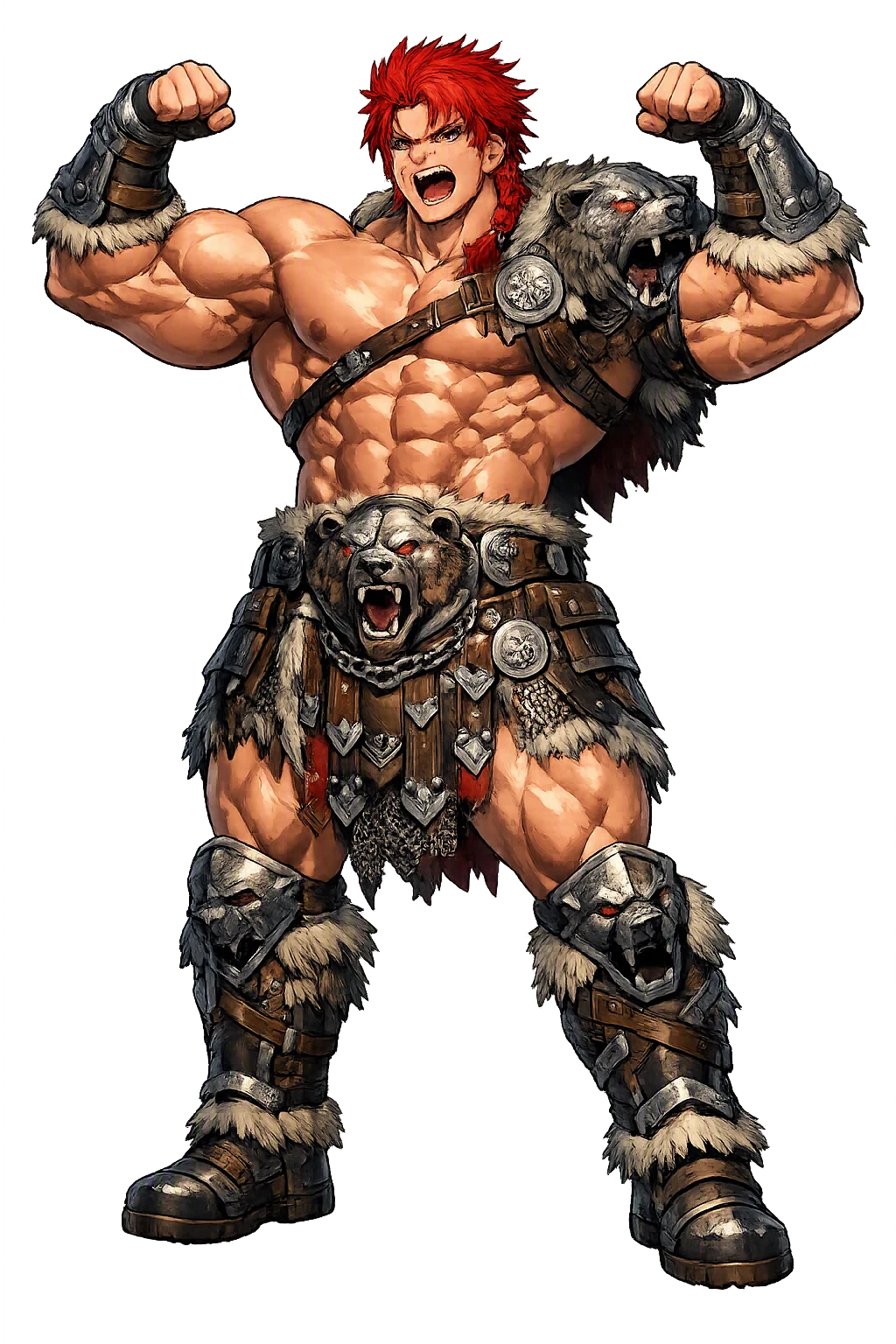
No Viking-Age image of Magni has ever been securely identified, and none should be expected. The monuments that image the Þórr-complex — the Altuna runestone in Uppland and the Ardre VIII picture stone on Gotland — show the thunderer fishing for the Midgard serpent, and the companion holding the line is the giant Hymir, not the son. Magni's canonical attributes are therefore textual: a dead giant's leg, a gold-maned stallion, and the hammer he is promised after the fire. The visual tradition is modern: the illustrated mythographies of the Romantic and Victorian centuries fixed the standard scene, a child straining under a stone limb while grown gods stand helpless round him. That picture, repeated through Edwardian children's books, is the whole of his iconography; nothing earlier survives.

06

Reception & Transformation

The name after its own age — transmission, translation, survival

Afterlives

Magni's transmission is the transmission of the Edda itself. He rides in the Codex Regius of the Poetic Edda (c. 1270) and in Snorri's Prose Edda, and he passed into print with the corpus: Peder Resen's editio princeps (1665) carried Vafþrúðnismál's promise of the hammer to the sons into the Republic of Letters. The eighteenth century made Norse myth European property — Mallet's history of Denmark (1755), translated as Northern Antiquities by Bishop Percy in 1770 — and the nineteenth built the scholarly framework Magni still inhabits: Jacob Grimm set the sons of the thunder-god within comparative mythology, and Cleasby and Vigfusson's great Icelandic dictionary (1874) anchored his name philologically to the common noun magn, 'strength'. The critical editions of the twentieth century — Neckel and Kuhn's Codex Regius text (1914), Ursula Dronke's Mythological Poems (1997) with Vafþrúðnismál — fixed the exact wording of the inheritance, and the modern handbook tradition keeps the three-night-old prodigy before scholarship.

Identifications Across Traditions

Magni's scene belongs to one of the oldest hero-patterns in the Indo-European world: the prodigious infant. Greek tradition sets it at the beginning of Heraklês' life — the baby strangling the serpents in his cradle, sung by Pindar in the first Nemean ode and told by Apollodorus (Library 2.4.8) — and Irish tradition builds the boyhood deeds of Cú Chulainn on the same armature, the macgnímrada of the Táin, where a child performs the feats of grown champions. The North compressed the whole pattern into a single sentence: three nights old, and already the strongest person in the story. The comparison is one of motif, not borrowing — Simek and Lindow treat Magni as a native figure of the Þórr-complex, and no line of transmission is needed. His name, meanwhile, is ordinary Germanic vocabulary: *maginą, 'strength', an element that built personal names all over the North — so that the strongest boy in the Edda wears the plainest possible label: 'the strong one'.

Modern Legacy

Magni's afterlife ran quiet for centuries: the Icelandic given name Magni never died out, and Victorian mythographies kept the Hrungnir duel in circulation as one of Þórr's set-pieces — the Kearys' Heroes of Asgard (1857) retold it for generations of children. The twenty-first century put the brothers back on stage. Marvel Comics introduced Magni Thorson, a future son of Thor, in the 'Reigning' storyline of Thor in the early 2000s; and Santa Monica Studio's God of War (2018) cast Magni and Modi as their father's enforcers, carrying the pair to an audience far larger than the Edda's. Modern Heathenry keeps him among the sons of the Æsir honored for the survival of the world after Ragnarǫk — the generation for whom the hammer is kept.

07

The Original Script Note

What the written record preserves — and what it does not

Original Script

The normalized Old Norse form is Magni — already plain ASCII, with no diacritic or distinctive letter for the restoration to recover; in the Younger Futhark the name would have been carved ᛘᛅᚴᚾᛁ (m-a-k-n-i, the ᚴ rune writing g; the name ends in the ja-stem -i, so there is no nominative -r as there is in Baldr's ᛒᛅᛚᛏᛦ). Because the name is pure ASCII, its domain was registered long ago in the ordinary way: magni.com is held by a third party outside the PuniCodex collection and is watched for release — no form of the name is currently owned, and this temple claims none.

08

The Meditation

What Magni means — beyond the dictionary

Magni is the Edda's answer to the question every parent eventually asks: will anyone be strong enough when I cannot stand up? The myth answers it twice. Once at Grjótúnagarðar, where the whole company of the gods heaves at a dead giant's leg and fails, and a three-night-old boy walks up and does it — strength, the story insists, is not a function of age or rank, and help can arrive from the person everyone overlooked. And once at the end of the world, where the father kills the serpent, walks nine paces, and falls — and the hammer is not buried with him. Móði and Magni carry Mjǫllnir into the green world. The Edda does not promise that the strong live forever. It promises that strength, like the hammer, is inheritable.

09

Frequently Asked Questions

Deep-dives into the cult, attestation, reception, and sources of Magni

01How do we know how Magni was worshipped?

Magni is a purely textual figure: no runestone invokes him as a god, no votive deposit or place-name can be securely tied to his cult, and no picture stone has been convincingly read as the lifting of Hrungnir's leg. The full cult record →

02Where do the earliest attestations of Magni come from?

The record rests on Poetic Edda: Vafþrúðnismál 51 ('Móði and Magni shall have Mjǫllnir'), Hárbarðsljóð 53 (Þórr as 'Magni's father'), Vǫluspá 56 (Þórr's death), Snorri Sturluson, Prose Edda: Skáldskaparmál 17 (the Hrungnir duel; Magni, three nights old, lifts the leg; Gullfaxi) and Gylfaginning 51, 53 (Þórr's fall; the sons inherit Mjǫllnir at Íðavöllr), Cleasby–Vigfusson, An Icelandic-English Dictionary, s.v. magn, magni, Magni, among 5 cited works. The full source apparatus →

03How did later traditions reinterpret Magni?

Magni's transmission is the transmission of the Edda itself. Reception & transformation →

04What do the surviving images of Magni actually show?

No Viking-Age image of Magni has ever been securely identified, and none should be expected. The iconography →

05What does the written record of Magni actually preserve?

The normalized Old Norse form is Magni — already plain ASCII, with no diacritic or distinctive letter for the restoration to recover; in the Younger Futhark the name would have been carved ᛘᛅᚴᚾᛁ (m-a-k-n-i, the ᚴ rune writing g; the name ends in the ja-stem -i, so there is no nominative -r as there is in Baldr's ᛒᛅᛚᛏᛦ). The Original Script note →

10

Scholarly Sources

The philological foundations of the record

Every claim on this page is grounded in established scholarship. The orthographic restorations follow disciplinary convention. The etymological chain follows the best available reference works. This is not invention — it is resurrection through scholarship.

◈

Lexicography & Philology

  • Cleasby-Vigfusson
◎

Primary Texts

  • Poetic Edda
  • Poetic Edda: Vafþrúðnismál 51 ('Móði and Magni shall have Mjǫllnir'), Hárbarðsljóð 53 (Þórr as 'Magni's father'), Vǫluspá 56 (Þórr's death)
  • Snorri Sturluson, Prose Edda: Skáldskaparmál 17 (the Hrungnir duel; Magni, three nights old, lifts the leg; Gullfaxi) and Gylfaginning 51, 53 (Þórr's fall; the sons inherit Mjǫllnir at Íðavöllr)
◉

Archaeology & Art History

  • Foote, P., & Wilson, D. M. The Viking Achievement; Graham-Campbell, J. Viking Art.
✦

Religious Studies

  • Cleasby–Vigfusson, An Icelandic-English Dictionary, s.v. magn, magni, Magni
  • Zoëga, A Concise Dictionary of Old Icelandic, s.v. Magni
  • Simek, Dictionary of Northern Mythology; Orchard, Dictionary of Norse Myth and Legend; Lindow, Norse Mythology: A Guide — s.v. Magni, Móði, Hrungnir
Return

The Surface Awaits

You have traced the name from its earliest attestation to its canonical restoration. Now return to the myth. The story is where the name lives.

Back to Lore
Magni mascot