PuniCodex

Extended Lore

Macha

Etymology · Phonology · Orthography · Cultural Legacy · Primary Sources

Tier 2 Macha
Macha — War, Sovereignty, Horses
01

Quick Facts

Essential information about Macha, War, Sovereignty, Horses

Scholarly TransliterationMacha
Unicode RestorationMacha
Reconstructed Pronunciation/ˈma.xa/
PantheonCeltic
DomainWar, Sovereignty, Horses
MeaningField, plain
ClassificationTier 2
Primary DomainMacha
Sacred SymbolsThe king's horses, The twins, The debility, The brooch of the queen, Macha's mast
02

Etymology & Word Family

From original script to Unicode restoration

Scholarly Transliteration Macha Macha — "Field, plain"
Unicode Restoration Macha Restored stress, length, and script
Modern ASCII macha Plain-ASCII fallback

Macha is Tier 2 by the mechanical rule: the normalized Old Irish form is already plain ASCII — there is no diacritic and no distinctive letter for the ASCII alphabet to lose. The capital alone distinguishes the temple form from the input; the goddess's standing in the tradition is beside the point.

03

Unicode Character Breakdown

Character-by-character philological analysis

CharacterUnicodeNameBlockPhonetic Role
MU+004DLatin Capital Letter MBasic LatinSame, capitalized
aU+0061Latin Small Letter ABasic LatinSame
cU+0063Latin Small Letter CBasic LatinSame
hU+0068Latin Small Letter HBasic LatinSame
aU+0061Latin Small Letter ABasic LatinSame

The Tier 2 classification reflects how much of the original phonology this restoration preserves — stress and vowel length for Greek names, distinctive letters and diacritics for every other tradition.

04

Cultural Significance

From ancient cult to modern Unicode

Ancient Domain

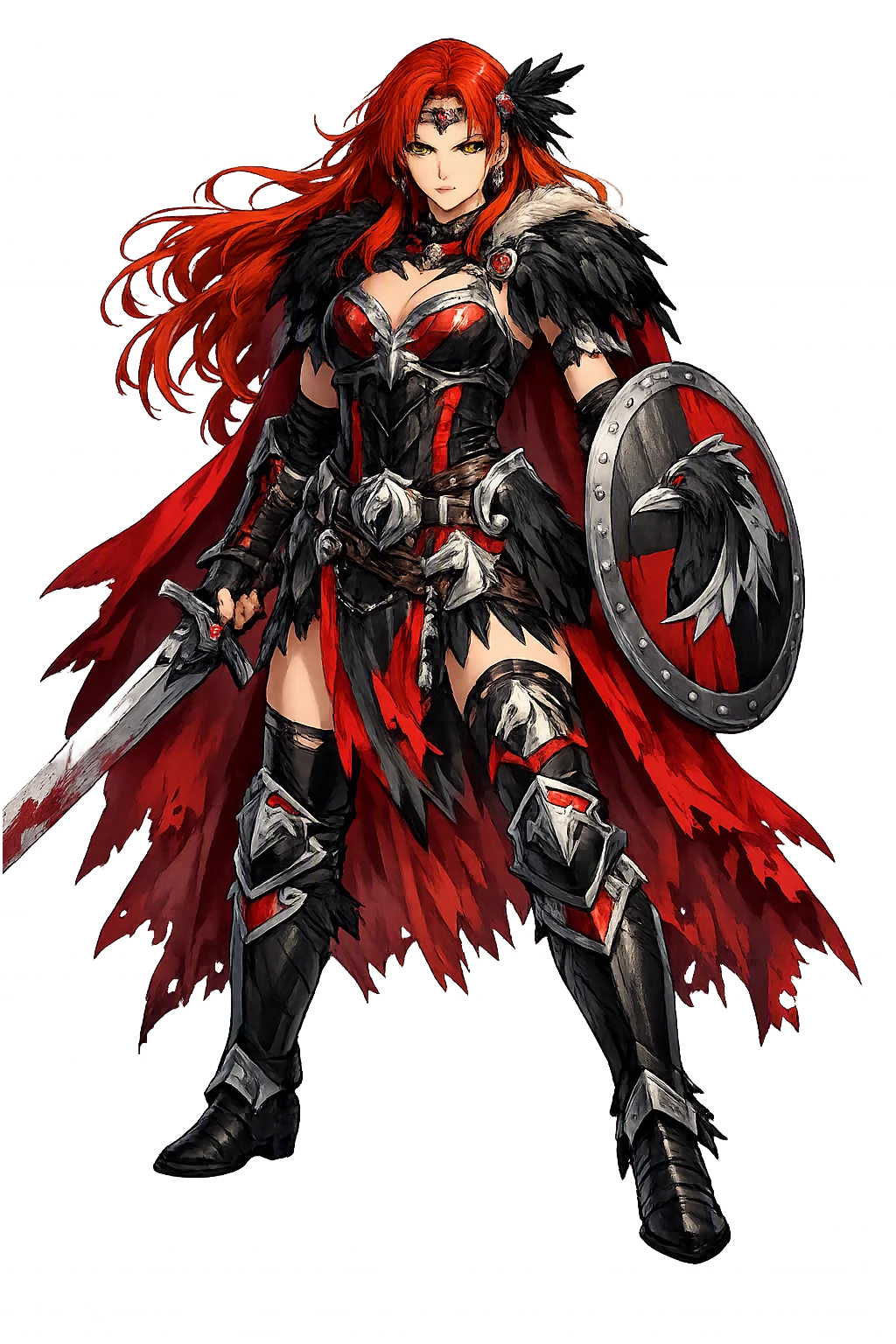
Macha is the sovereignty figure of the Ulster Cycle: the otherworld woman who came to the door of the widower Cruinniuc and made his house prosper, and who — when her husband boasted at the assembly that she could outrun the king's horses — was brought out pregnant to the racetrack, outran the horses of Conchobar mac Nessa at the finish, gave birth to twins on the field, and laid on the men of Ulster the curse that shapes the whole Táin: in their hour of greatest need, the pangs of childbirth.

Macha in Later Traditions

Macha's clearest cross-border witness is Welsh, and it is the standard comparison of the handbooks: [[rhiannon|Rhiannon]] of the First Branch of the Mabinogi, the otherworld woman on the horse no rider can overtake, who — falsely accused and shamed — is sentenced to sit at the horse-block and offer to carry guests on her back like a beast of burden. Mac Cana and Sjoestedt both set the two figures side by side: the sovereignty woman bound to horses, wronged by the men of the court, and made to bear an equine humiliation. Behind both stands the Gaulish horse-goddess Epona, whose altars run from Britain to the Danube — the one Celtic deity with a festival in the Roman calendar — the continental anchor of the comparison, cited as type, never as identity. Within the Irish corpus her structural kin are [[medb|Medb]], the sovereignty queen whose favor makes kings, and her own sisters of war, [[badb|Badb]] and [[morrigan|the Morrígan]], with whom the Lebor Gabála shares a mother.

Modern Legacy

Macha rode the Celtic revival as the first wrong of the Ulster Cycle. Lady Gregory's Cuchulain of Muirthemne (1902) opens the epic with her — 'The Curse of Macha' — and made the race and the debility the gateway through which two generations of English readers entered the Táin. Thomas Kinsella's The Táin (1969) kept the fore-tale at the head of the epic, and the twinned figures of the wronged woman and the war-goddess have made Macha a standing subject in the study of Celtic sovereignty myth. On the ground, her names never went anywhere: Emain Macha is Navan Fort, one of the royal sites of Ireland and the ceremonial capital of Ulster, and Ard Macha — Armagh, the ecclesiastical primacy of Ireland, founded by Patrick in the fifth century — still carries her name in every address in the county. Modern scholarship from Mac Cana to Koch treats the race as the type-case of the Irish sovereignty goddess, and contemporary Celtic pagan practice honors her among the three of war.

Unicode Restoration as Cultural Act

Restoring Macha in a domain name is more than orthographic accuracy. It is a statement that the internet should recognize the full range of human writing — not only the ASCII keyboard.

05

Frequently Asked Questions

Common questions about Macha, War, Sovereignty, Horses, and Unicode restoration

01How do you pronounce Macha?

In reconstructed pronunciation, Macha is /ˈma.xa/ — approximately 'MAHKH-ah' — two short open a's, stress on the first, and let the ch rasp like the end of Scottish 'loch'. Modern Irish keeps the sound: Eamhain Mhacha is said with the same fricative..

02What does Macha mean?

Macha means Field, plain in the celtic tradition.

03What are the symbols of Macha?

Macha is associated with The king's horses (Conchobar's unmatched chariot-pair — the boast that forced the race and the measure she outran), The twins (Emain, the boy and girl born on the racetrack — the naming of Ulster's royal seat and the price of its pride), The debility (Five days and four nights of a woman's labor-pangs, laid on a warrior people for nine generations — the curse that left Cú Chulainn to fight the Táin alone), The brooch of the queen (Macha Mongrúad marked the circuit of Emain with her eo-muin, her neck-brooch — sovereignty drawing the boundary of its own seat), Macha's mast (Mesrad Machae, 'Macha's crop' — the Táin's kenning for the severed heads of the slain, the war-goddess's harvest).

04Why restore Macha in Unicode?

Plain ASCII macha strips the stress, length, and script that make the name specific. Unicode restoration returns the name to its original written dignity.

05What is the most important myth about Macha?

Cruinniuc mac Agnomain was a rich farmer of the Ulaid, a widower with sons, and one day a woman he had never seen walked into his house, set about the work of it without a word, and lay with him that night. She stayed, and under her hand everything prospered — the house, the cattle, the table — and she told him the one condition of their life together: he must never speak of her, never boast of her. It is the old compact of the otherworld wife, and it held as long as he kept his mouth shut.The tale that tells this — Noínden Ulad, 'The Debility of the Ulaid', one of the fore-tales of the Táin — is a sovereignty story before it is anything else: the land's own woman comes to the man of the land, and her condition is silence about the source of the plenty. Cruinniuc kept it until the day of the great assembly of the Ulaid, when the talk turned to the king's horses and there was nothing in the world faster.

06

Scholarly Sources

The philological foundations of this restoration

Every claim on this page is grounded in established scholarship. The orthographic restorations follow disciplinary convention. The etymological chain follows the best available reference works. This is not invention — it is resurrection through scholarship.

Lexicography & Philology

  • Táin Bó Cúailnge
  • MacKillop

Primary Texts

  • The Immram Brain (Voyage of Bran); Tochmarc Étaíne; Cóir Anmann; medieval Irish saga literature.

Archaeology & Art History

  • Lynn, Chris, Navan Fort: Archaeology and Myth (2003) — the excavations and the dendrochronology of the great timber structure
  • Macha is a textual goddess: no ogham stone names her, no votive inscription invokes her, and Irish paganism generally left literature rather than dedications. Her manuscript witnesses are exact: Noínden Ulad survives in the Yellow Book of Lecan and its sister codices (Hull's edition in Celtica 8 rests on them), the Táin in its oldest recension in Lebor na hUidre, the Book of the Dun Cow (c. 1100), and the twelfth-century Book of Leinster, and the Lebor Gabála in the Book of Leinster and its companions. Her mythic address, by contrast, is one of the most instructive monuments in Atlantic Europe: Emain Macha is Navan Fort, Co. Armagh, where Waterman's excavations (1961–71) uncovered beneath the mound a forty-metre timber structure — a ring of great posts around a central oak — that dendrochronology dates to 95 BC, built in a single episode, filled with a stone cairn, burned, and buried under the mound still visible today. A building raised to be unmade is a ritual statement, not a residence; the standing interpretation, Lynn's, is a one-time ceremonial monument at the very seat the Ulster Cycle calls Macha's. No artifact names her; the identification of the fort with Emain Macha rests on the early medieval record, beginning with the annals and the Book of Armagh.

Religious Studies

  • Noínden Ulad (The Debility of the Ulaidians), ed. Vernam Hull, Celtica 8 (1968) — the woman at Cruinniuc's door; the race, the twins, and the curse
  • Táin Bó Cúailnge, Recension 1, ed. and trans. Cecile O'Rahilly (Dublin Institute for Advanced Studies, 1976) — the ces noínden in the epic; mesrad Machae, 'Macha's mast'
  • Lebor Gabála Érenn, ed. and trans. R. A. S. Macalister (Irish Texts Society, 1938–56) — Macha wife of Nemed; Macha Mongrúad daughter of Áed Rúad; the three daughters of Ernmas
  • The dindsenchas of Emain Macha — the twinned etymologies: Macha's twins and Macha's brooch
  • Pwyll Pendeuic Dyfed (First Branch of the Mabinogi), ed. Ifor Williams, Pedeir Keinc y Mabinogi (1930); trans. Sioned Davies, The Mabinogion (Oxford, 2007) — Rhiannon and the horse-block penance, for comparison
  • Dictionary of the Irish Language (Dublin: Royal Irish Academy; electronic ed. eDIL), s.v. Macha, emain, ces noínden
  • Matasović, Etymological Dictionary of Proto-Celtic, s.v. *magos 'plain, field' — the proposed root of the name
  • Mac Cana, Celtic Mythology — Macha and the sovereignty complex; the Rhiannon–Epona comparison
  • Sjoestedt, Gods and Heroes of the Celts — the Irish sovereignty goddess and the equine figures
  • Koch, ed., Celtic Culture: A Historical Encyclopedia, s.v. Macha, Emain Macha, Epona
  • Gregory, Lady Augusta, Cuchulain of Muirthemne (1902) — 'The Curse of Macha', the revival's gateway to the Táin
Return

The Surface Awaits

You have traced the name from its earliest attestation to its Unicode restoration. Now return to the myth. The story is where the name lives.

Back to Lore
Macha mascot