PuniCodex

Extended Lore

ᛚᚢᚴᛁ Logi

Etymology · Phonology · Orthography · Cultural Legacy · Primary Sources

Tier 2 Logi
Logi — Fire, Flame, Giant
01

Quick Facts

Essential information about Logi, Fire, Flame, Giant

Original Scriptᛚᚢᚴᛁ
Unicode RestorationLogi
Reconstructed Pronunciation/ˈlo.ɣi/
PantheonNorse
DomainFire, Flame, Giant
MeaningFlame
ClassificationTier 2
Primary DomainLogi
Sacred SymbolsThe feeding-trough, The eaten bones, The flame (logi), The brothers Hlér and Kári
02

Etymology & Word Family

From original script to Unicode restoration

Original Script ᛚᚢᚴᛁ Logi — "Flame"
Unicode Restoration Logi Restored stress, length, and script
Modern ASCII logi Plain-ASCII fallback

Old Norse Logi is a common noun made person: logi, m., 'flame, blaze', beside log, n., 'flame', and the verb loga, 'to burn with a flame'. The restoration and the ASCII form are the same word — the manuscripts write four plain letters and the ASCII alphabet loses nothing — so Logi is Tier 2 by the mechanical rule. The etymology is transparent in the North; the old scholarly difficulty was never the word's meaning but its neighbor: nineteenth-century philology equated the god Loki with logi, 'flame', on the strength of the similar sound, an equation now abandoned — the vowels differ in kind, the figures never merge in the texts, and Gylfaginning itself stages Logi as the opponent who out-eats Loki at Útgarðr. Attestation and lexicography follow Cleasby & Vigfusson, An Icelandic-English Dictionary (1874), s.v. logi; Zoëga, A Concise Dictionary of Old Icelandic (1910), s.v. logi; and de Vries, Altnordisches etymologisches Wörterbuch (1962), s.v. logi.

03

Unicode Character Breakdown

Character-by-character philological analysis

CharacterUnicodeNameBlockPhonetic Role
LU+004CLatin Capital Letter LBasic LatinSame
oU+006FLatin Small Letter OBasic LatinSame
gU+0067Latin Small Letter GBasic LatinSame
iU+0069Latin Small Letter IBasic LatinSame

The Tier 2 classification reflects how much of the original phonology this restoration preserves — stress and vowel length for Greek names, distinctive letters and diacritics for every other tradition.

04

Cultural Significance

From ancient cult to modern Unicode

Ancient Domain

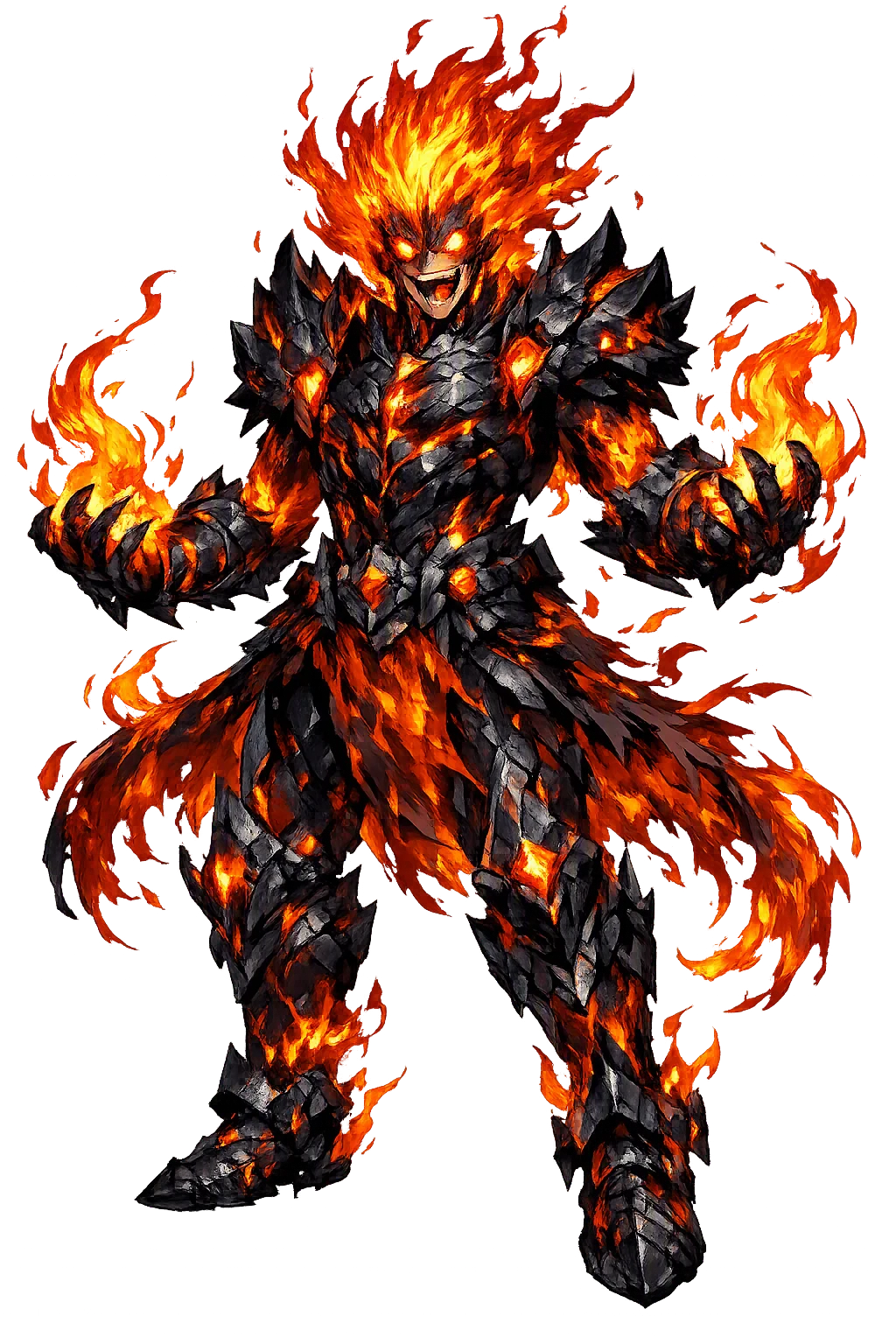
Logi is the Norse name for flame itself — the common noun logi, 'blaze', walking on two legs into the greatest hall of giants the mythology knows. In Útgarða-Loki's court he is served a trough of meat against the god Loki, and when the two eaters meet in the middle, Logi has consumed the meat, the bones, and the trough besides: wildfire does not chew, it consumes. He is catalogued in the norse pantheon under the domain "Fire, Flame, Giant", and his meaning is the plainest in the lexicon — "Flame".

Logi in Later Traditions

Logi's cross-cultural life begins with a mistake and ends with a commonplace. The mistake is famous: nineteenth-century philology, from Grimm onward, heard the fire-word in the god Loki and made Loki a fire-god; the equation is now abandoned — the vowels differ in kind, the figures never merge in the texts, and Snorri stages them face to face across a trough, which is about as far apart as two beings can sit. Its monument survives in art rather than scholarship: Wagner's Loge, the flame-cynic of the Ring cycle, is the conflation set to music. The commonplace is older than any comparison: every tradition that watches fire discovers that it eats. The Vedic hymns give flame a mouth and a priesthood in Agni, the devourer who carries the sacrifice to heaven; the Norse kept the same observation at the scale of a common noun, logi, and personified it once, brilliantly, as the unbeatable guest. Within the corpus his kin are elemental: Surtr of Múspellheimr, whose sword-fire burns the world; Ægir, the sea his own genealogy calls brother; and Loki, the god his name was once wrongly spent to explain.

Modern Legacy

The eating contest is one of the most retold scenes of the Norse revival: the Kearys' The Heroes of Asgard (1857) made Útgarða-Loki's hall a set-piece for English-reading children, and every handbook since keeps Logi's trough beside Hugi's running and Elli's wrestling as the triad of unwinnable contests — fire, thought, and age, the three things no champion beats. The nineteenth century's false etymology had an afterlife of its own: Wagner's Loge, and a long tail of fire-trickster Loki in popular fiction, are children of the conflation scholarship has buried. In Iceland the name never needed reviving: logi remains the everyday word for flame, and Logi persists as a given name. Modern retellings and games cast him as he was written — fire wearing a face, the one opponent in Útgarðr who cheated by being exactly what he was.

Unicode Restoration as Cultural Act

Restoring Logi in a domain name is more than orthographic accuracy. It is a statement that the internet should recognize the full range of human writing — not only the ASCII keyboard.

05

Frequently Asked Questions

Common questions about Logi, Fire, Flame, Giant, and Unicode restoration

01How do you pronounce Logi?

In reconstructed pronunciation, Logi is /ˈlo.ɣi/ — approximately 'LOH-yi' — two short, even syllables with the weight on the first; keep the o short and round, and let the medial g soften to a voiced friction in the throat, as in modern Icelandic logi..

02What does Logi mean?

Logi means Flame in the norse tradition.

03What are the symbols of Logi?

Logi is associated with The feeding-trough (Appetite made measurable: the only scoreboard in mythology that fire ever emptied), The eaten bones (The line between hunger and combustion: Loki strips the bone, Logi strips the question), The flame (logi) (The common noun kept as a name — fire called by the very word the hearth already knew), The brothers Hlér and Kári (Sea and wind: the family that makes fire one element among three, not a freak among persons).

04Why restore Logi in Unicode?

Plain ASCII logi strips the stress, length, and script that make the name specific. Unicode restoration returns the name to its original written dignity.

05What is the most important myth about Logi?

Þórr sets out east for Jǫtunheimr with Loki for company, and at a peasant's farm takes the children Þjálfi and Rǫskva as his servants. On the road they meet the giant who calls himself Skrýmir: they sleep, unknowing, in the thumb of his dropped glove, and Þórr's three hammer-blows in the night — which the giant greets as a leaf, an acorn, and a bird's dropping — will be explained only later. Skrýmir points them to Útgarðr, a stronghold so vast the travellers must tilt their heads back to see the top of it, and vanishes. Every step of the journey is a setup: by the time the company reaches the hall, the story has already taught the reader that nothing here is what it is called.

06

Scholarly Sources

The philological foundations of this restoration

Every claim on this page is grounded in established scholarship. The orthographic restorations follow disciplinary convention. The etymological chain follows the best available reference works. This is not invention — it is resurrection through scholarship.

Lexicography & Philology

  • Cleasby-Vigfusson
  • Zoëga

Primary Texts

  • Snorri Sturluson, Prose Edda: Gylfaginning (the Útgarða-Loki journey; the eating contest and its unmasking; Brodeur translation)
  • Gylfaginning, Old Norse text (Guðni Jónsson edition), chs. 44–47
  • Skáldskaparmál, Old Norse text (the kennings for wind; the sons of Fornjótr)
  • Poetic Edda: Vafþrúðnismál (st. 51, surtalogi — 'when Surtr's flame dies down'; Bellows translation)

Archaeology & Art History

  • Material evidence — iconography, inscriptions, and temple archaeology — for Logi and related cults.
  • Logi is a textual figure in the strictest sense: his attestations are the Snorra Edda manuscripts — Codex Regius (GKS 2367 4to), Codex Wormianus, Codex Upsaliensis — together with the þulur, the rhymed name-lists appended to the Prose Edda, which keep the common noun logi among the heiti for fire, and the Fornjótr genealogy of Hversu Noregr byggðist in the Flateyjarbók. No runic inscription names him, no place-name is securely his, and no cult could attach to a figure who is, by definition, an element rather than a person. His material context is the fire itself: the hearth-centered longhouse, the cremation pyres of the Late Iron Age, and the wildfire of the northern forests — the villieldr Snorri names as the truth behind the illusion.

Religious Studies

  • Hversu Noregr byggðist (Flateyjarbók; Fornjótr's three sons: Hlér, Logi, Kári)
  • Cleasby & Vigfusson, An Icelandic-English Dictionary (1874), s.v. logi
  • Zoëga, A Concise Dictionary of Old Icelandic (1910), s.v. logi
  • de Vries, Altnordisches etymologisches Wörterbuch (1962), s.v. logi
  • Simek, Dictionary of Northern Mythology, s.v. Logi
  • Lindow, Norse Mythology: A Guide, s.v. Logi
Return

The Surface Awaits

You have traced the name from its earliest attestation to its Unicode restoration. Now return to the myth. The story is where the name lives.

Back to Lore
Logi mascot