
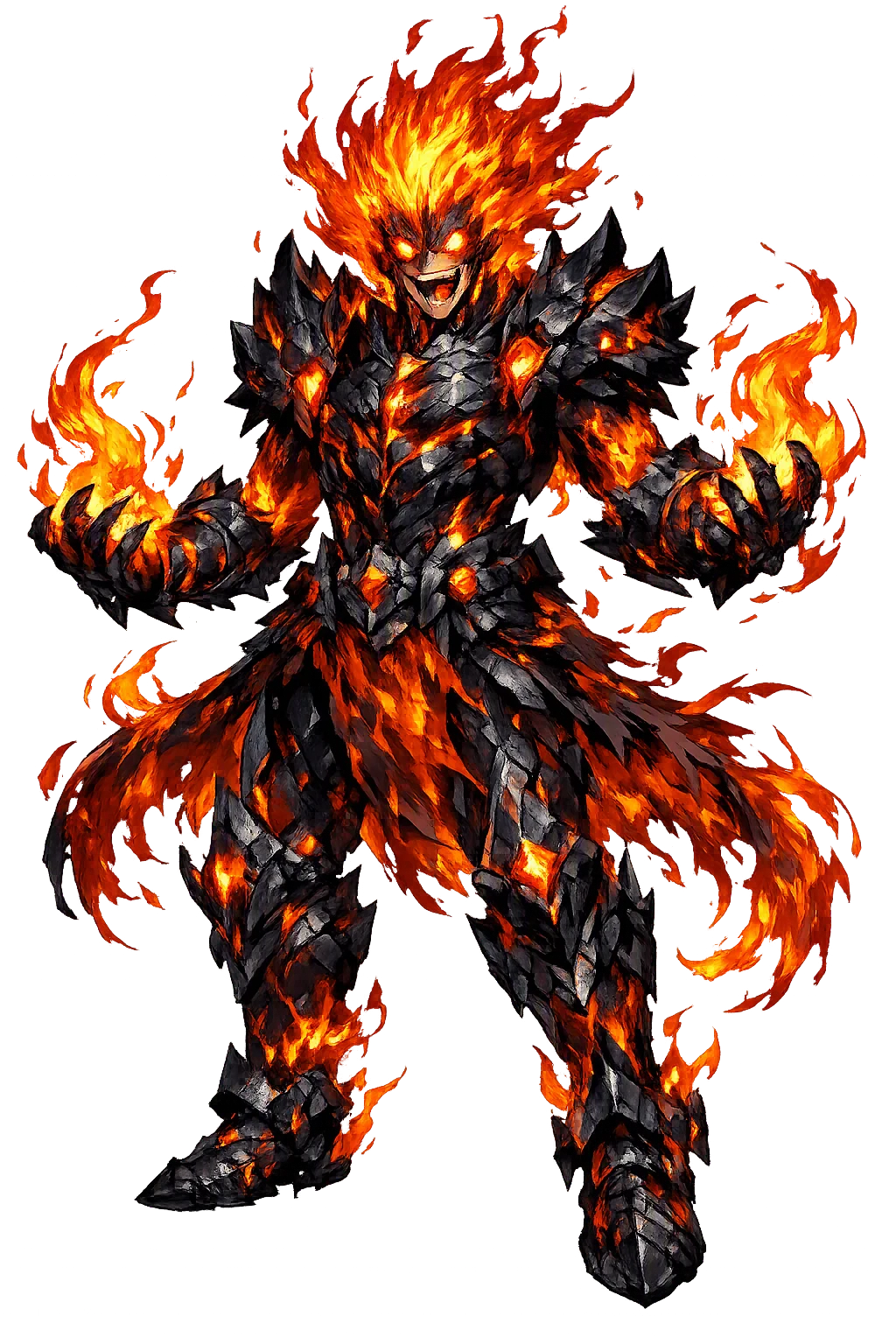
The Cult
No cult could attach to Logi, and none did: a figure who is an element rather than a person has no sanctuary to house him, and the record shows none — no festival, priesthood, votive, or inscription. What the sources offer instead is a genealogy and a hearth: the Fornjótr line makes him fire brothered to the sea and the wind, a classification rather than a devotion, and the þulur file his name among the heiti of flame. His true ancient presence was environmental — the longhouse hearth, the cremation pyre, the northern forest's wildfire, the villieldr Snorri names as the truth behind the illusion. Modern Heathen and literary honour of him is revival, and says more about the age doing the honouring than about any Viking-Age rite.