
The Cult
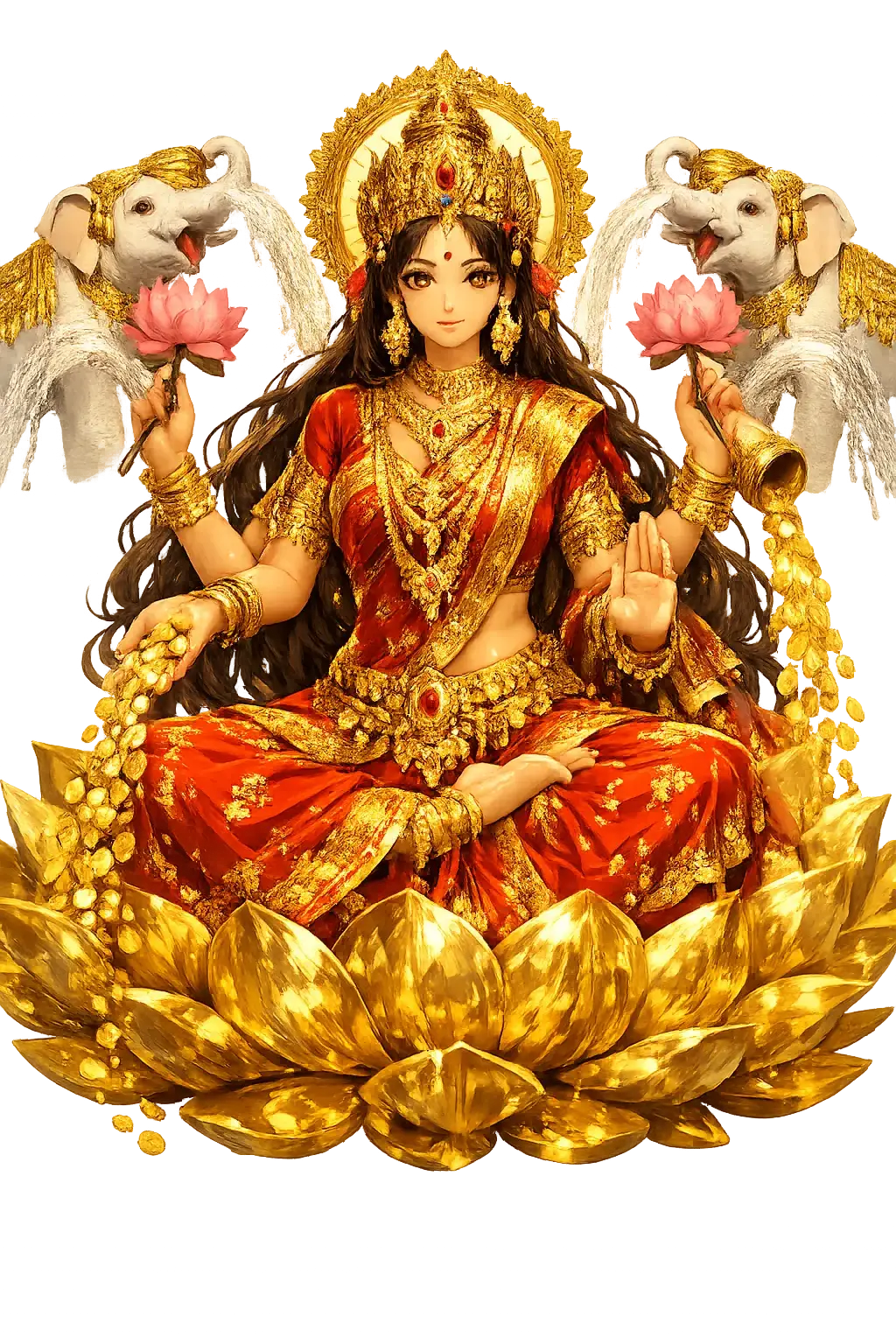
Lakṣmī is worshipped wherever prosperity is hoped for — which in Hindu India is nearly everywhere. Her oldest cultic layer is domestic: the household shrine, the recitation of the Śrī Sūkta, and the Friday observances that make her the working deity of merchants and housewives. Temples followed — the great Mahālakṣmī shrines at Kolhapur and Mumbai draw pilgrims in their tens of thousands, and a Lakṣmī shrine stands in most Viṣṇu temples across the subcontinent. Her festivals mark the calendar's prosperous turns: Varalakṣmī Vrata, the Friday vow kept by women for the family's fortune; Kojāgarī on the autumn full moon, when the goddess walks the night asking who is awake; and the closing of account books before the year turns. The ritual is consistent — lotus flowers, gold, vermilion, new cloth, lamps, and the invitation spoken aloud at the threshold. Votive evidence runs deep: Gupta gold coins already show her enthroned as the guarantor of royal fortune, and her images still receive the first coin of the day in shops from Chennai to Singapore.