PuniCodex

Extended Lore

𒀭𒌓𒈬 Lahmu

Etymology · Phonology · Orthography · Cultural Legacy · Primary Sources

Tier 2 Lahmu
Lahmu — Primordial Being
01

Quick Facts

Essential information about Lahmu, Primordial Being

Original Script𒀭𒌓𒈬
Unicode RestorationLahmu
Reconstructed Pronunciation/ˈlax.mu/
PantheonMesopotamian
DomainPrimordial Being
MeaningThe hairy one
ClassificationTier 2
Primary DomainLahmu
Sacred SymbolsHairy body and beard, Doorpost or gate, Curled locks, Apsû and Tiāmat
02

Etymology & Word Family

From original script to Unicode restoration

Original Script 𒀭𒌓𒈬 Lahmu — "The hairy one"
Unicode Restoration Lahmu Restored stress, length, and script
Modern ASCII lahmu Plain-ASCII fallback

Lahmu is Tier 2 because the registrable canonical form is plain ASCII: it preserves no distinctive diacritic or non-Latin letter. Scholarly Assyriological transliteration often writes Laḫmu with an underdot ḫ to mark the voiceless velar fricative, but the PuniCodex flagship temple displays the unadorned Latin form Lahmu.

03

Unicode Character Breakdown

Character-by-character philological analysis

CharacterUnicodeNameBlockPhonetic Role
LU+004CLatin Capital Letter LBasic LatinSame, capitalized
aU+0061Latin Small Letter ABasic LatinSame
hU+0068Latin Small Letter HBasic LatinSame
mU+006DLatin Small Letter MBasic LatinSame
uU+0075Latin Small Letter UBasic LatinSame

The Tier 2 classification reflects how much of the original phonology this restoration preserves — stress and vowel length for Greek names, distinctive letters and diacritics for every other tradition.

04

Cultural Significance

From ancient cult to modern Unicode

Ancient Domain

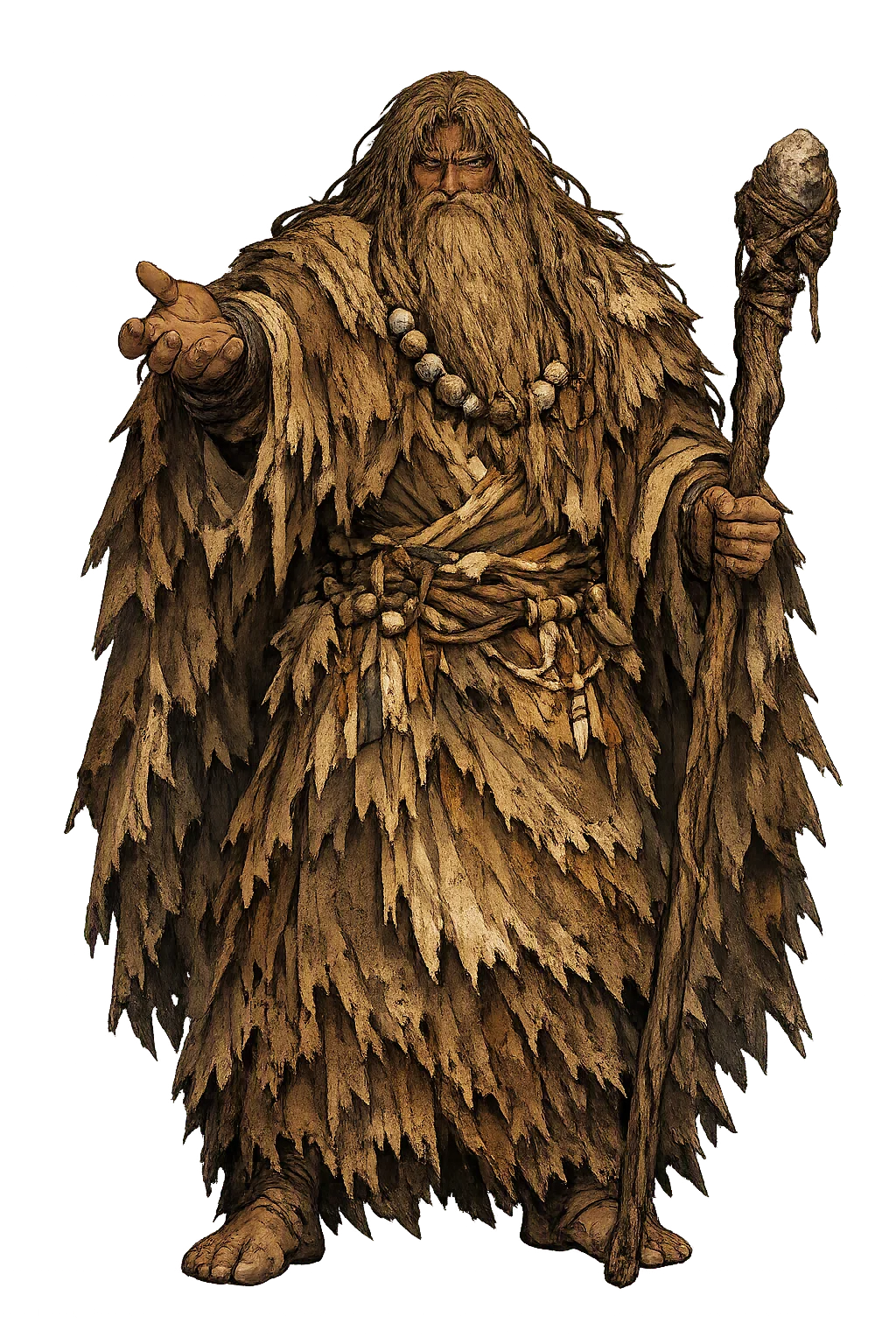
Lahmu is the Mesopotamian primordial being whose name simply means 'the hairy one'. In the Enuma Elish he is the firstborn of Apsû and Tiāmat, the earliest divine generation before sky and earth were fixed. Beyond cosmogony, he is a protective spirit: a bearded, hair-covered guardian posted at doorways, gates, and thresholds to turn aside demons and pollution.

He stands at the border between chaos and order — born from the mingled primordial waters, then stationed at the doors that keep the ordered world safe.

Lahmu in Later Traditions

Lahmu's double life — primordial ancestor and doorway demon — gave him a long afterlife in Mesopotamian religion.

As a cosmogonic figure he belongs to the same watery genealogy as Apsû and Tiāmat, and through them his memory survives in biblical and Near Eastern images of the primordial deep. As a guardian he anticipates the apotropaic figures of later traditions: the cherubim posted at Eden's east gate, the lion and bull colossi that guard Assyrian palace doors, and the sphinxes and lamassu that still flank temple entrances across the ancient Near East. The Greek daimon and the Roman genius loci partly overlap with his function, though none carry his distinctive hairy form.

Modern Legacy

The hairy guardian never fully left the architectural imagination.

Every bearded gatekeeper figure, from Assyrian palace reliefs to medieval church gargoyles and the lion-headed knockers of later doors, preserves the old idea that a threshold needs a frightening friend. In cuneiform studies the name Lahmu remains a standard example of how a descriptive adjective — 'the hairy one' — could become a deity. Modern fantasy and games often borrow Mesopotamian 'hairy demons' without knowing their source, but the type is authentically ancient. PuniCodex keeps the plain Latin form Lahmu as a Tier-2 node: a reminder that not every restoration needs a diacritic; some names are powerful precisely because they are plain.

Unicode Restoration as Cultural Act

Restoring Lahmu in a domain name is more than orthographic accuracy. It is a statement that the internet should recognize the full range of human writing — not only the ASCII keyboard.

05

Frequently Asked Questions

Common questions about Lahmu, Primordial Being, and Unicode restoration

01How do you pronounce Lahmu?

In reconstructed pronunciation, Lahmu is /ˈlax.mu/ — approximately 'LAKH-moo' — the middle consonant is a dry, breathy 'kh' like the ch in Scottish 'loch', not a soft English h..

02What does Lahmu mean?

Lahmu means The hairy one in the mesopotamian tradition.

03What are the symbols of Lahmu?

Lahmu is associated with Hairy body and beard (The shaggy pelt that gives the demon his name and apotropaic force), Doorpost or gate (The threshold he is posted to defend), Curled locks (The six or seven stylized curls that identify him in art), Apsû and Tiāmat (The primordial waters from which he first arose).

04Why restore Lahmu in Unicode?

Plain ASCII lahmu strips the stress, length, and script that make the name specific. Unicode restoration returns the name to its original written dignity.

05What is the most important myth about Lahmu?

The Enuma Elish opens with Apsû, the freshwater abyss, and Tiāmat, the salt sea. Their waters mingled and produced the first generation of gods: Lahmu and Lahamu, then Anshar and Kishar, then Anu, and finally Ea (Enuma Elish I:1–10). Lahmu is therefore the first divine body to emerge from chaos, the earliest shape the cosmos takes after the waters meet.

06

Scholarly Sources

The philological foundations of this restoration

Every claim on this page is grounded in established scholarship. The orthographic restorations follow disciplinary convention. The etymological chain follows the best available reference works. This is not invention — it is resurrection through scholarship.

Lexicography & Philology

  • Enuma Elish
  • Black-Green

Primary Texts

  • Enuma Elish

Archaeology & Art History

  • George, House Most High: The Temples of Ancient Mesopotamia
  • Archaeological evidence for Lahmu consists chiefly of protective figurines, glazed brick reliefs, and seal impressions. Neo-Assyrian palace gateways, notably at Khorsabad and Nineveh, were flanked by apotropaic colossi whose iconography overlaps with the lahmu type. Clay figurines buried in foundation deposits and door sockets invoke his protective function. Cuneiform copies of the Enuma Elish from Nineveh and Babylon preserve his cosmogonic role.

Religious Studies

  • Black & Green, Gods, Demons and Symbols of Ancient Mesopotamia
  • CAD (Chicago Assyrian Dictionary), s.v. lahmu / lahāmu
  • Wiggermann, Mesopotamian Protective Spirits: The Ritual Texts
  • Jacobsen, The Treasures of Darkness
  • Foster, Before the Muses
Return

The Surface Awaits

You have traced the name from its earliest attestation to its Unicode restoration. Now return to the myth. The story is where the name lives.

Back to Lore
Lahmu mascot