PuniCodex

Extended Lore

九州 Kyūshū

Etymology · Orthography · Cult · Iconography · Reception · Sources

Tier 1 Kyūshū.com
Kyūshū — South, Volcanoes, Origins
01

Quick Facts

Essential information about Kyūshū, South, Volcanoes, Origins

Original Script九州
Unicode RestorationKyūshū
Reconstructed Pronunciation/kjɯː.ɕɯː/
PantheonJapanese
DomainSouth, Volcanoes, Origins
Meaning'Nine provinces' (九州)
ClassificationTier 1
Primary DomainKyūshū.com
Sacred SymbolsThe kamikaze banner, The Aso caldera, The Dejima fan
02

Etymology & Word Family

From original script to Unicode restoration

Original Script 九州 Kyūshū — "'Nine provinces' (九州)"
Unicode Restoration Kyūshū Restored stress, length, and script
Modern ASCII kyushu Plain-ASCII fallback

The name Kyūshū carries the orthographic signature of the japanese tradition: 九州. Unicode restoration recovers what ASCII flattens.

03

Unicode Character Breakdown

Character-by-character philological analysis

CharacterUnicodeNameBlockPhonetic Role
KU+004BLatin Capital Letter KBasic LatinSame letter
yU+0079Latin Small Letter YBasic LatinSame letter
ūU+016BLatin Small Letter U with MacronLatin Extended-AMacron marks the long vowel
sU+0073Latin Small Letter SBasic LatinSame letter
hU+0068Latin Small Letter HBasic LatinSame letter
ūU+016BLatin Small Letter U with MacronLatin Extended-AMacron marks the long vowel

The Tier 1 classification reflects how much of the original phonology this restoration preserves — stress and vowel length for Greek names, distinctive letters and diacritics for every other tradition.

04

Cult & Worship

How the sacred was kept — rites, sanctuaries, remains

The Cult

Kyūshū has no deity-cult proper, yet its landscape is dense with mythic sanctity. The cave-tomb of Takachiho and nearby peaks are identified in tradition as the place where Ninigi-no-Mikoto descended from heaven, founding the imperial line. The Aso shrine in its vast caldera and the shrines of Munakata on the Genkai Sea mark the island as a frontier between the Japanese archipelago and the Asian mainland. The failed Mongol invasions of 1274 and 1281 were later commemorated as the work of the kamikaze, the divine wind, and memorial sites on the coast preserve that memory. Modern festivals and regional pride keep Kyūshū's mythic identity alive without constituting a single cult.

In the Earth

Yoshinogari, in Saga, is East Asia's great Yayoi site: a moated, towered settlement of two thousand years ago, with mass jar-burials and bronze-weapon caches — the archaeological face of the Wa people whom Chinese chronicles describe. The underwater archaeology of Takashima's Mongol wrecks — anchor stones, bombs, and hulls preserved in Imari Bay — has recovered the kamikaze fleets themselves. The hidden Christian sites of the Amakusa islands and Nagasaki's Ōura Cathedral (1864, built for the returned faith) are UNESCO-listed as the "Hidden Christian Sites in the Nagasaki Region."

05

Iconography

How Kyūshū was imaged across the ages

The Image

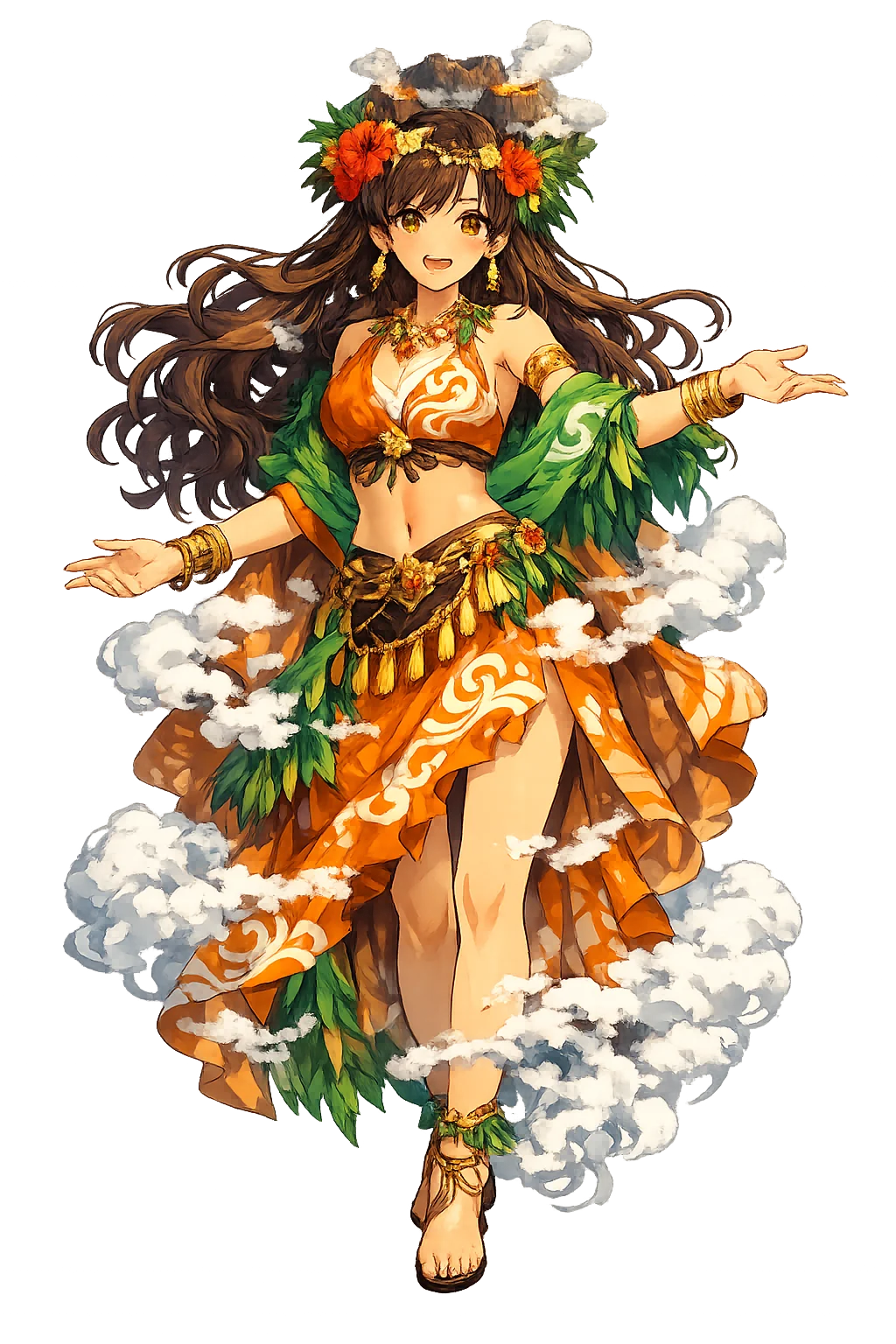
Like Honshū, Kyūshū was never anthropomorphized in ancient art. Its visual identity comes from its volcanoes — Aso, Kirishima, Sakurajima — and from the green coastal mountains that appear in Edo-period travel pictures and modern photography. The Yayoi and kofun archaeology of Yoshinogari and the Daisenryō tomb provide its ancient material signature: bronze weapons, jar burials, and keyhole mounds. In cartography, the island's name, 九州 — 'nine provinces' — is the emblem. Dragons, sea waves, and camphor trees recur in local shrine iconography, but the island itself remains a place rather than a figure.

06

Reception & Transformation

The name after its own age — transmission, translation, survival

Afterlives

The name Kyūshū replaced the older Tsukushi, recorded in the Kojiki as one of the islands born to Izanagi and Izanami. The same texts preserved the descent of Ninigi and the eastern expedition of Emperor Jimmu, giving Kyūshū a foundational place in imperial historiography. Medieval and Edo-period scholars transmitted these narratives through annotated manuscripts and printed editions; modern historians added the Mongol-invasion chronicles and the Christian century of the sixteenth century. Today Kyūshū is both a modern administrative region and a mythic point of origin, its name a reminder of the transition from archaic island names to the standardized geography of the Japanese state.

Identifications Across Traditions

Kyūshū is Japan's syncretic laboratory: Korean potters founding Arita porcelain, Chinese merchant quarters at Nagasaki, Portuguese words entering the language (pan, tempura, kappa), Dutch learning (Rangaku) flowing through Dejima into Japanese science — anatomy, astronomy, and artillery smuggled in translation. The island's cuisine, dialects, and crafts all carry the gateway's mark: everything Japanese that came from outside came here first.

Modern Legacy

The kamikaze of 1281 gave the 20th century its most terrible word; Nagasaki's 1945 atomic bombing made the island a symbol of the nuclear age's cost, and its peace park one of the world's pilgrimage sites of memory. Arita and Imari porcelain conquered European markets and imitators for three centuries. Today the island's universities and semiconductor fabs continue the oldest pattern: the gateway as Japan's technology shore.

07

The Meditation

What Kyūshū means — beyond the dictionary

Kyūshū is the island that opens. Rice, writing, Buddhism, gunpowder, Christianity, Western science — all knocked on this shore, and Japan answered differently each time: embrace, storm, secrecy, translation. It asks the gateway's question, which is every border's question: what do you let in — and what does the letting-in make of you?

The gateway's pattern persists in silicon: the island that took in rice, iron, scripture, and surgery now takes in the semiconductor supply chain, and Kumamoto's fabs are Tsukushi's old role in new matter. Every borderland knows its double exposure — first to the gift, first to the invasion — and Kyūshū's answer has been constant for two thousand years: translate everything, fear nothing twice, and keep the door's hinges oiled.

And the island's two great memories — the divine wind and the atomic one — face each other across eight centuries: the storm that saved and the bomb that burned, both arriving from the same sky over the same coast. Kyūshū carries them without resolving them, which is the gateway's last lesson: the shore that opens to the world must be ready for everything the world brings, the sutra and the cannonball, the virus and the vaccine, the answer arriving, as always, by sea.

08

Frequently Asked Questions

Common questions about Kyūshū, South, Volcanoes, Origins, and Unicode restoration

01How do you pronounce Kyūshū?

In reconstructed pronunciation, Kyūshū is /kjɯː.ɕɯː/ — approximately KYOO-shoo, with the compressed ky- onset and long vowels.

02What does Kyūshū mean?

Kyūshū means 'Nine provinces' (九州) in the japanese tradition.

03What are the symbols of Kyūshū?

Kyūshū is associated with The kamikaze banner (The storm as protector — weather enlisted in the national myth), The Aso caldera (One of the world's great volcanic craters — the island's fiery heart), The Dejima fan (The tiny artificial island that carried Europe into Japan for 200 years).

04Why restore Kyūshū in Unicode?

Plain ASCII kyushu strips the stress, length, and script that make the name specific. Unicode restoration returns the name to its original written dignity.

05What is the most important myth about Kyūshū?

“Ninigi on Takachiho” — the The Descent story that anchors the mythology of Kyūshū, told in full on the lore page.

09

Scholarly Sources

The philological foundations of this restoration

Every claim on this page is grounded in established scholarship. The orthographic restorations follow disciplinary convention. The etymological chain follows the best available reference works. This is not invention — it is resurrection through scholarship.

◈

Lexicography & Philology

  • Kokugo dictionaries
◎

Primary Texts

  • Nihon Shoki
  • Kojiki (Age of the Gods; Ninigi's descent; Jimmu's eastern expedition)
  • Nihon Shoki (the kamikaze of 1274 and 1281; the founding chronology)
◉

Archaeology & Art History

  • Material evidence — iconography, inscriptions, and temple archaeology — for Kyūshū and related cults.
✦

Religious Studies

  • Sansom, George, A History of Japan to 1334 (1958)
  • Boxer, C. R., The Christian Century in Japan, 1549–1650 (1951)
  • Turnbull, Stephen, The Mongol Invasions of Japan 1274 and 1281 (2010)
  • UNESCO, 'Hidden Christian Sites in the Nagasaki Region' (World Heritage listing)
Return

The Surface Awaits

You have traced the name from its earliest attestation to its Unicode restoration. Now return to the myth. The story is where the name lives.

Back to Lore
Kyūshū mascot