PuniCodex

Extended Lore

𒀭𒆥𒄖 Kingu

Etymology · Phonology · Orthography · Cultural Legacy · Primary Sources

Tier 2 Kingu
Kingu — Dragon, Consort of Tiamat
01

Quick Facts

Essential information about Kingu, Dragon, Consort of Tiamat

Original Script𒀭𒆥𒄖
Unicode RestorationKingu
Reconstructed Pronunciation/ˈkiŋɡu/
PantheonMesopotamian
DomainDragon, Consort of Tiamat
MeaningUnknown
ClassificationTier 2
Primary DomainKingu
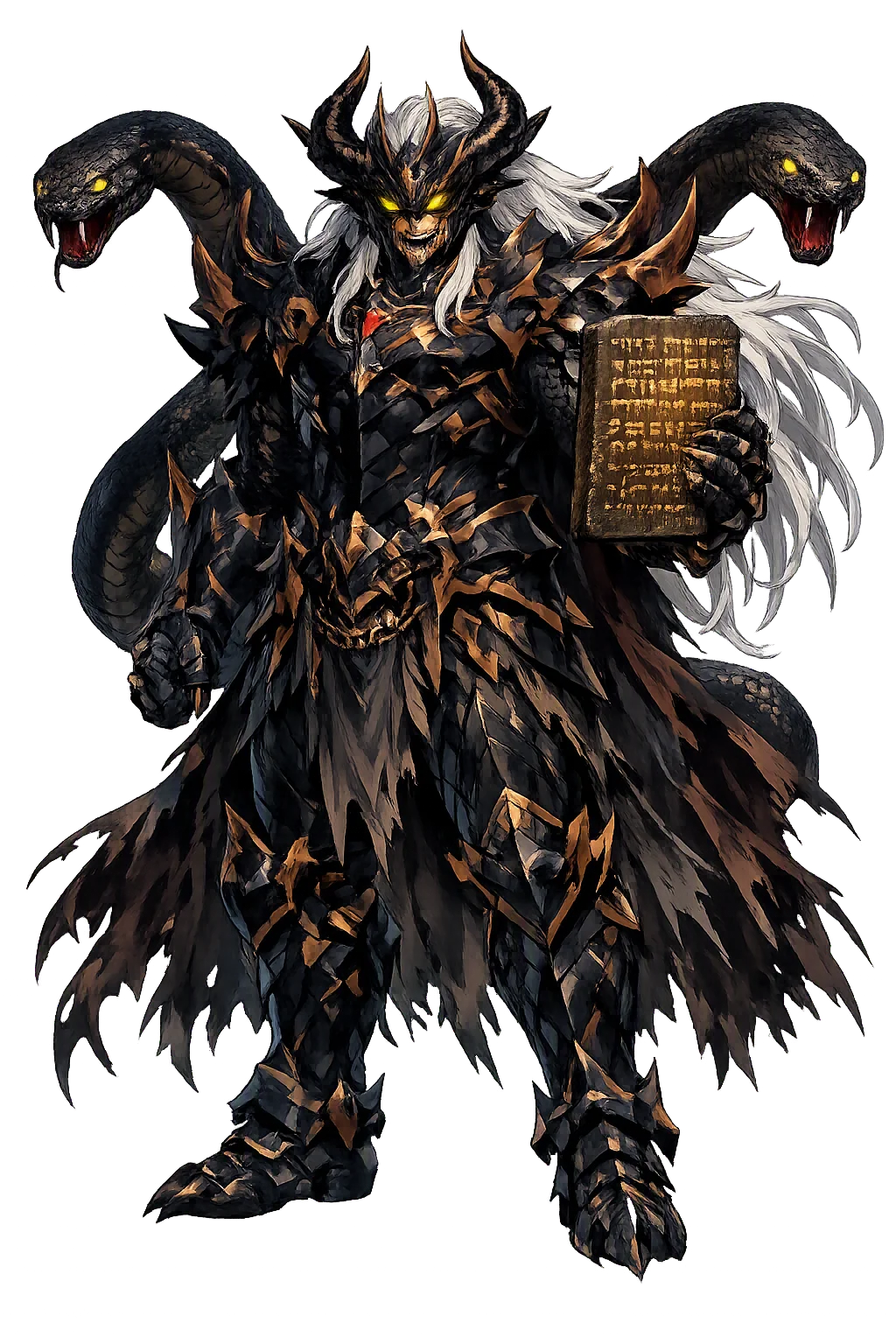
Sacred SymbolsDragon body, Tablet of Destinies, Blood, Crescent blade
02

Etymology & Word Family

From original script to Unicode restoration

Original Script 𒀭𒆥𒄖 Kingu — "Unknown"
Unicode Restoration Kingu Restored stress, length, and script
Modern ASCII kingu Plain-ASCII fallback

Kingu is Tier 2: the Unicode restoration 'Kingu' is simply the ASCII form capitalized, with no preserved diacritic or distinctive non-ASCII letter. The name's etymology is unknown, so there is no reconstructed vowel length or accent to mark. Standard Assyriology writes Kingu; PuniCodex displays the canonical capitalized form while acknowledging that the name remains philologically opaque.

03

Unicode Character Breakdown

Character-by-character philological analysis

CharacterUnicodeNameBlockPhonetic Role
KU+004BLatin Capital Letter KBasic LatinSame, capitalized
iU+0069Latin Small Letter IBasic LatinSame
nU+006ELatin Small Letter NBasic LatinSame
gU+0067Latin Small Letter GBasic LatinSame
uU+0075Latin Small Letter UBasic LatinSame

The Tier 2 classification reflects how much of the original phonology this restoration preserves — stress and vowel length for Greek names, distinctive letters and diacritics for every other tradition.

04

Cultural Significance

From ancient cult to modern Unicode

Ancient Domain

Kingu is the dragon-god who stands at the right hand of Tiāmat in the Babylonian Enuma Elish. When the younger gods slay Apsû and disturb the primordial order, Tiāmat takes Kingu as her consort, places the Tablet of Destinies (ṭuppi šīmāti) upon his breast, and makes him commander of the monster-host that marches against the divine assembly. He is terror made general: the chaotic deep given a strategic mind and a regal badge.

Yet Kingu's defeat is the pivot on which the human world turns. Marduk kills him, strips away the Tablets, and from Kingu's blood the gods create humankind to bear the toil of heaven and earth. The dragon who would have unmade order becomes, unwillingly, the raw material of civilization. This temple tracks that double identity: the consort of chaos and the substrate of humanity.

Kingu in Later Traditions

Kingu is a specifically Babylonian figure, but his narrative pattern — the defeated dragon whose body becomes the stuff of human life — echoes across Near Eastern and later mythologies.

The closest parallel is Tiāmat herself: where she becomes the physical cosmos, Kingu becomes the biological substrate of humanity. In later Jewish and Christian demonology, the figure of a rebel dragon or fallen angel bound and stripped of authority (Leviathan, Satanail, Azazel) partially replays Kingu's defeat and degradation. Gnostic and Manichaean traditions similarly describe the creation of human bodies from the blood or matter of rebellious powers. In modern fantasy and games, Kingu survives as a dragon-general or dark consort archetype, often conflated with Tiamat's own monstrous form. PuniCodex preserves the capitalized form 'Kingu' not as a reconstruction but as a philological placeholder: the name's etymology is unknown, and the ASCII form is the only form currently attested.

Modern Legacy

The myth of Kingu encodes several durable ideas: that chaos can be organized, that authority depends on the symbols of fate, and that human life is made from the remains of a defeated enemy.

The Tablet of Destinies — briefly worn by Kingu, then permanently by Marduk — became a template for later images of the book of fate, the sealed scroll, and the tablets of law. The idea that humanity was created from the blood or clay of a slain god or rebel appears in Greek (the Titan Prometheus fashions humans from clay), Norse (the giants Ymir and Ask/Embla), and biblical traditions shaped by Mesopotamian models. In popular culture, Kingu appears in role-playing games, trading cards, and fantasy novels as a dragon-lord or dark consort, often stripped of his original cosmological function. PuniCodex keeps the name in its plain Assyriological form because there is no reconstructed diacritic to add; the unknown etymology is itself part of the entry's scholarly honesty.

Unicode Restoration as Cultural Act

Restoring Kingu in a domain name is more than orthographic accuracy. It is a statement that the internet should recognize the full range of human writing — not only the ASCII keyboard.

05

Frequently Asked Questions

Common questions about Kingu, Dragon, Consort of Tiamat, and Unicode restoration

01How do you pronounce Kingu?

In reconstructed pronunciation, Kingu is /ˈkiŋɡu/ — approximately 'KEENG-goo' — stress the first syllable; the middle consonant is a soft ng-sound, and the final vowel is rounded and firm..

02What does Kingu mean?

Kingu means Unknown in the mesopotamian tradition.

03What are the symbols of Kingu?

Kingu is associated with Dragon body (The monstrous form that opposes Marduk's cosmic order), Tablet of Destinies (The ṭuppi šīmāti, the badge of supreme authority Tiāmat briefly grants to Kingu), Blood (The material from which humanity is created after Kingu's defeat), Crescent blade (Kingu's martial role as general of Tiamat's army).

04Why restore Kingu in Unicode?

Plain ASCII kingu strips the stress, length, and script that make the name specific. Unicode restoration returns the name to its original written dignity.

05What is the most important myth about Kingu?

After Ea kills Apsû, Tiāmat resolves to avenge the primordial freshwater abyss. She takes Kingu as her consort and sets him over the gods she has assembled: 'She placed him in the front, leader of the host, to direct the battle, to gain the victory' (Enuma Elish II:122–124, trans. Foster). Kingu is not the source of the rebellion but its appointed head — the dragon who gives tactical shape to Tiāmat's formless rage.

06

Scholarly Sources

The philological foundations of this restoration

Every claim on this page is grounded in established scholarship. The orthographic restorations follow disciplinary convention. The etymological chain follows the best available reference works. This is not invention — it is resurrection through scholarship.

Lexicography & Philology

  • Enuma Elish
  • Black-Green

Primary Texts

  • Enuma Elish (Akkadian creation epic, Tablets I–VI)

Archaeology & Art History

  • Material evidence — iconography, inscriptions, and temple archaeology — for Kingu and related cults.
  • Archaeological evidence for Kingu comes primarily from cuneiform copies of the Enuma Elish found at Nineveh, Ashur, Babylon, and Sippar, where the epic was recited at the Babylonian New Year (Akitu) festival. The text's description of Kingu receiving the Tablet of Destinies and his blood being used to create humanity is preserved in the Standard Babylonian version. Visual representations of dragon-like creatures and composite monsters from the Ishtar Gate at Babylon and contemporary cylinder seals give artistic context to the monster-host Kingu leads, even though no securely identified image of Kingu himself survives.

Religious Studies

  • CAD (Chicago Assyrian Dictionary), s.v. Kingu, ṭuppu šīmāti
  • Dalley, Myths from Mesopotamia
  • Foster, Before the Muses: An Anthology of Akkadian Literature
  • Black-Green, Gods, Demons and Symbols of Ancient Mesopotamia
Return

The Surface Awaits

You have traced the name from its earliest attestation to its Unicode restoration. Now return to the myth. The story is where the name lives.

Back to Lore
Kingu mascot