
Kēr: the stories first, then the spelling
Before the spelling, the story. Kēr earns its restoration the old way — through what was actually told.
The Stories That Carry the Name
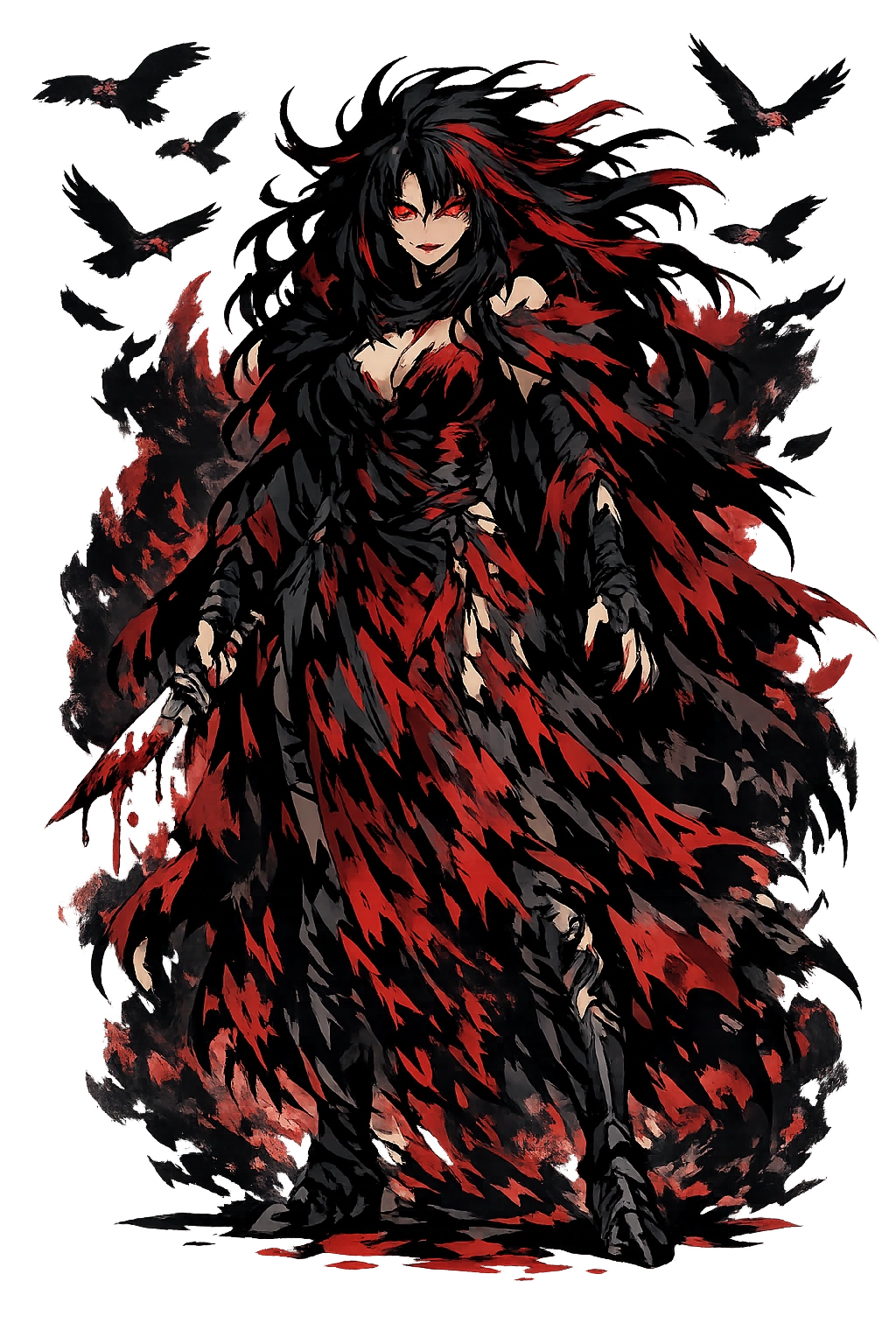
The Keres on the Shield. The kēres arrive at full strength in Homer's description of Achilles' shield. In the battle frieze, the poet fixes them with a few terrible strokes: among the combatants stride Eris and Kydoimos and destructive Kēr, 'holding fast one man alive and newly wounded, another unwounded, and dragging by the feet a dead man out of the carnage — the garment on her shoulders red with the blood of men' (Iliad 18. 535–540).
The Two Fates of Achilles. The word's other Homeric face is personal. Achilles, told that his arms will decide the war, answers that two kēres are carrying him on toward the doom of death: if he remains and fights about Troy, he loses his homecoming but his glory will be imperishable; if he voyages home, his glory perishes but his life will be long (Iliad 9. 411–416).
Daughters of Night. Hesiod supplies the genealogy. In the Theogony (211–225), Nyx — Night — bears a procession of abstractions without a father: first Moros, 'Doom', and black Kēr, then Thanatos (Death) and Hypnos (Sleep), then the Dreams, Blame, Woe, the Hesperides, the Moirai (Fates), Nemesis, and the rest of Night's grim household. Kēr stands second, immediately after Doom itself: in the divine economy of the Theogony, violent death outranks even its gentler siblings.
And Here Is What the Spelling Preserves
Against those stories, the attestation: Κήρ, in the attestation Homer, Iliad 9.411–416; 12.326–328; 18.535–540 and Hesiod, Theogony 211–225 give us. The name means "Doom, violent death (from κήρ)".
The restoration keeps one feature the ASCII form ker cannot show:
- e → ē — Macron: long eta: how long the vowel is held.
A storyteller pronouncing the name would restore every one of them by instinct. The file only writes down what the voice already knows.
At a Glance
- Restored name: Kēr
- ASCII form: ker
- Meaning: "Doom, violent death (from κήρ)"
- Domain of influence: Violent Death, Doom, Fate
- Pantheon: Greek
- Classification: Tier 1
- Original script: Κήρ
- Series: The Restoration Files, No. 258 of 546
The Name Travels
The Romans had no exact equivalent for the kēres: Latin letum and the shadowy goddess Mors render the idea, not the person. In Etruria, however, the winged Vanth — painted in tombs guiding and guarding the dead — is the closest relative in image, and art historians trace a continuous iconography from the clawed kēres of Attic vases to the winged death-figures of Roman and early Christian art.
The Address It Earned
The temple of Kēr stands at /ker/ — lore, scholars, patterns — because a name carrying this much story deserves more than a parking page. Tier-1 is not a compliment; it is a measurement. This restoration keeps something the ASCII form provably loses, and the measurement is repeatable.
The Sources Are Open
The myths above are retold from the temple's record; the primary voices are in the Sacred Texts: Theogony, Homeric Hymns, and Works and Days. Nothing in this file outranks them.
The File Continues
Read the founding dispatch for the name's full story, the Resonance File for the archetype at work — or the whole archive in one sitting.
Continue the series — previous file: Kārttikeya (read it here) · next file: Keraunós (read it here).
The Restoration Files are written from the same canonical record as the temples themselves: the lexicon, the lore catalog, the pattern atlas, and the cited scholarly sources. If a file ever disagrees with its temple, the temple is right — tell us, and the file will be corrected.