PuniCodex

Extended Lore

Karnak

Etymology · Orthography · Cult · Iconography · Reception · Sources

ASCII-equivalent form Karnak
Karnak — Temple Complex, Amun
01

Quick Facts

Essential information about Karnak, Temple Complex, Amun

Scholarly TransliterationKarnak
Unicode RestorationKarnak
Reconstructed Pronunciation/ˈkɑːrnæk/ (conventional)
PantheonEgyptian
DomainTemple Complex, Amun
MeaningFortified village
ClassificationASCII-equivalent form
Primary DomainKarnak
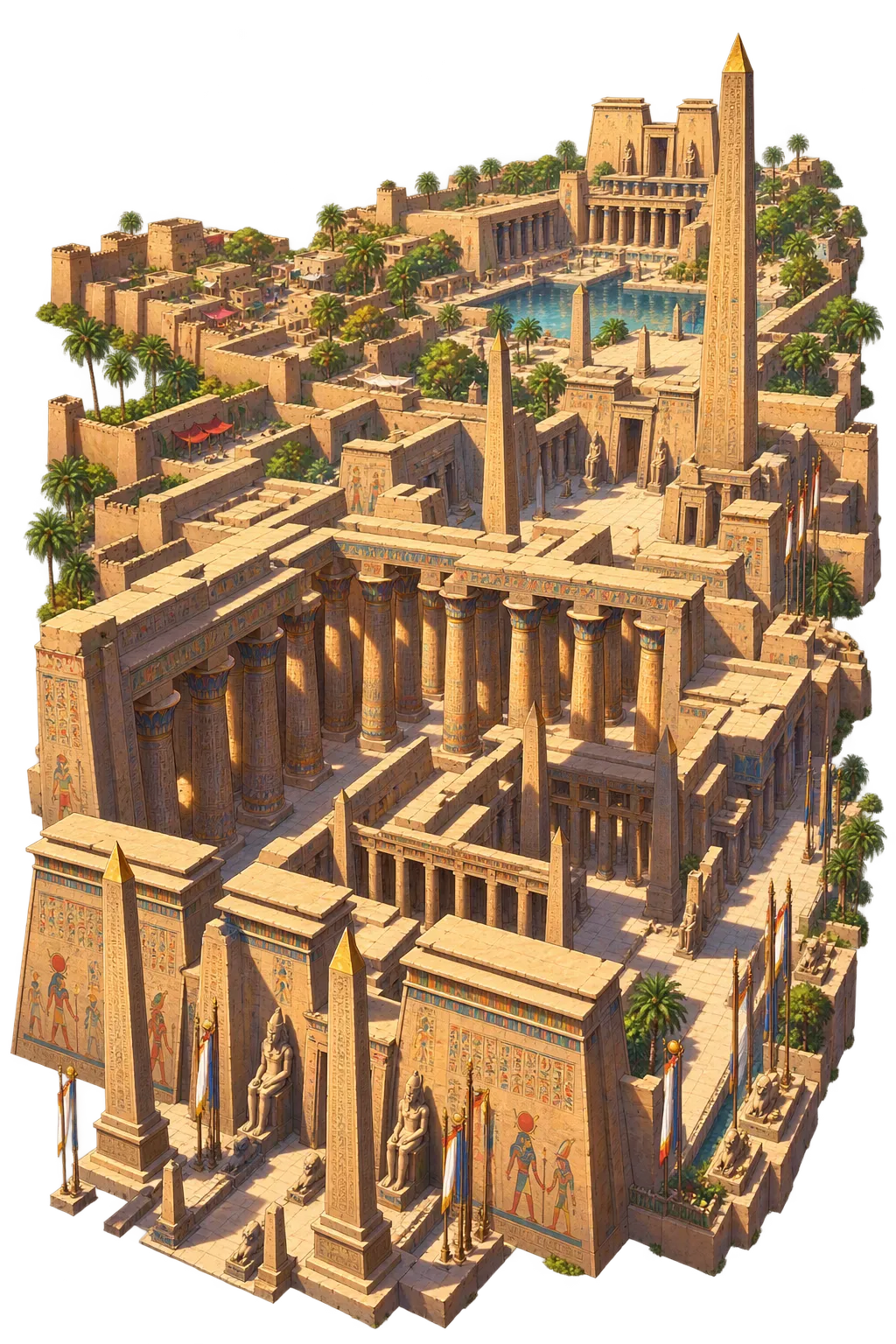
Sacred SymbolsThe Great Hypostyle, House of Amun-Ra, The Pharaohs’ Ledger, The Sacred Lake
02

Etymology & Word Family

From original script to Unicode restoration

Scholarly Transliteration Karnak Karnak — "Fortified village"
Unicode Restoration Karnak Canonical scholarly spelling — ASCII-identical
Modern ASCII karnak Plain-ASCII fallback

The name Karnak reaches the modern world through scholarly transliteration of the egyptian tradition. Because the conventional spelling uses only Latin letters, its Unicode and ASCII forms coincide — the tradition it carries is in the name itself, not in diacritics.

03

Unicode Character Breakdown

Character-by-character philological analysis

CharacterUnicodeNameBlockPhonetic Role
KU+004BLatin Capital Letter KBasic LatinSame, capitalized
aU+0061Latin Small Letter ABasic LatinSame
rU+0072Latin Small Letter RBasic LatinSame
nU+006ELatin Small Letter NBasic LatinSame
aU+0061Latin Small Letter ABasic LatinSame
kU+006BLatin Small Letter KBasic LatinSame

This restoration reflects fidelity to the attested tradition, not recovered diacritics: every character of Karnak already survives in ASCII. What the restoration preserves is the canonical spelling itself — the form scholarship standardised.

04

Cult & Worship

How the sacred was kept — rites, sanctuaries, remains

The Cult

The daily cult of Amun-Ra — the god’s waking, washing, robing and feeding — was the most elaborate liturgy of Egypt, performed by the highest-ranking priests of the realm. The great festivals of Opet and the Valley moved the god’s barques between temples with the whole city watching.

In the Earth

Two thousand years of continuous building: the Middle Kingdom precursors, Hatshepsut’s obelisks, the great hypostyle of Seti I and Ramesses II, the sacred lake, the seven processional pylons, the Khonsu temple — all standing and all published. The ‘Avenue of Sphinxes’ to Luxor has been re-excavated in the twenty-first century.

05

Iconography

How Karnak was imaged across the ages

The Image

Karnak has no divine image — its icon is the ground-plan: pylons ranked like sunset gates, obelisks like ray-shafts, the columned hall as a petrified papyrus thicket. The ram-headed criosphinx, Amun’s processional animal, lines the temple’s approaches.

06

Reception & Transformation

The name after its own age — transmission, translation, survival

Afterlives

For two centuries Karnak has been the default image of ‘ancient temple’ in world culture — from Belzoni’s moving of its statues to the British Museum, to its role in every film that needs Egypt. Its name entered every major language unchanged, a loan-word from the largest religious building humanity ever raised.

Identifications Across Traditions

Karnak housed them all: Amun-Ra supreme, but also Montu, Mut, Khonsu, Ptah and Opet, in a polyphony of chapels that makes the complex a pantheon in plan. The Greeks called the whole Thebes ‘Diospolis’, city of Zeus-Amun; the temple was the Zeus-estate, and Alexander the Great crossed the desert to its oracle to be confirmed son of Amun.

Modern Legacy

The hypostyle hall’s columns seeded every ‘Egyptian’ column in the world’s architecture — railway stations, museums, mausoleums. The Sound-and-Light economy of modern Luxor, and half of every coffee-table book on Egypt, rest on this one complex; its restoration is an ongoing international project two centuries old.

07

The Meditation

What Karnak means — beyond the dictionary

A place-name standing among god-names: Karnak’s inclusion in the lexicon is deliberate — the temple-city as deity, the dwelling as theophany. Its plain ASCII spelling is the one every language already uses; the fortified village needed no restoration because the whole world never stopped saying its name.

08

Frequently Asked Questions

Common questions about Karnak, Temple Complex, Amun, and Unicode restoration

01How do you pronounce Karnak?

In reconstructed pronunciation, Karnak is /ˈkɑːrnæk/ (conventional) — approximately “KAR-nak”.

02What does Karnak mean?

Karnak means Fortified village in the egyptian tradition.

03What are the symbols of Karnak?

Karnak is associated with The Great Hypostyle (A forest of 134 columns under one roof — the largest columned hall ever raised.), House of Amun-Ra (The god’s ‘mansion’ on earth; the cult image dwelt here in a daily liturgy of waking, washing, and feeding.), The Pharaohs’ Ledger (Every dynasty added a pylon, an obelisk, a hall — the temple is Egypt’s history carved in sequence.), The Sacred Lake (Its rectangular lake staged the primeval waters for the priests’ dawn ablutions.).

04Why restore Karnak in Unicode?

Karnak is written entirely in ASCII letters, so its restoration is about canonical fidelity rather than recovered diacritics: the temple fixes the name in its scholarly standard spelling, attested in the source tradition, instead of leaving it to drift.

05What is the most important myth about Karnak?

“The Most Select of Places” — the Foundation Legend story that anchors the mythology of Karnak, told in full on the lore page.

09

Scholarly Sources

The philological foundations of this restoration

Every claim on this page is grounded in established scholarship. The orthographic restorations follow disciplinary convention. The etymological chain follows the best available reference works. This is not invention — it is resurrection through scholarship.

◈

Lexicography & Philology

  • Egyptology
  • Faulkner, R. O. A Concise Dictionary of Middle Egyptian. Oxford: Griffith Institute, 1962.
◎

Primary Texts

◉

Archaeology & Art History

  • Material evidence — iconography, inscriptions, and temple archaeology — for Karnak and related cults.
✦

Religious Studies

  • Description de l’Égypte, Antiquités vol. I–III
  • Karnak King List (Seti I gallery)
  • Opet festival reliefs, Luxor and Karnak
  • Barguet, Le temple d’Amon-Rê à Karnak
Return

The Surface Awaits

You have traced the name from its earliest attestation to its Unicode restoration. Now return to the myth. The story is where the name lives.

Back to Lore
Karnak mascot