PuniCodex

Extended Lore

観音 Kannon

Etymology · Phonology · Orthography · Cultural Legacy · Primary Sources

Tier 2 Kannon
Kannon — Compassion, Mercy
01

Quick Facts

Essential information about Kannon, Compassion, Mercy

Original Script観音
Unicode RestorationKannon
Reconstructed Pronunciation/kaɴ.noɴ/
PantheonJapanese
DomainCompassion, Mercy
MeaningPerceiver of sounds
ClassificationTier 2
Primary DomainKannon
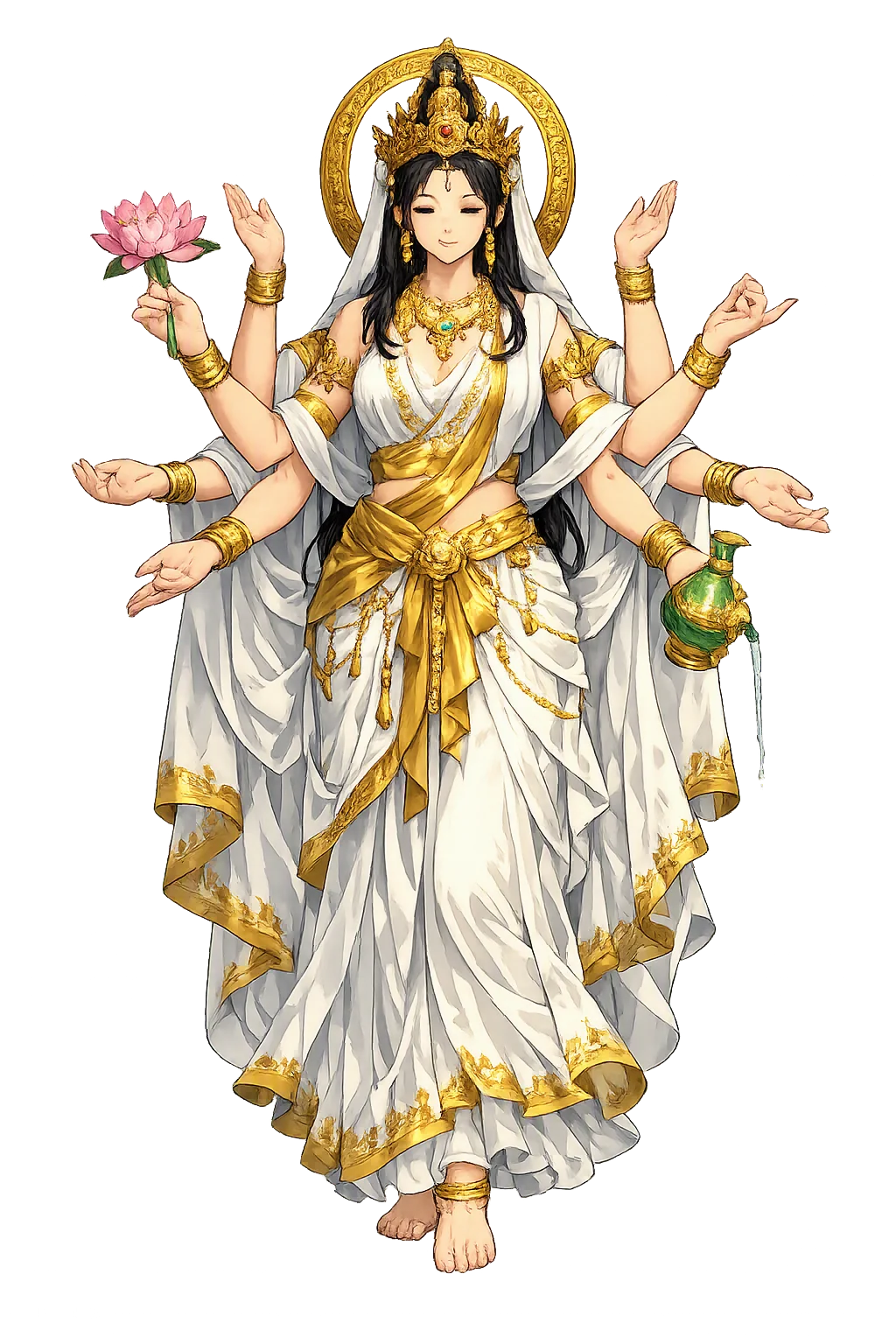
Sacred SymbolsLotus seat, Water vase, Willow branch, Thousand eyes
02

Etymology & Word Family

From original script to Unicode restoration

Original Script 観音 Kannon — "Perceiver of sounds"
Unicode Restoration Kannon Restored stress, length, and script
Modern ASCII kannon Plain-ASCII fallback

Kannon is Tier 2: the Japanese form loses the long ā and special ś of the Sanskrit. The name's power is devotional and artistic, not orthographic.

03

Unicode Character Breakdown

Character-by-character philological analysis

CharacterUnicodeNameBlockPhonetic Role
KU+004BLatin Capital Letter KBasic LatinSame, capitalized
aU+0061Latin Small Letter ABasic LatinSame
nU+006ELatin Small Letter NBasic LatinSame
oU+006FLatin Small Letter OBasic LatinSame
nU+006ELatin Small Letter NBasic LatinSame

The Tier 2 classification reflects how much of the original phonology this restoration preserves — stress and vowel length for Greek names, distinctive letters and diacritics for every other tradition.

04

Cultural Significance

From ancient cult to modern Unicode

Ancient Domain

Kannon is the Japanese form of Avalokiteśvara, the bodhisattva of infinite compassion. Kannon hears the cries of all beings and responds in whatever form is needed — male or female, one-faced or thousand-armed, gentle or wrathful. Kannon is one of the most beloved Buddhist figures in Japan, worshipped at pilgrimage sites from Kyōto's Kiyomizu-dera to the island sanctuary of Kannonzaki.

Kannon in Later Traditions

Kannon absorbed native kami functions, especially those related to water, childbirth, and protection at sea. Shrine-Buddhist synthesis (shinbutsu shūgō) produced hybrid figures such as Kannon as a local kami, and hidden Christians (kakure kirishitan) disguised the Virgin Mary as Kannon statues. The bodhisattva's flexibility made Kannon a bridge between religious worlds.

Modern Legacy

Kannon is one of the most common figures in Japanese art and worship. The Great Buddha of Kamakura is Amida, but Kannon statues rival it in number and devotion. Kannonzaki, Kiyomizu-dera, and Hase-dera are famous pilgrimage sites, and the name Kannon appears in place names, festivals, and personal names across Japan.

Unicode Restoration as Cultural Act

Restoring Kannon in a domain name is more than orthographic accuracy. It is a statement that the internet should recognize the full range of human writing — not only the ASCII keyboard.

05

Frequently Asked Questions

Common questions about Kannon, Compassion, Mercy, and Unicode restoration

01How do you pronounce Kannon?

In reconstructed pronunciation, Kannon is /kaɴ.noɴ/ — approximately 'KAHN-nohn' — the first 'n' is a soft nasal; the final syllable closes gently..

02What does Kannon mean?

Kannon means Perceiver of sounds in the japanese tradition.

03What are the symbols of Kannon?

Kannon is associated with Lotus seat (Purity and transcendence), Water vase (The vase of compassion that pours forth healing waters), Willow branch (Used to sprinkle blessed water and ease suffering), Thousand eyes (The eyes on the thousand hands that perceive all suffering).

04Why restore Kannon in Unicode?

Plain ASCII kannon strips the stress, length, and script that make the name specific. Unicode restoration returns the name to its original written dignity.

05What is the most important myth about Kannon?

The Lotus Sutra's 'Universal Gate' chapter describes Avalokiteśvara's vow to save all beings from fire, flood, prison, demons, and despair. Those who call the name will be heard, regardless of their condition. This chapter became the foundation of Kannon devotion across East Asia.

06

Scholarly Sources

The philological foundations of this restoration

Every claim on this page is grounded in established scholarship. The orthographic restorations follow disciplinary convention. The etymological chain follows the best available reference works. This is not invention — it is resurrection through scholarship.

Lexicography & Philology

  • Lotus Sutra
  • Buddhist texts

Primary Texts

  • The Kojiki; the Nihon Shoki; shrine ritual records.

Archaeology & Art History

  • Material evidence — iconography, inscriptions, and temple archaeology — for Kannon and related cults.
  • Kiyomizu-dera in Kyōto and Hase-dera in Kamakura are among the most famous Kannon temples in Japan, preserving Heian- and Kamakura-period sculpture and architecture. The Saikoku and Bandō pilgrimage circuits link dozens of temples with Kannon statuary, votive materials, and pilgrimage culture.

Religious Studies

  • Lotus Sutra, 'Universal Gate' chapter
  • Heart Sutra
  • Japanese pilgrimage records (Saikoku, Bandō)
Return

The Surface Awaits

You have traced the name from its earliest attestation to its Unicode restoration. Now return to the myth. The story is where the name lives.

Back to Lore
Kannon mascot