PuniCodex

Extended Lore

Kai

Etymology · Orthography · Cult · Iconography · Reception · Sources

Tier 2 Kai
Kai — Seneschal, Steward
01

Quick Facts

Essential information about Kai, Seneschal, Steward

Scholarly TransliterationKai
Unicode RestorationKai
Reconstructed Pronunciation/kəi/
PantheonCeltic
DomainSeneschal, Steward
MeaningUnknown
ClassificationTier 2
Primary DomainKai
Sacred SymbolsThe nine days' breath, The fire in his hands, The unhealable sword, The beard of Dillus, Cei Hir, 'the Tall'
02

Etymology & Word Family

From original script to Unicode restoration

Scholarly Transliteration Kai Kai — "Unknown"
Unicode Restoration Kai Canonical scholarly spelling — ASCII-identical
Modern ASCII kai Plain-ASCII fallback

The name Kai reaches the modern world through scholarly transliteration of the celtic tradition. Because the conventional spelling uses only Latin letters, its Unicode and ASCII forms coincide — the tradition it carries is in the name itself, not in diacritics.

03

Unicode Character Breakdown

Character-by-character philological analysis

CharacterUnicodeNameBlockPhonetic Role
KU+004BLatin Capital Letter KBasic LatinSame, capitalized
aU+0061Latin Small Letter ABasic LatinSame
iU+0069Latin Small Letter IBasic LatinSame

The Tier 2 classification here reflects fidelity to the attested tradition, not recovered diacritics: every character of Kai already survives in ASCII. What the restoration preserves is the canonical spelling itself — the form scholarship standardised.

04

Cult & Worship

How the sacred was kept — rites, sanctuaries, remains

The Cult

Cei was never a god, and no cult ever belonged to him: no dedication, shrine, or festival names the tall man, and Welsh tradition left texts, not temples, for its heroes. The nearest the record comes to reverence is remembrance — his name kept in the triads and the court poetry, his deeds retold at the gate of Arthur's hall — which is the hero-lore of a storyteller's people, not the cult-lore of a priesthood. If any sanctity attached to him in the Welsh imagination, it was the sanctity of the first companion, the one Arthur names before all others. That is literary honour, and it is all the evidence allows.

In the Earth

Kai is a literary figure: no inscription, ogham stone, or Romano-British dedication names him, and Welsh tradition generally left texts rather than cult monuments for its heroes. His manuscript witnesses are exact and early. The dialogue poem Pa Gur survives in the Black Book of Carmarthen (c. 1250), the oldest substantial manuscript of Welsh verse; Culhwch ac Olwen survives in a fragmentary copy in the White Book of Rhydderch (Peniarth 4–5, c. 1350) and complete in the Red Book of Hergest (Jesus College MS 111, c. 1375–1425); and the Otherworld-raid poem Preiddeu Annwn, the companion witness to this stratum, is preserved in the Book of Taliesin (Peniarth 2, early 14th c.). Geoffrey of Monmouth's Historia Regum Britanniae (c. 1136) and Lifris of Llancarfan's Vita Cadoci (c. 1100) carry the Latin attestations. The places of the tales — Caer Loyw on the Severn, the Anglesey of Cath Palug — remain on the map, but the tall man himself left nothing in stone.

05

Iconography

How Kai was imaged across the ages

The Image

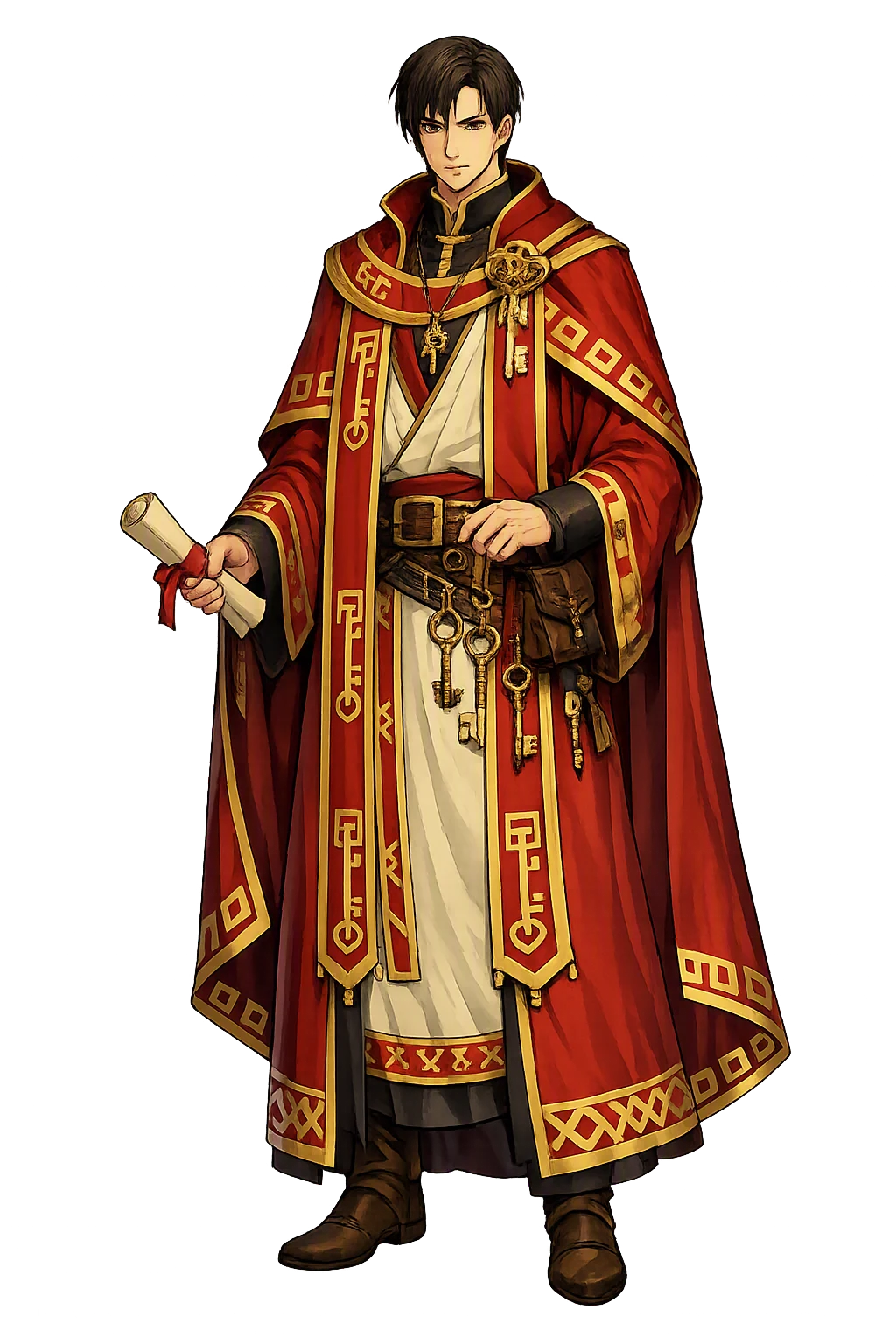
No early image of Cei survives, and none can be identified with confidence: the manuscripts that keep him — the Black Book of Carmarthen, the White Book of Rhydderch, the Red Book of Hergest — are text-books, not picture-books, and early Wales left no figured stones to carry him. His visual grammar is textual and strange: Cei Hir, the Tall, who when it pleased him stood as high as the tallest tree in the forest; the hand that stayed dry a handbreadth above and below in the heaviest rain; the body so hot it served as fuel for the company's fire; the sword whose wound no physician could heal. When later medieval and Renaissance artists painted Arthur's court, it was the younger costume they gave him — the seneschal's staff and robe — so every image of Kay descends from Geoffrey's job title, not from the wonder-hero of the Welsh list.

06

Reception & Transformation

The name after its own age — transmission, translation, survival

Afterlives

Kai's transmission is the longest journey in this batch. The oldest stratum is Welsh verse: Pa Gur yv y Porthaur?, the gatekeeper dialogue that makes Cei the champion against nine witches and the cat of Anglesey, survives in the Black Book of Carmarthen (c. 1250); Culhwch ac Olwen, his fullest dossier, rides the White Book of Rhydderch (c. 1350) and the Red Book of Hergest (c. 1375–1425); and the Welsh Triads keep his name in order. Then the language changes: Geoffrey of Monmouth's Historia Regum Britanniae (c. 1136) makes him Caius dapifer, steward and duke, buried at the castle of Chinon; Chrétien de Troyes makes Keu the court's mocker in Erec et Enide and Yvain; the French prose cycles pass him down, and Malory's Le Morte Darthur (1485) fixes the English Kay — foster-brother, claimant of the sword, seneschal at the coronation. The Welsh wonder-hero was not so much forgotten as translated out of existence, job title by job title. The recovery ran in reverse: nineteenth-century antiquarian scholarship — Lady Charlotte Guest's Mabinogion (1838–49) above all — set the tall man with the fire in his hands back beside the steward of the romances, and Mac Cana and Bromwich made the descent from Cei Hir to Sir Kay a standard case-study in how legend domesticates its oldest figures. The name never needed reviving: Cai is a living Welsh given name, and its two descendants, the Welsh Cei and the romances' Kay, still answer to the same single syllable.

Identifications Across Traditions

Kai is less a figure who absorbed other gods than one whom each retelling rewrote. The Welsh stratum gives a wonder-hero: the tall, fire-handed, sleepless companion whose attributes belong to the oldest legendary stock of Britain. Geoffrey of Monmouth euhemerizes him into Caius dapifer, a duke and steward of recognizable twelfth-century type; Chrétien de Troyes turns the steward's sharpness into Keu's venomous tongue, the court's mocker who is always wrong; and Malory resolves the long arc into Sir Kay, Arthur's foster-brother — loyal, loud, and forever outmatched. Scholars have long paired him with Bedwyr, his constant companion in Culhwch ac Olwen, as the two oldest members of Arthur's band; and Mac Cana and others note that the tale-patterns around the pair — the raid on a giant's stronghold, the hunt of the enchanted boar — have close Irish analogues, though no Irish cycle preserves Cei himself. The transformation of the tall man into the seneschal is the tradition's own syncretism: one name, four costumes, and the office outlasting the magic.

Modern Legacy

The steward outlived the giant-killer. Malory's Sir Kay — the foster-brother who claims he drew the sword from the stone, confesses, and is made seneschal at Arthur's coronation — fixed the English image: blunt, envious, brave enough, and indispensable to the household. Chrétien's Keu had already made him the court's satirist, and the romances of every language kept that register. T. H. White's The Sword in the Stone made Kay the human counterweight to the Wart, the brother who gets the crown's shadow instead of the crown. In Welsh the name never left: Cai remains a living given name, and the Mabinogion's Cei Hir is still the tall man of the oldest Arthurian tale. Modern scholarship treats the arc from wonder-hero to comic steward as one of the great case-studies in how the Arthurian legend domesticated its oldest figures.

07

The Meditation

What Kai means — beyond the dictionary

Kai is the patron of the unglamorous power: the one who keeps the fire, the stores, the hall — the office that lets everyone else be heroic. His oldest attributes are a steward's attributes written in mythic scale. He does not merely endure the cold; he is fuel for the company's fire. He does not merely keep dry; whatever he carries stays dry a handbreadth around. The seneschal of the romances is the same figure after the magic has been spent: the man who knows where everything is kept, who answers the gate, whose sharp tongue is the friction of service worn into habit.

And the tradition is honest about the cost. His mother's prophecy said his heart would be cold; Arthur's englyn mocked the feat no one else could perform; the fellowship ended in a vengeance taken too late. Kai asks the question every household and every court must answer: what do you owe the one who keeps the fire — and what does keeping it do to the heart?

08

Frequently Asked Questions

Common questions about Kai, Seneschal, Steward, and Unicode restoration

01How do you pronounce Kai?

In reconstructed pronunciation, Kai is /kəi/ — approximately 'KAY' — one syllable, exactly the English name Kay; the diphthong glides from a neutral 'uh' to 'ee' inside a single beat.

02What does Kai mean?

Kai means Unknown in the celtic tradition.

03What are the symbols of Kai?

Kai is associated with The nine days' breath (Endurance past the human limit — the hero who outlasts water and sleep alike), The fire in his hands (Heat as provision: the companion who keeps the whole company warm, dry, and fed with fire), The unhealable sword (A stroke beyond remedy — the oldest stratum's mark of the warrior, before romances made him a steward), The beard of Dillus (The quest accomplished by cunning — and Arthur's mocking englyn that ended the fellowship), Cei Hir, 'the Tall' (Tall as the tallest tree in the forest when it pleased him — stature as the visible sign of the older, larger hero).

04Why restore Kai in Unicode?

Kai is written entirely in ASCII letters, so its restoration is about canonical fidelity rather than recovered diacritics: the temple fixes the name in its scholarly standard spelling, attested in the source tradition, instead of leaving it to drift.

05What is the most important myth about Kai?

“The First Companion” — the Culhwch ac Olwen story that anchors the mythology of Kai, told in full on the lore page.

09

Scholarly Sources

The philological foundations of this restoration

Every claim on this page is grounded in established scholarship. The orthographic restorations follow disciplinary convention. The etymological chain follows the best available reference works. This is not invention — it is resurrection through scholarship.

◈

Lexicography & Philology

  • Arthurian legend
  • MacKillop
◎

Primary Texts

  • The Immram Brain (Voyage of Bran); Tochmarc Étaíne; Cóir Anmann; medieval Irish saga literature.
◉

Archaeology & Art History

  • Material evidence — iconography, inscriptions, and temple archaeology — for Kai and related cults.
✦

Religious Studies

  • Culhwch ac Olwen (Mabinogion), trans. Gwyn Jones and Thomas Jones — the first companion; the attribute list; Wrnach; Dillus; the englyn and the rift; Cei's death avenged.
  • Pa Gur yv y Porthaur? (Black Book of Carmarthen) — the nine witches; Cath Palug on Anglesey.
  • Trioedd Ynys Prydein, ed. and trans. Rachel Bromwich — the birth of Cath Palug from Henwen.
  • Geoffrey of Monmouth, Historia Regum Britanniae — Caius dapifer; Anjou; the death and burial at Chinon.
  • Sir Thomas Malory, Le Morte Darthur — Sir Kay the seneschal, Arthur's foster-brother.
  • Mac Cana, Proinsias, Celtic Mythology — the Welsh hero tradition and its Irish analogues.
Return

The Surface Awaits

You have traced the name from its earliest attestation to its Unicode restoration. Now return to the myth. The story is where the name lives.

Back to Lore
Kai mascot