
Why Jǫrmungandr is spelled that way — and what it costs to get it right
There is a version of this name the early internet had to settle for: jormungandr. This is the file on how Jǫrmungandr replaced it.
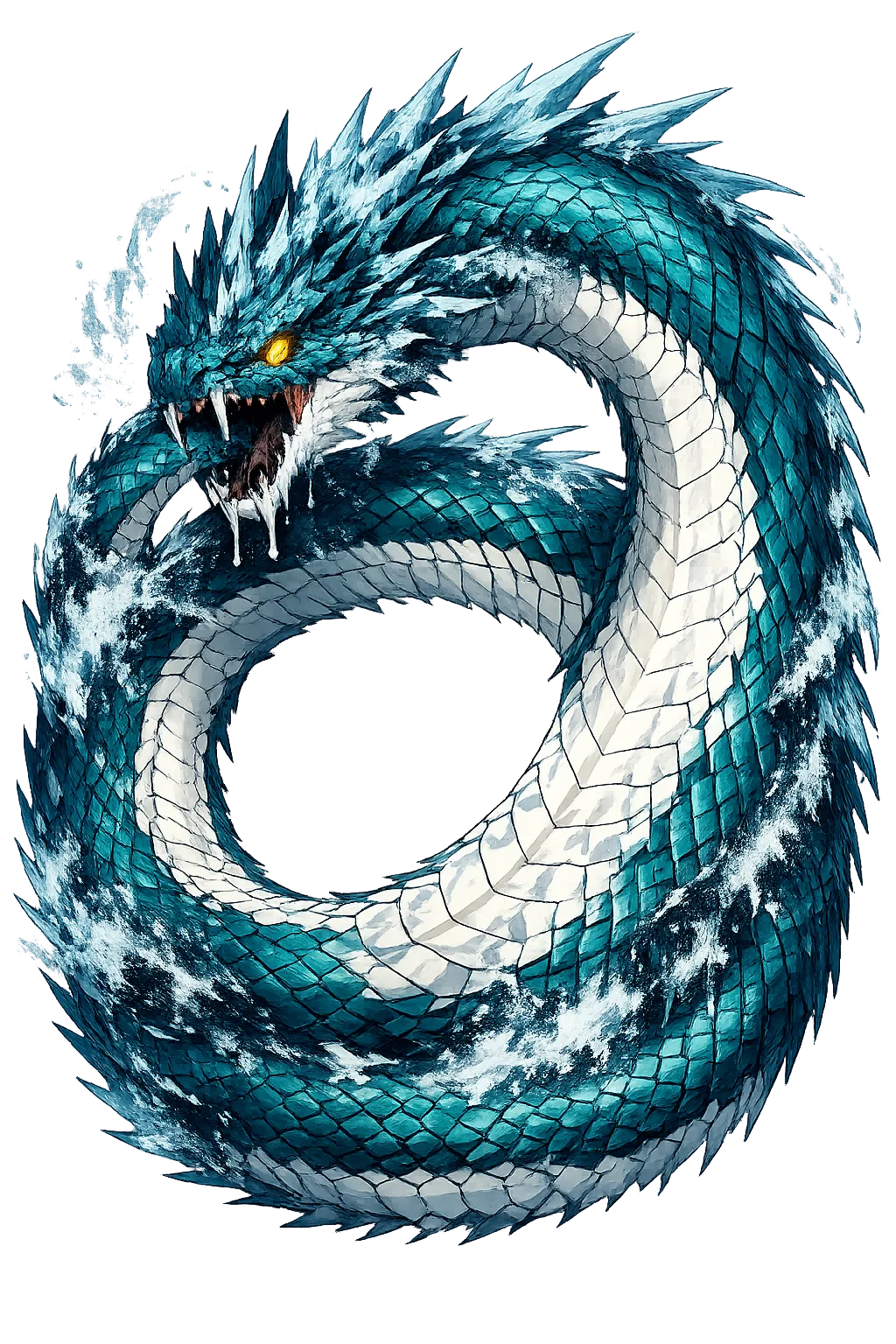
Jǫrmungandr is one of the three great threats to the gods, alongside Fenrir and Hel. It does not speak in the myths, yet its body defines the shape of the world and its final battle with Þórr is one of the climactic moments of Ragnarök.
At a Glance
- Restored name: Jǫrmungandr
- ASCII form: jormungandr
- Meaning: "Huge monster (from jǫrmun + gandr)"
- Domain of influence: World Serpent
- Pantheon: Norse
- Classification: Tier 1
- Original script: ᛁᚢᚱᛘᚢᚾᚴᛅᚾᛏᚱ
- Series: The Restoration Files, No. 247 of 546
The Name Before the Marks
Spoken, the name runs `/ˈjɔrˌmun.ɡan.dr/` — 'YOR-mun-gand-r' — stress the first syllable, pronounce the 'or' like the 'o' in 'hot' with an r-color, and keep the final r light and trilled.
The Temple That Stands Now
The restored name is not a plaque; it is an address. The temple of Jǫrmungandr lives at /jormungandr/, with its mythology in the lore halls, its peer-reviewed record in the Scholarly Edition, and its place in the pattern atlas on the patterns floor.
Tier-1 is not a compliment; it is a measurement. This restoration keeps something the ASCII form provably loses, and the measurement is repeatable.
Where the Name Stood First
The Altuna runestone in Uppland, Sweden (U 1161) is the most famous pictorial attestation of Þórr fishing for Jǫrmungandr, showing the god in a boat with his hammer raised and the serpent at the line. Gosforth Cross in Cumbria and other Scandinavian runestones depict related scenes. Mjöllnir amulets, though not directly depicting the serpent, belong to the same visual culture in which Þórr's cosmic battles were central. The ouroboros motif appears independently in Greek, Egyptian, and medieval European iconography. The temple on the web is the newest of these addresses — the first one that fits in a pocket.
The Archetype at Work
The pattern atlas seats this temple in 5 industries, each match argued and weighted: Gaming, Fantasy & Entertainment IP (the world serpent; God of War’s most memorable co-star.); Mapping & Geospatial (its coil defines the shape of the world; the coastline as one endless body.); Cybersecurity & Digital Protection (the boundary that holds the world together — perimeter defense with teeth.). The Resonance File reads those seats through the myths themselves.
In the Sacred Texts
The Norse tradition is not a vibe; it is a library. The Sacred Texts collection holds Poetic Edda and Prose Edda — the primary sources the temple's scholarship is built on. The temple is the argument; the texts are the evidence.
The File Continues
The temple's founding dispatch tells the name's story; its Resonance File reads the myths into the industries; the blog index holds the whole archive.
Continue the series — previous file: Jǫrð (read it here) · next file: Jötunheimr (read it here).
The Restoration Files are written from the same canonical record as the temples themselves: the lexicon, the lore catalog, the pattern atlas, and the cited scholarly sources. If a file ever disagrees with its temple, the temple is right — tell us, and the file will be corrected.