
The Cult
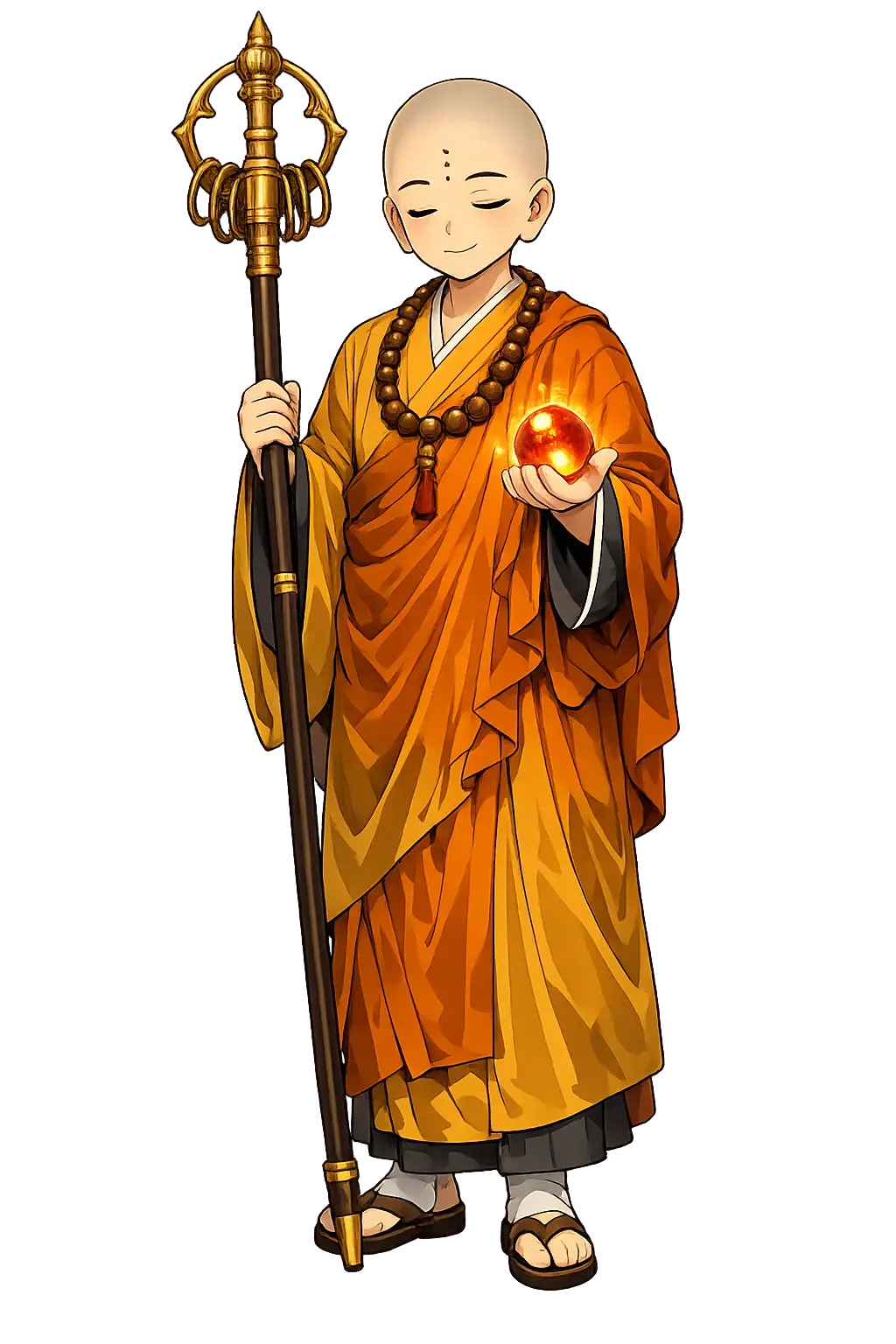
Jizō's cult is the most domestic in Japan. It has no priesthood of its own and needed none: the statues are tended by the families and neighborhoods who set them up. From the Kamakura period onward the rokujizō — six Jizō standing guard over the six realms of rebirth — were planted at village edges, crossroads, bridges, and graveyards, so the bodhisattva's territory became the map of ordinary travel and ordinary death. The twenty-fourth of each month is his en'nichi, his festival day, and in high summer Japan keeps Jizō-bon, when children honor their guardian with flowers, sweets, and red bibs — a children's festival built on a bodhisattva. At Mount Kōya's Okunoin, ranks of stone Jizō watch over the nation's grandest cemetery; at cemeteries everywhere, parents dress the stones for the children they lost. The rites are self-service religion of the gentlest kind: sweep the snow, tie the bib, say thank you.