
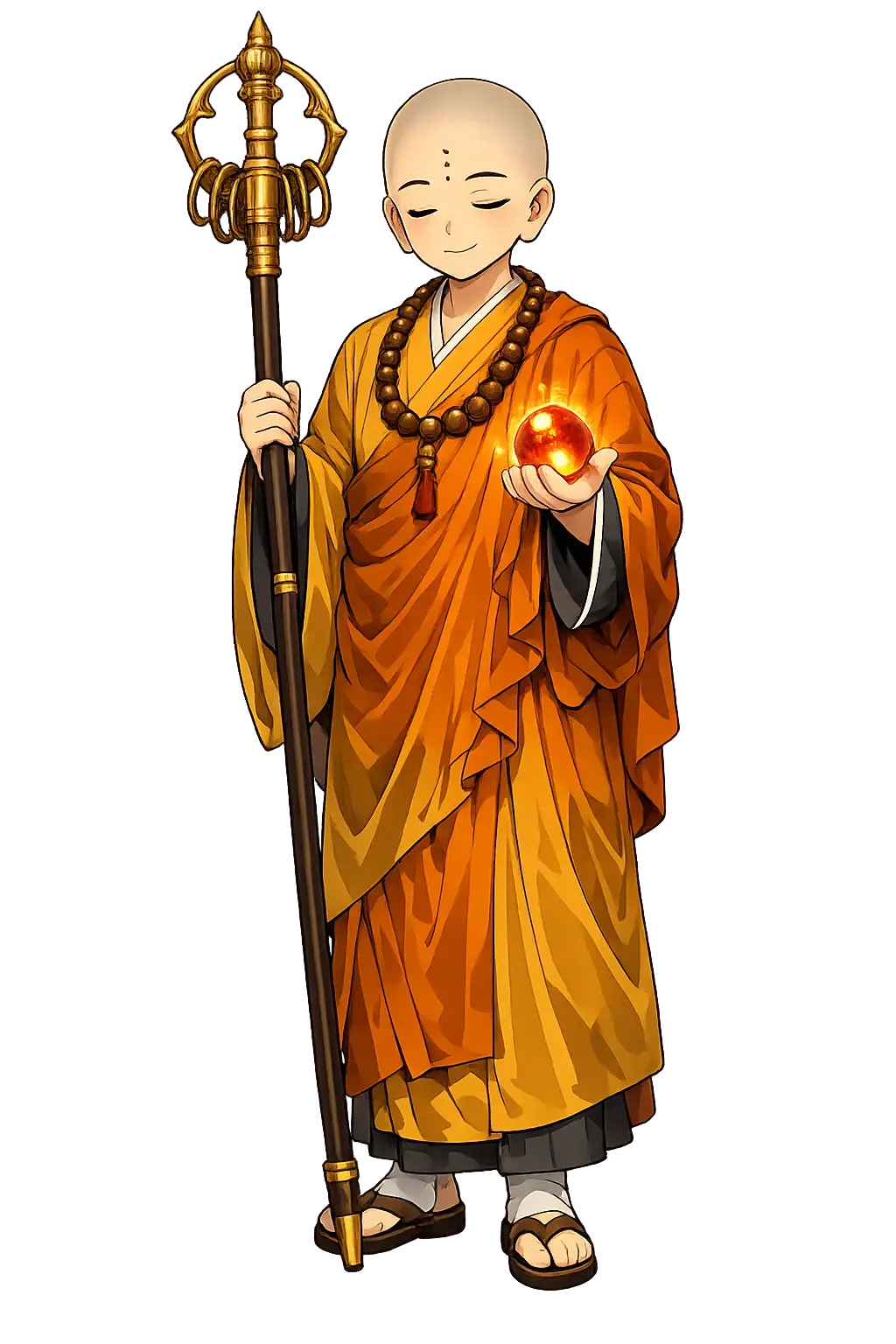
Stress-testing Jizō: do the industry seats hold?
Audit: Jizō, seat by seat. The atlas makes claims; the myths decide which ones stand. This is the record of what held.
At a Glance
- Temple: Jizō
- Pantheon: Japanese
- Domain of influence: Protection of Children, Travelers
- Pattern seats: 5
- Sectors touched: Commerce & Governance · Home & Lifestyle · Society & Spirit · Health & Wellbeing · Culture & Entertainment
- Strongest seat: Insurance & Protection Services
- Series: The Resonance Files, No. 245 of 546
The Test
Seat 1: Insurance & Protection Services
Claim: Protector of children and travelers; the guardian at every roadside. Exhibit: The Original Vow — The Kṣitigarbha Bodhisattva Sūtra recounts that in a previous life the bodhisattva was a Brahmin maiden whose mother had slandered the Dharma.
Verdict: survives scrutiny. The myth and the trade do the same work.
Seat 2: Wedding, Family & Maternity
Claim: Protector of children; the beloved guardian of the young. Exhibit: Sai no Kawara — On the banks of Sai no Kawara, the stony riverbed where dead children must labor, the little souls pile stones as penance for having caused their parents grief — and each night demons scatter their work.
Verdict: holds under load. The correspondence is functional, not decorative.
Seat 3: Faith & Spiritual Organizations
Claim: Roadside devotion across Japan; offerings still pile at his statues. Exhibit: The Monk Who Was Jizō — Countless Japanese tales tell of a wandering monk who helps a traveller in distress — carrying the load, pointing the road, sharing the fire — only to vanish, leaving the traveller to realize that the monk was the roadside Jizō himself.
Verdict: survives scrutiny. The myth and the trade do the same work.
Seat 4: Mental Health & Emotional Wellness
Claim: Comforter of the grieving and protector in liminal states; Japan’s patron of consolation. Exhibit: The Original Vow — The Kṣitigarbha Bodhisattva Sūtra recounts that in a previous life the bodhisattva was a Brahmin maiden whose mother had slandered the Dharma.
Verdict: survives scrutiny. The myth and the trade do the same work.
Seat 5: Travel, Tourism & Place Branding
Claim: Protector of travelers; the pilgrim’s patron. Exhibit: Sai no Kawara — On the banks of Sai no Kawara, the stony riverbed where dead children must labor, the little souls pile stones as penance for having caused their parents grief — and each night demons scatter their work.
Verdict: stands. Strip both to their function and the functions match.
The Control Group
Against the seats that survived, one control: the temple's own summary of its figure — Jizō's mythology blends Indian scripture, Chinese translation, and Japanese folk belief. The seats do not drift far from it. That is the audit's cleanest result.
The Method, Stated Plainly
Skeptical? Good — the system is built for you. Every seat in this file carries its why-line and its weight, the full derivation is public at the methodology page, and the challenge process is part of the design. Falsifiable is not a posture here; it is the mechanism.
For the Ones Who Work There
For a sponsor in insurance & protection services, the fit here is not adjacency — it is inheritance. Your trade already tells this story every working day; the temple simply holds the original. The patron tier and the advertising terms carry the mechanics; the myths above carry the reason.
The File Continues
This is one of 546 Resonance Files — the third dispatch from every flagship temple, where the myths meet the markets. The temple's founding dispatch tells the name's story; its Restoration File tells the spelling's; the blog index holds the whole archive.
Continue the series — previous: Jagannātha (read it) · next: Jǫrð (read it).
The Resonance Files are argued from the same canonical record as the pattern atlas itself: the lexicon, the lore catalog, and the cited sources. Every seat can be challenged at the methodology page — and the challenge is the point.