PuniCodex

Extended Lore

伊邪那岐 Izanagi

Etymology · Phonology · Orthography · Cultural Legacy · Primary Sources

Tier 2 Izanagi
Izanagi — Creator God, Shintō
01

Quick Facts

Essential information about Izanagi, Creator God, Shintō

Original Script伊邪那岐
Unicode RestorationIzanagi
Reconstructed Pronunciation/i.za.na.ɡi/
PantheonJapanese
DomainCreator God, Shintō
MeaningHe who invites
ClassificationTier 2
Primary DomainIzanagi
Sacred SymbolsAme-no-Nuboko, Yomotsu-hirasaka, Misogi purification, Eight-forked road
02

Etymology & Word Family

From original script to Unicode restoration

Original Script 伊邪那岐 Izanagi — "He who invites"
Unicode Restoration Izanagi Restored stress, length, and script
Modern ASCII izanagi Plain-ASCII fallback

Izanagi is Tier 2: plain Hepburn. He is one of the two primordial creator kami of Japanese myth.

03

Unicode Character Breakdown

Character-by-character philological analysis

CharacterUnicodeNameBlockPhonetic Role
IU+0049Latin Capital Letter IBasic LatinSame
zU+007ALatin Small Letter ZBasic LatinSame
aU+0061Latin Small Letter ABasic LatinSame
nU+006ELatin Small Letter NBasic LatinSame
aU+0061Latin Small Letter ABasic LatinSame
gU+0067Latin Small Letter GBasic LatinSame
iU+0069Latin Small Letter IBasic LatinSame

The Tier 2 classification reflects how much of the original phonology this restoration preserves — stress and vowel length for Greek names, distinctive letters and diacritics for every other tradition.

04

Cultural Significance

From ancient cult to modern Unicode

Ancient Domain

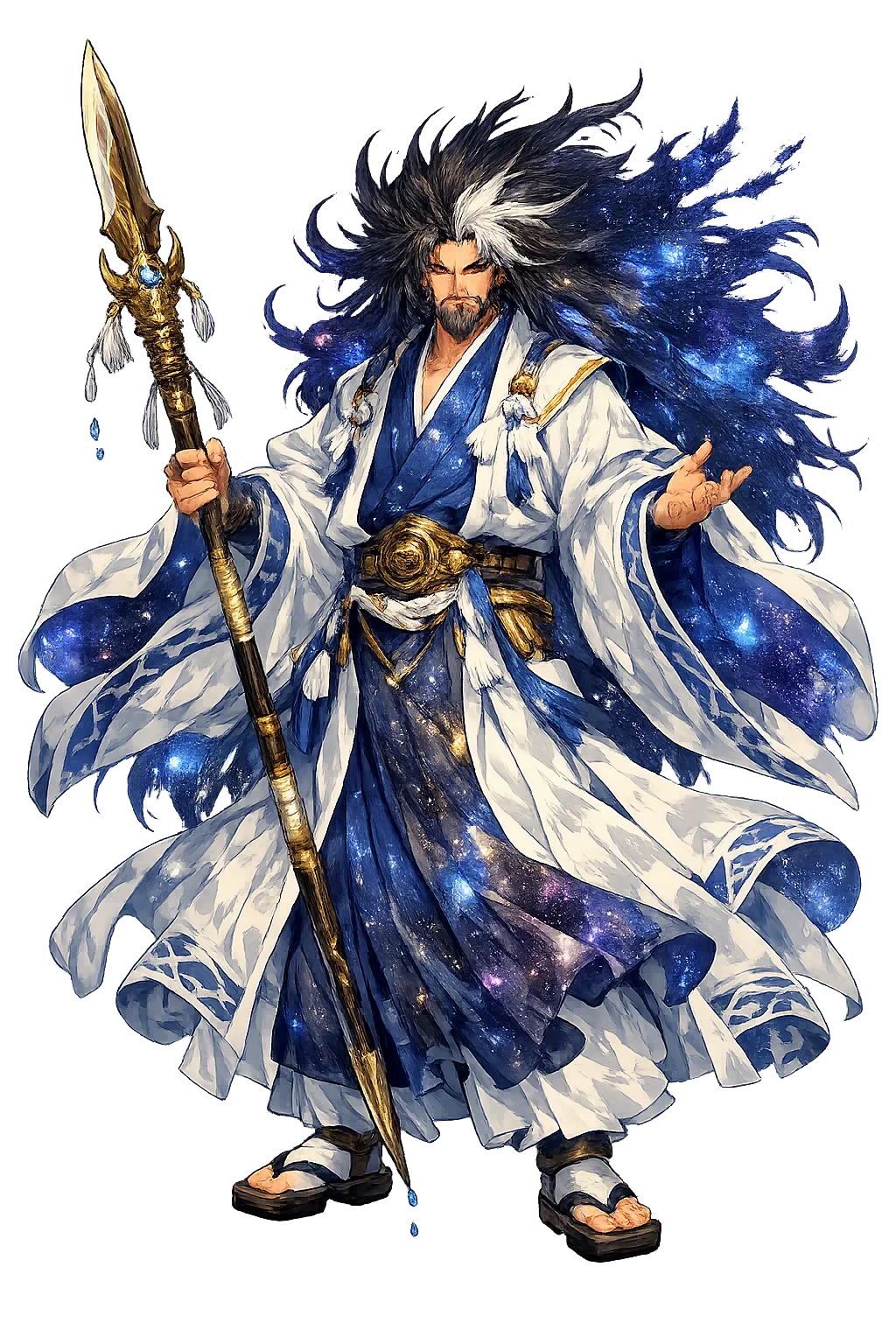
Izanagi is the male half of the primordial creator pair. With his sister-wife Izanami, he stirred the primordial ocean with the spear Ame-no-Nuboko and raised the islands of Japan. His later journey to the underworld and ritual purification gave birth to the most powerful kami of the Japanese pantheon, including Amaterasu herself.

Izanagi in Later Traditions

Izanagi and Izanami are often compared to other creator couples across Eurasia, but their specifically Japanese features — the island-creating spear, the underworld separation, the birth of gods from purification — are distinct. In the modern period, Izanagi became a focus of State Shinto as a symbol of national origins, and the creation myth was taught in schools as literal history.

Modern Legacy

Izanagi remains a foundational figure in Japanese myth. His name appears in shrine rituals, creation narratives, and popular retellings. The misogi purification ritual is still practiced at shrines and by practitioners of Shinto-derived martial arts. The image of the divine couple stirring the ocean is one of Japan's most enduring creation scenes.

Unicode Restoration as Cultural Act

Restoring Izanagi in a domain name is more than orthographic accuracy. It is a statement that the internet should recognize the full range of human writing — not only the ASCII keyboard.

05

Frequently Asked Questions

Common questions about Izanagi, Creator God, Shintō, and Unicode restoration

01How do you pronounce Izanagi?

In reconstructed pronunciation, Izanagi is /i.za.na.ɡi/ — approximately 'EE-zah-nah-gee' — the 'g' is hard, and the 'r' of Western transcriptions is absent in Japanese..

02What does Izanagi mean?

Izanagi means He who invites in the japanese tradition.

03What are the symbols of Izanagi?

Izanagi is associated with Ame-no-Nuboko (The jeweled spear used to stir the primordial ocean and create land), Yomotsu-hirasaka (The slope that separates the land of the living from Yomi, sealed by Izanagi), Misogi purification (The river ritual that cleansed him after Yomi and produced the great kami), Eight-forked road (The crossroads in Yomi where Izanami sent demons to pursue him).

04Why restore Izanagi in Unicode?

Plain ASCII izanagi strips the stress, length, and script that make the name specific. Unicode restoration returns the name to its original written dignity.

05What is the most important myth about Izanagi?

Standing on the Floating Bridge of Heaven, Izanagi and Izanami lowered the jeweled spear into the formless ocean. When they lifted it, brine dripped from the tip and congealed into the island of Onogoroshima. They descended to the island, circled the pillar of heaven, and began to create the Japanese archipelago.

06

Scholarly Sources

The philological foundations of this restoration

Every claim on this page is grounded in established scholarship. The orthographic restorations follow disciplinary convention. The etymological chain follows the best available reference works. This is not invention — it is resurrection through scholarship.

Lexicography & Philology

  • Hepburn
  • Kojiki

Primary Texts

  • Kojiki (creation, Yomi, purification)
  • Nihon Shoki (parallel creation accounts)
  • Philippi, Kojiki

Archaeology & Art History

  • Material evidence — iconography, inscriptions, and temple archaeology — for Izanagi and related cults.
  • Izanagi has no independent material cult separate from shrines honoring the creation kami as a pair. The Taga Taisha in Ōmi is one prominent shrine associated with Izanagi and Izanami. Creation imagery appears in shrine art and ritual objects across Japan.

Religious Studies

  • Aston, Nihongi
Return

The Surface Awaits

You have traced the name from its earliest attestation to its Unicode restoration. Now return to the myth. The story is where the name lives.

Back to Lore
Izanagi mascot