PuniCodex

Extended Lore

𓊨𓏏𓆇 Ꜣst

Etymology · Orthography · Cultural Legacy · Reception · Primary Sources

Tier 1 Ꜣst.com
Ꜣst — Magic, Motherhood, Throne
01

Quick Facts

Essential information about Ꜣst, Magic, Motherhood, Throne

Original Script𓊨𓏏𓆇
Unicode RestorationꜢst
Reconstructed Pronunciation/ˈʔaːsət/
PantheonEgyptian
DomainMagic, Motherhood, Throne
MeaningThrone (Egyptian ꜣst)
ClassificationTier 1
Primary DomainꜢst.com
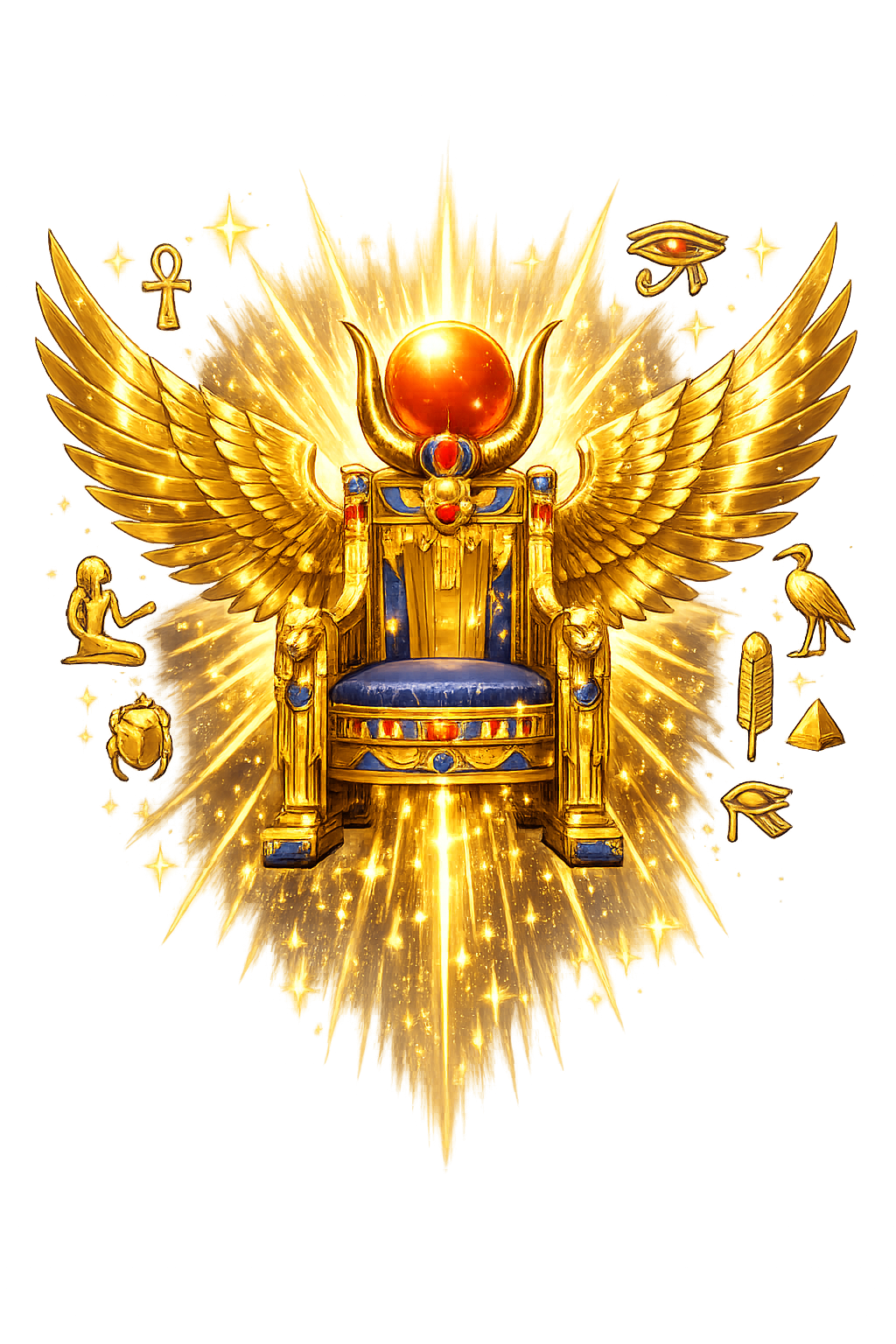
Sacred SymbolsThrone hieroglyph, Outspread wings, Ankh, Sistrum, Tyet knot
02

Etymology & Word Family

From original script to Unicode restoration

Original Script 𓊨𓏏𓆇 Ꜣst — "Throne (Egyptian ꜣst)"
Unicode Restoration Ꜣst Restored stress, length, and script
Modern ASCII isis Plain-ASCII fallback

The name Ꜣst carries the orthographic signature of the egyptian tradition: 𓊨𓏏𓆇. Unicode restoration recovers what ASCII flattens.

03

Unicode Character Breakdown

Character-by-character philological analysis

CharacterUnicodeNameBlockPhonetic Role
U+A722Latin Capital Letter Egyptological AlefLatin Extended-DAlef: glottal stop, voiced
sU+0073Latin Small Letter SBasic LatinSame
tU+0074Latin Small Letter TBasic LatinT: unwritten vowel position
N/ADropped characterEgyptian orthographyDropped: not represented in Egyptological

The Tier 1 classification reflects how much of the original phonology this restoration preserves — stress and vowel length for Greek names, distinctive letters and diacritics for every other tradition.

04

Cultural Significance

From ancient cult to modern memory

Ꜣst in Later Traditions

Ꜣst absorbed or was identified with many goddesses: Hathor in her solar-mother aspect, Mut as consort of Amun, and Serqet in protective magic. Greeks identified her with Demeter, both searching goddesses of grain and mourning, and with Aphrodite in her erotic power. Roman Egypt made Isis a universal saviour whose cult spread across the Mediterranean, reaching Pompeii, London, and the Danube. Early Christianity drew on her iconography for the Virgin Mary: the nursing mother, the queen of heaven, the star-crowned woman of Revelation. The Copts rendered her name as ⲎⲤⲈ, a sound that still haunts the modern name 'Isis.'

Modern Legacy

Isis gave the ancient Mediterranean one of its first truly international mystery religions. Her temples offered initiation, personal salvation, and a goddess who heard individual prayers. After Egypt became Christian, her images were redeployed for the Virgin and Child. In modern times the name 'Isis' has been borrowed by terrorist groups, a sad irony that has nothing to do with the goddess. Contemporary Pagans, Kemetics, and feminist theologians reclaim her as a goddess of magic, motherhood, and political resistance. Her throne hieroglyph still sits at the center of every royal image in which a king is 'established' on the goddess herself.

In the Earth

The temple of Isis at Philae, relocated to Agilkia by UNESCO, preserves the last known hieroglyphic inscription (394 CE). Earlier shrines flourished at Abydos, Behbeit el-Hagar, and Giza. The Great Hymn to Osiris on the Stela of Amenmose (Louvre C 286, Eighteenth Dynasty) and the Metternich Stela celebrate her magical protection of Horus. Bronze statuettes of Isis lactans, faience amulets, and temple reliefs from the Delta to Nubia attest her popularity across three millennia.

05

The Meditation

What Ꜣst means — beyond the dictionary

Isis is the goddess who refuses to let death have the last word. She does not bargain with the underworld; she walks into it, collects the fragments, and reassembles the beloved. Her power is not the thunderbolt but the patient knot, the hidden name, the breast that keeps a threatened child alive.

In a world that often splits love from power, Isis holds them together. She is the throne and the lap, the magician and the mother, the one who outwits the sun and weeps for a murdered husband. She teaches that sovereignty is not domination but the capacity to make broken things whole again. To call on Isis is to call on the part of the soul that will not stop searching until what was lost is found.

06

Screen & Culture

Where Ꜣst echoes through film, television, and games — and how

07

Frequently Asked Questions

Common questions about Ꜣst, Magic, Motherhood, Throne, and Unicode restoration

01How do you pronounce Ꜣst?

In reconstructed pronunciation, Ꜣst is /ˈʔaːsət/ — approximately 'AH-set' — begin with a slight catch in the throat (the alef), then 'set' with a crisp or silent final t. The variant 'EE-set' is also widely defended.

02What does Ꜣst mean?

Ꜣst means Throne (Egyptian ꜣst) in the egyptian tradition.

03What are the symbols of Ꜣst?

Ꜣst is associated with Throne hieroglyph (Her name and body; the seat on which the king is established), Outspread wings (Protection of the living and the dead; the winged goddess sheltering Osiris or the king), Ankh (The life she grants to Horus, the king, and the justified dead), Sistrum (Musical power used to frighten enemies and celebrate the goddess), Tyet knot (The 'blood of Isis,' a protective amulet associated with her menstrual and life-giving power).

04Why are there different spellings of Ꜣst?

Each form is a historically attested restoration rather than a mistake: Ísis is the alt-stress form (Acute on iota: alternate stress position). PUNICODEX registers the full set so the tradition is preserved under every defensible spelling.

05Why restore Ꜣst in Unicode?

Plain ASCII isis strips the stress, length, and script that make the name specific. Unicode restoration returns the name to its original written dignity.

06What is the most important myth about Ꜣst?

“The Lament and the Search” — Isis's mythology is the central drama of the Osirian cycle: love, murder, fragmentation, and restoration. It is also a handbook of magical power, because Isis does not accept loss as final — she out-searches the dismembered, out-waits the sun, and out-heals the poisoned, and does it all as a mother whose throne is the seat of kings. The full telling lives on the lore page.

08

Scholarly Sources

The philological foundations of this restoration

Every claim on this page is grounded in established scholarship. The orthographic restorations follow disciplinary convention. The etymological chain follows the best available reference works. This is not invention — it is resurrection through scholarship.

Lexicography & Philology

  • Faulkner, R. O. A Concise Dictionary of Middle Egyptian. Oxford: Griffith Institute, 1962.
  • Wb

Primary Texts

  • Plutarch, On Isis and Osiris 13–19
  • Metternich Stela (Seven Scorpions)
  • Pyramid Texts, Utterances 364 and 593

Archaeology & Art History

  • Material evidence — iconography, inscriptions, and temple archaeology — for Ꜣst and related cults.

Religious Studies

  • Allen, Middle Egyptian (2014)
  • Faulkner, A Concise Dictionary of Middle Egyptian, s.v. ꜣst
  • Lichtheim, Ancient Egyptian Literature, vol. 2
  • Papyrus Bremner-Rhind (The Secret Name of Re)
  • Lamentations of Isis and Nephthys (Berlin Papyrus 3008)
Return

The Surface Awaits

You have traced the name from its earliest attestation to its Unicode restoration. Now return to the myth. The story is where the name lives.

Back to Lore
Ꜣst mascot