
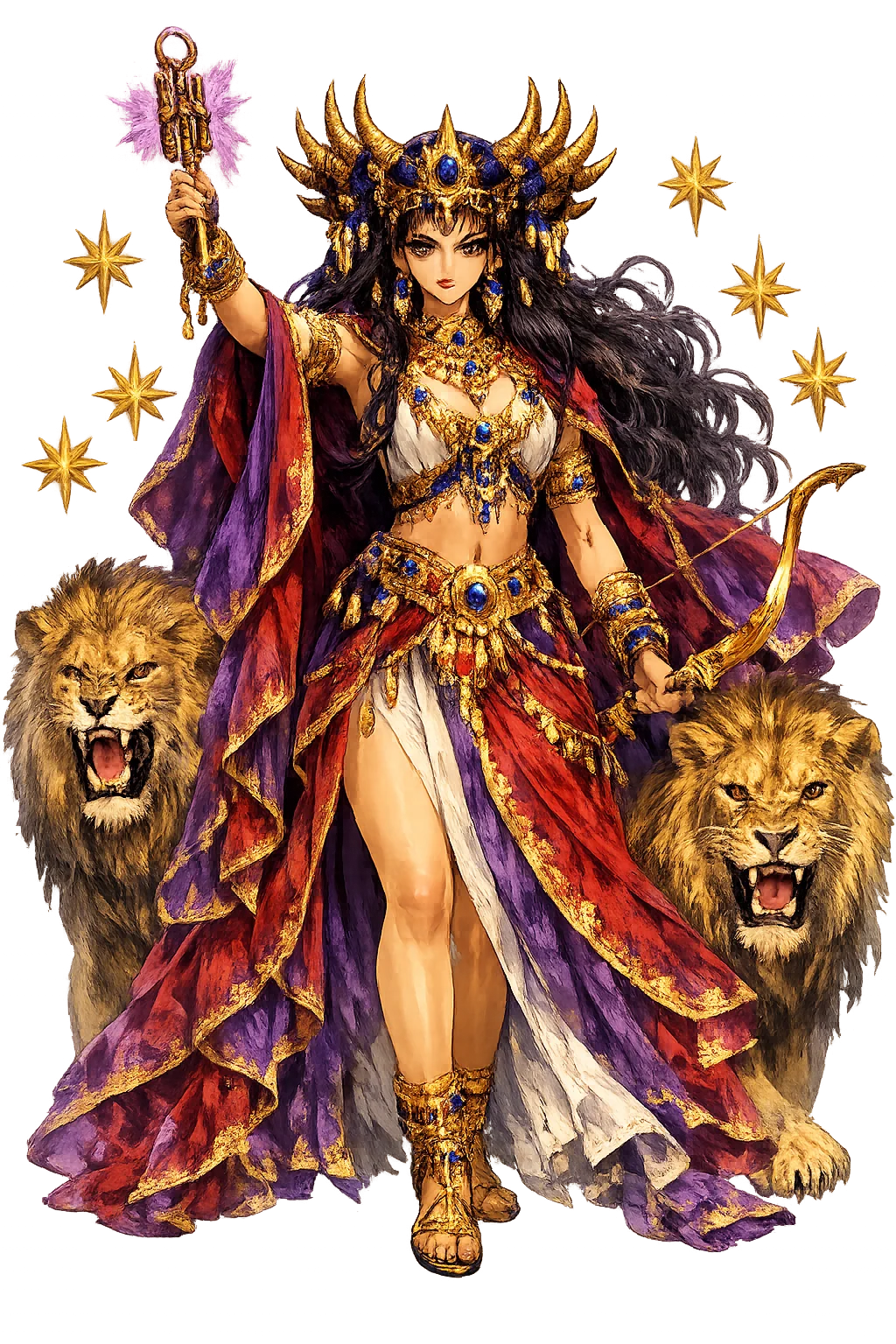
The Cult
Ištar's cult ran on two engines, bed and battle. At Uruk the Eanna precinct — excavated from its fourth-millennium foundations upward — housed her temple household, where kings of Isin and Ur enacted the sacred marriage with the goddess in New Year liturgies that the hymns of Iddin-Dagan still sing. In the early second millennium her prophets spoke politics: the archives of Mari record male and female ecstatics delivering Ištar's oracles straight into King Zimri-Lim's war councils. Assyria made her the king's battle patron: Sennacherib rebuilt her temple Emašmaš at Nineveh, and Esarhaddon praises 'Ištar who dwells in Arbela' for deciding his wars. The votive evidence is dense: the Uruk (Warka) Vase carries her earliest processional image; thousands of Old Babylonian terracotta plaques show the nude goddess; cylinder seals press her armed image into clay tens of thousands of times. The Akitu festival turned the whole city into her liturgy — and this catalog's own mythology shows what her absence meant.