
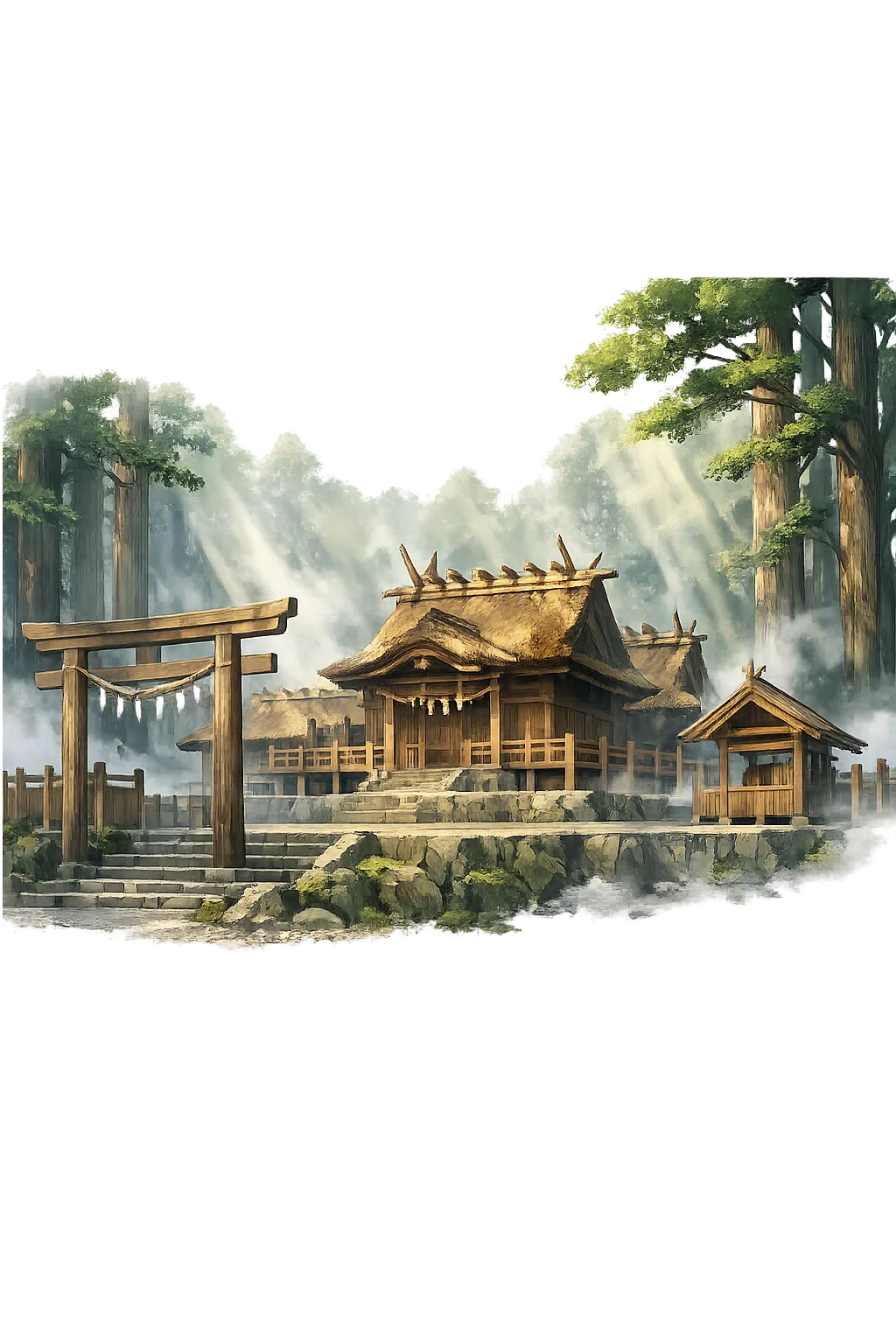
The Cult
Ise's cult is the most continuous sacred routine on earth. Its heart is offering, not preaching: the Kannamesai of October presents the year's first rice to Amaterasu, and the Tsukinami festivals of June and December renew the bond, all codified with the shrine's full calendar in the Engishiki of 927. For over six centuries the chief officiant was an imperial princess: the Saiō, chosen by divination, left the palace for the Saikū residence near the shrine, a vestal institution running from the seventh century to the fourteenth; the Saishu — an imperial princess again today — presides still. The deity's body is a mirror, the Yata-no-Kagami, never displayed; priests tend it behind the blank walls of the Inner Shrine, crossing the Uji Bridge as ritual geography. The shikinen-zōtai rebuilding every twenty years, first attested under Empress Jitō in 690, turns maintenance into liturgy: new cypress, the kami transferred, the old timbers granted to daughter shrines. Envoys, offerings, and pilgrims complete the circuit — a cult of feeding and renewing rather than of doctrine.