
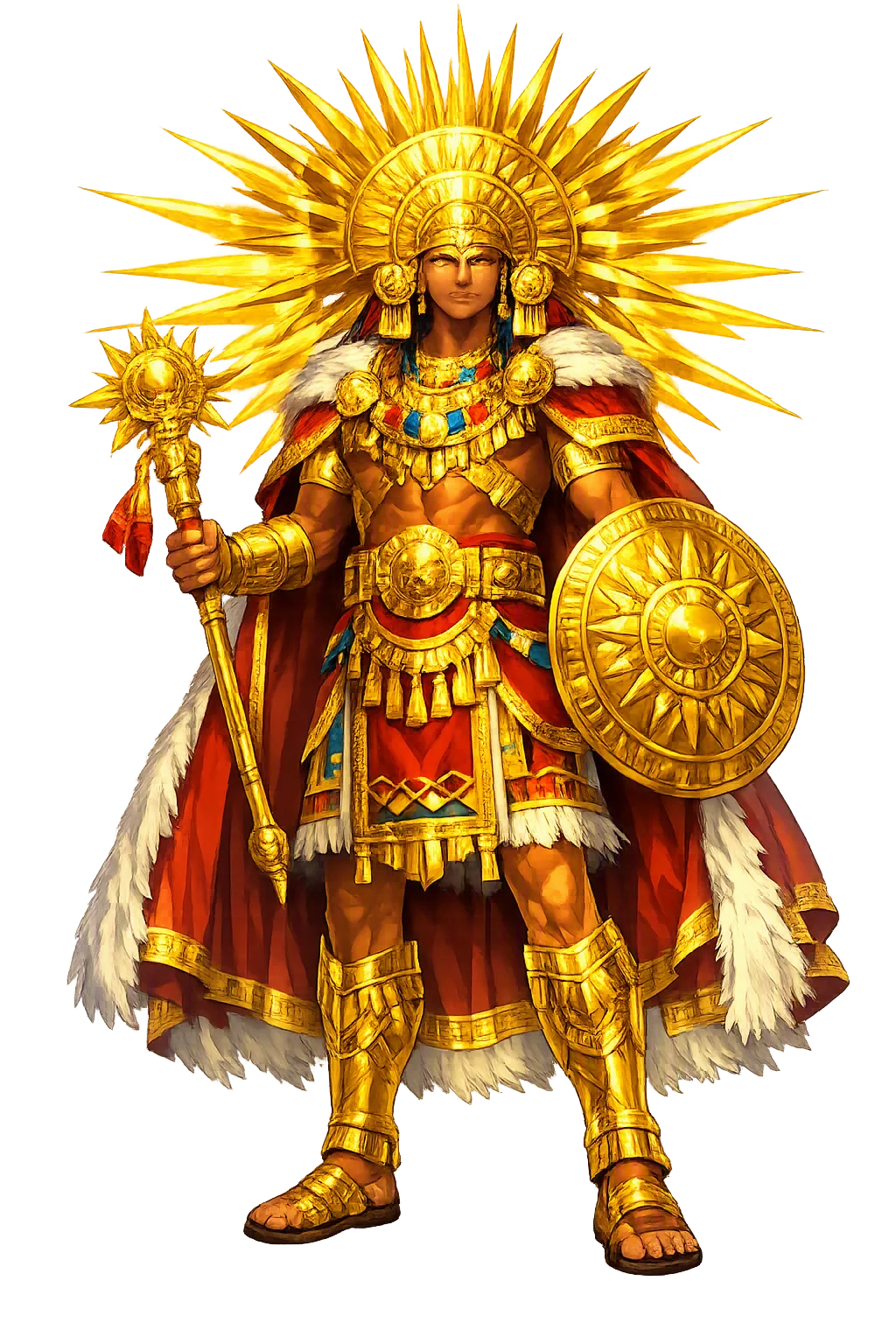
The Cult
Inti's cult was a household enlarged to imperial scale, and its daily rhythm is unusually well documented because Spanish friars wrote it down before it vanished. In the Coricancha, the temple staff — led, the chroniclers say, by the villac-umu, high priest second only to the Sapa Inca — woke the Punchao each morning, washed and dressed it, and offered chicha and food as to a living father; the mummified dead emperors sat beside it as senior members of the family. Beyond the great June Inti Raymi, Cobo enumerates a festival in nearly every month, including the Situa, a city-wide purification of fasting, washing, and new fire. The cult reached beyond Cuzco through capacocha, the state rite that consecrated children on remote mountain peaks — frozen shrines at Llullaillaco and elsewhere have been excavated in our own time — and through the acllas, chosen women who wove the Sun's cloth and brewed his beer. Provincial worship rose on the usnu platforms of Vilcashuamán and Huánuco Pampa: the same father, fed from a thousand hearths.