PuniCodex

Extended Lore

𒀭𒈹 Inanna

Etymology · Phonology · Orthography · Cultural Legacy · Primary Sources

Tier 2 Inanna
Inanna — Love, War, Venus
01

Quick Facts

Essential information about Inanna, Love, War, Venus

Original Script𒀭𒈹
Unicode RestorationInanna
Reconstructed Pronunciation/iˈnan.na/
PantheonMesopotamian
DomainLove, War, Venus
MeaningLady of heaven
ClassificationTier 2
Primary DomainInanna
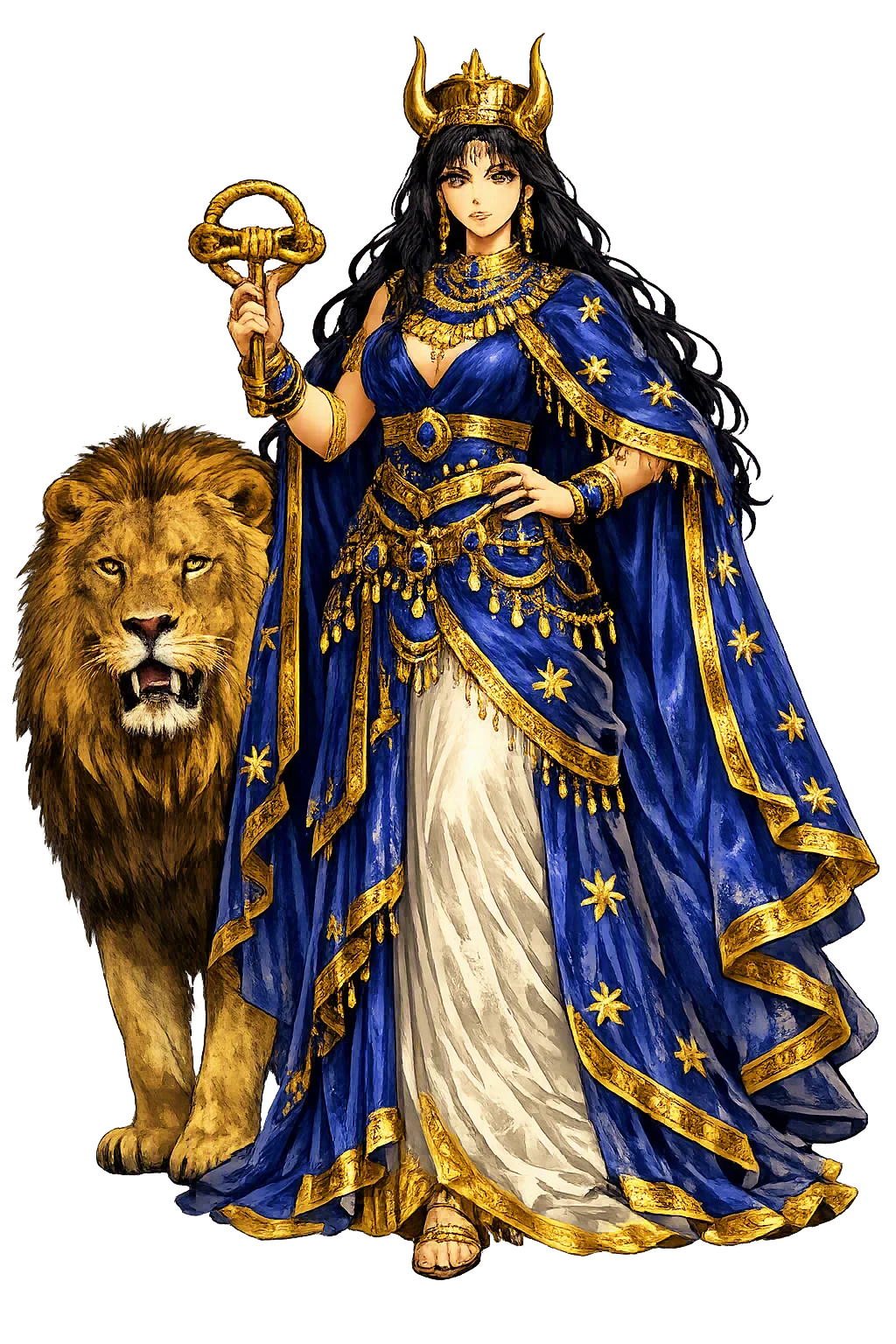
Sacred SymbolsEight-pointed star, Lion, Reed bundle, Rosette
02

Etymology & Word Family

From original script to Unicode restoration

Original Script 𒀭𒈹 Inanna — "Lady of heaven"
Unicode Restoration Inanna Restored stress, length, and script
Modern ASCII inanna Plain-ASCII fallback

The Sumerian name is written in cuneiform as 𒀭𒈹. The ASCII form inanna flattens the name to lowercase and removes the proper-noun marking; the restoration Inanna recovers the standard scholarly citation form. Because the restoration adds only the conventional capital of a proper name, the entry is placed in Tier 2.

03

Unicode Character Breakdown

Character-by-character philological analysis

CharacterUnicodeNameBlockPhonetic Role
IU+0049Latin Capital Letter IBasic LatinSame, capitalized
nU+006ELatin Small Letter NBasic LatinSame
aU+0061Latin Small Letter ABasic LatinSame
nU+006ELatin Small Letter NBasic LatinSame
aU+0061Latin Small Letter ABasic LatinSame

The Tier 2 classification reflects how much of the original phonology this restoration preserves — stress and vowel length for Greek names, distinctive letters and diacritics for every other tradition.

04

Cultural Significance

From ancient cult to modern Unicode

Ancient Domain

Inanna is the Sumerian great goddess whose domain stretches across the heavens and the human heart. She is the planet Venus as both morning and evening star, the force of sexual desire and fertility, the frenzy of battle, and the sovereign power that legitimises kings. No other deity of ancient Mesopotamia so thoroughly refuses to be one thing: she is the lover and the warrior, the bride and the conqueror, the star that crosses from the eastern to the western horizon and back again.

Inanna in Later Traditions

Inanna was so thoroughly identified with the Akkadian Ištar from the Old Akkadian period onward that the two are now treated as a single deity across most of Mesopotamian history. Through Ištar she was equated with the West Semitic Astarte, the Hurrian Šauška, and the Egyptian Qudshu, and she contributed features to the Iranian goddess Anāhitā. The Greeks identified her with Aphrodítē in her eastern, armed form. In the Hebrew Bible, her star and cult shadow the 'Queen of Heaven' denounced by Jeremiah.

Modern Legacy

Inanna's afterlife is inseparable from that of Ištar/Astarte. Her eight-pointed star persists in Near Eastern and occult symbolism, and her Descent has been read as a precursor to later underworld journeys from Orpheus to Christ. In modern scholarship she has become a central figure in feminist re-readings of ancient religion, admired for her autonomous sexuality and her refusal to accept the limits imposed by gods or mortals. Her sacred-marriage hymns, some of the earliest love poetry known, continue to be translated and performed.

Unicode Restoration as Cultural Act

Restoring Inanna in a domain name is more than orthographic accuracy. It is a statement that the internet should recognize the full range of human writing — not only the ASCII keyboard.

05

Frequently Asked Questions

Common questions about Inanna, Love, War, Venus, and Unicode restoration

01How do you pronounce Inanna?

In reconstructed pronunciation, Inanna is /iˈnan.na/ — approximately 'ee-NAHN-nah' — stress the second syllable, keep the vowels bright, and let the double n sound like a held tongue against the ridge..

02What does Inanna mean?

Inanna means Lady of heaven in the mesopotamian tradition.

03What are the symbols of Inanna?

Inanna is associated with Eight-pointed star (The sign of Venus, her planet; the star disk crowns her tiara and writes her name in cuneiform.), Lion (Her warlike aspect and royal mount; she stands upon lions as mistress of battle.), Reed bundle (The cuneiform sign 𒈹 that writes her name, a stylised bundle of reeds linking her to the marshes of Sumer.), Rosette (The fertility emblem attached to her cult from the Uruk-period cylinder seals onward.).

04Why restore Inanna in Unicode?

Plain ASCII inanna strips the stress, length, and script that make the name specific. Unicode restoration returns the name to its original written dignity.

05What is the most important myth about Inanna?

In the Sumerian Descent of Inanna, the goddess abandons heaven and earth to descend to the netherworld ruled by her sister Ereškigal. At each of the seven gates she is stripped of a garment or ornament until she stands naked before the throne of the dead. She is killed and hung on a hook. Her faithful servant Ninšubur persuades Enki to create two sexless beings who revive her with the food and water of life. The myth is a meditation on death, sovereignty, and the price of rebirth.

06

Scholarly Sources

The philological foundations of this restoration

Every claim on this page is grounded in established scholarship. The orthographic restorations follow disciplinary convention. The etymological chain follows the best available reference works. This is not invention — it is resurrection through scholarship.

Lexicography & Philology

  • ETCSL
  • Black-Green

Primary Texts

  • The Epic of Gilgamesh; Sumerian temple hymns and Akkadian ritual texts.

Archaeology & Art History

  • Material evidence — iconography, inscriptions, and temple archaeology — for Inanna and related cults.
  • The Eanna precinct at Uruk — 'House of Heaven' — preserves the sequence of Inanna temples from the Uruk period onward, source of the archaic cylinder seals that first display her star, lion, and rosette. Thousands of personal names, royal inscriptions, and incantations attest her presence in daily religion from the third millennium to the last generations of cuneiform scribes.

Religious Studies

  • Electronic Text Corpus of Sumerian Literature, Oxford Oriental Institute, 1998.
  • Black & Green, Gods, Demons and Symbols of Ancient Mesopotamia.
  • Jacobsen, The Treasures of Darkness: A History of Mesopotamian Religion.
  • Kramer, The Sumerians.
  • George, The Babylonian Gilgamesh Epic: Introduction, Critical Edition and Cuneiform Texts.
  • Wolkstein & Kramer, Inanna: Queen of Heaven and Earth.
Return

The Surface Awaits

You have traced the name from its earliest attestation to its Unicode restoration. Now return to the myth. The story is where the name lives.

Back to Lore
Inanna mascot