PuniCodex

Extended Lore

Ὕπνος Hýpnos

Etymology · Orthography · Cult · Iconography · Reception · Sources

Tier 2 Hýpnos.com
Hýpnos — Sleep
01

Quick Facts

Essential information about Hýpnos, Sleep

Original ScriptὝπνος
Unicode RestorationHýpnos
Reconstructed Pronunciation/hýp.nos/
PantheonGreek
DomainSleep
MeaningSleep
ClassificationTier 2
Primary DomainHýpnos.com
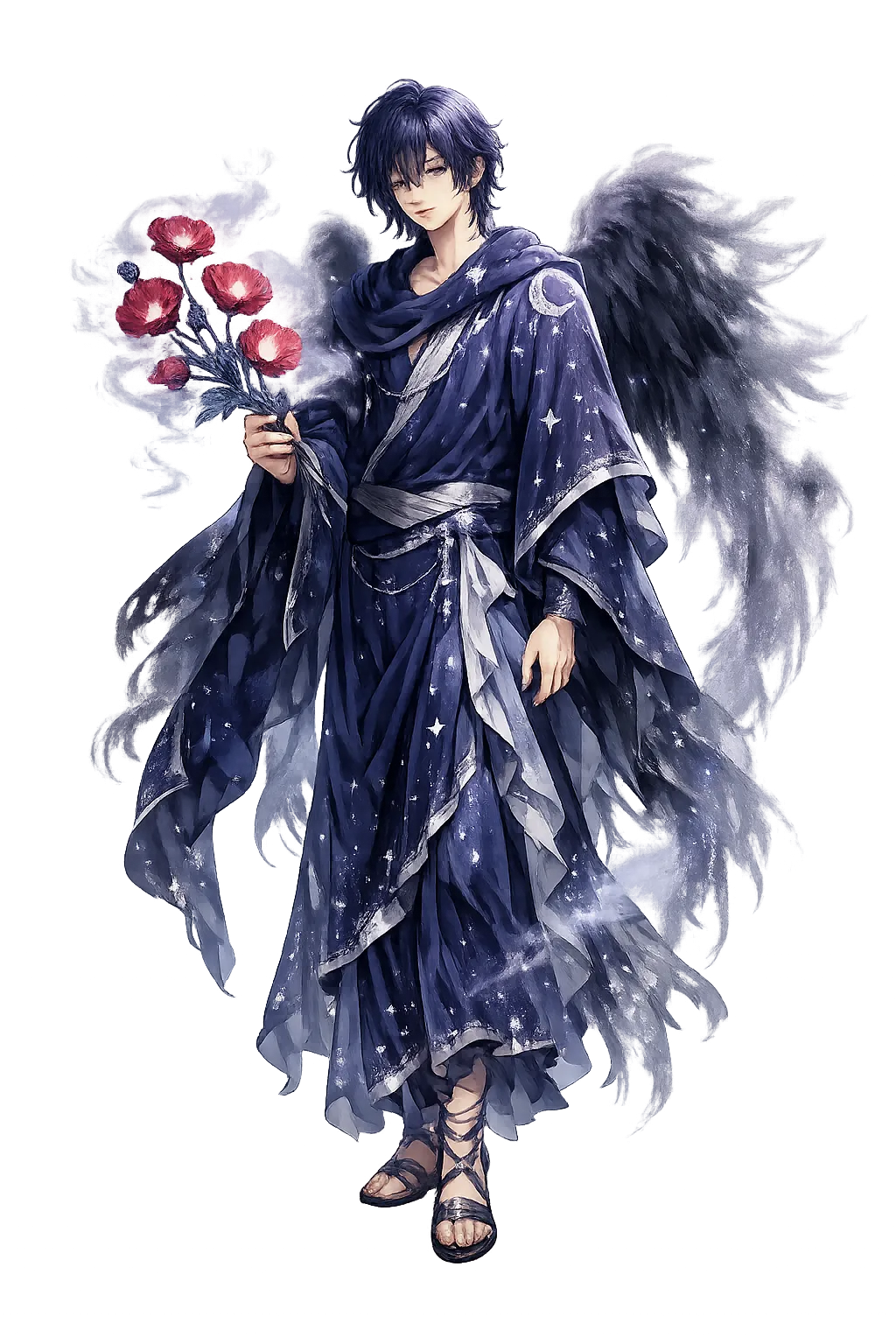
Sacred SymbolsPoppy, Wings at the temples, Branch or horn, Dark mist, The gates of horn and ivory
02

Etymology & Word Family

From original script to Unicode restoration

Original Script Ὕπνος Hýpnos — "Sleep"
Unicode Restoration Hýpnos Restored stress, length, and script
Modern ASCII hypnos Plain-ASCII fallback

The name Hýpnos carries the orthographic signature of the greek tradition: Ὕπνος. Unicode restoration recovers what ASCII flattens.

03

Unicode Character Breakdown

Character-by-character philological analysis

CharacterUnicodeNameBlockPhonetic Role
HU+0048Latin Capital Letter HBasic LatinH uppercase
ýU+00FDLatin Small Letter Y with AcuteLatin-1 SupplementAcute on y
pU+0070Latin Small Letter PBasic Latinp same
nU+006ELatin Small Letter NBasic Latinn same
oU+006FLatin Small Letter OBasic Latino same
sU+0073Latin Small Letter SBasic Latins same

The Tier 2 classification reflects how much of the original phonology this restoration preserves — stress and vowel length for Greek names, distinctive letters and diacritics for every other tradition.

04

Cult & Worship

How the sacred was kept — rites, sanctuaries, remains

The Cult

Hypnos drew no temples, festivals, or priesthoods — the evidence for his cult is honestly thin. Greek religion housed its personifications mostly in poetry, and sleep came to every house without an altar. One exception survives: Pausanias (2.31.3) records an altar of Hypnos beside the sanctuary of Aphrodite Akraia at Troezen, a single quiet corner of the Peloponnese where the god could receive offerings. His household is Hesiod’s — a son of Nyx lodged in a house the sun never visits — and Ovid’s palace of Somnus is a literary set-piece, not a pilgrims’ destination. The practical religion of sleep in Greece belonged to household ritual and to the healing sanctuaries whose patients slept for dreams; the god himself simply arrived, on wings, uninvited and unrefusable.

In the Earth

Hypnos was represented in Greek and Roman art as a winged youth, often at the bedside of the dying or carrying a hero's body. The most famous single image is ceramic: the krater of Euphronios (c. 515 BCE, Metropolitan Museum, New York) shows Hypnos and Thanatos gently lifting Sarpedon's body, one twin at the head, one at the heels — the Iliad scene rendered by a master of red-figure. In bronze, the head of Hypnos in the British Museum (Roman copy of a Hellenistic type, said to be from Civitella d'Arna) shows the god with wings at his temples. Funerary art across the Roman world pairs the twins on sarcophagi as escorts of the dead — sleep and death made brothers in marble, the gentlest company the departed ever keep.

05

Iconography

How Hýpnos was imaged across the ages

The Image

The type is fixed early and barely changes: a winged youth bending over the sleeper. On Euphronios’ great krater (c. 515 BCE) Hypnos and Thanatos lift Sarpedon’s body with matched gentleness — the Iliad’s ‘swift as thought’ made visible, one twin at the head, one at the heels; the vase made the pair the standard funeral escort for centuries. Wings mark him — at the temples in archaic art, later at the shoulders or heels — and the later attribute is the horn or branch with which he sprinkles sleep, poppies braiding through Hellenistic renderings. A Roman bronze head in the British Museum, wings breaking from the temples, copies the Hellenistic type with haunting softness. Across the Roman empire the twins multiply on sarcophagus reliefs, sleep and death made brothers in marble; the image freezes there, ready for later tomb art to borrow its tenderness while renaming its gods.

06

Reception & Transformation

The name after its own age — transmission, translation, survival

Afterlives

Hypnos rode out of antiquity on two vehicles: the text and the twin. Homer carried him through medieval manuscripts to the first printed Iliad (Florence, 1488); Ovid carried Somnus through every schoolroom copy of the Metamorphoses. The painted image had its own odyssey: Euphronios’ krater lay in an Etruscan tomb at Cerveteri until the nineteenth century, passed through dealers’ hands, was bought by the Metropolitan Museum in 1972 for a then-record price, and was repatriated to Italy in 2008 amid the Medici looting scandal — today the twins lift Sarpedon in Rome’s Villa Giulia, the most famous image of the god ever made. Neoclassicism redrew the scene for print culture: Flaxman’s spare outline of Sleep and Death carrying the hero, engraved by Piroli (1793), taught a generation to see Homer’s gentleness. His name entered the learned languages too: nineteenth-century sleep science coined hypnagogic for the threshold he guards, and Romance speakers still conjugate Somnus nightly — insomnia, somnolence, French sommeil. The personification outlived the cult by two millennia and never needed a temple to do it.

Identifications Across Traditions

The Romans identified Hypnos with Somnus, whose mythology largely mirrors the Greek; Ovid keeps the Cimmerian geography and adds the dream-shaper Morpheus and the palace full of his sons. In later antiquity the winged, poppy-bearing image of Sleep merged with that of Death in funerary art, and Christian writers, while formally demonizing the pagan sleep-gods, retained the poppy, the wings, and the bedchamber vigil in their own depictions of the dying. Modern psychology has reclaimed Hypnos through the term 'hypnosis' — coined by James Braid in the 1840s from the god's name — though the connection is more romantic than clinical.

Modern Legacy

Hýpnos lives wherever humanity manages its own oblivion: in the word hypnosis (Braid's coinage of the 1840s, from the god's name), in morphine, which borrows his son Morpheus' name, and in the whole modern industry of sleep — mattresses, apps, pills, lullabies. He is the god of the third of life we spend unconscious, the realm where memory, fear, and desire recombine. In art he remains a beautiful winged youth, sleep's beauty made visible; his twinship with Thanatos, carved on a thousand sarcophagi, still reminds every viewer that each night's surrender of consciousness is a small rehearsal for the last one.

07

The Meditation

What Hýpnos means — beyond the dictionary

Hýpnos is the god who visits everyone. Rich and poor, hero and coward, all close their eyes at his touch. In this he is more democratic than any Olympian. Yet he is also dangerous: sleep can be bribery, escape, or the doorway to deception, as when Hera uses him against Zeus.

The Greeks did not trust sleep entirely. Dreams could be true or false, divine or merely digestive — Homer gives them two gates, of horn and of ivory, and no way to know which one a dream came through. Hypnos therefore carries ambivalence: he restores and he disables, he heals and he makes vulnerable. To honor him is to acknowledge our daily surrender of consciousness — the small death without which no waking is possible.

08

Screen & Culture

Where Hýpnos echoes through film, television, and games — and how

09

Frequently Asked Questions

Common questions about Hýpnos, Sleep, and Unicode restoration

01How do you pronounce Hýpnos?

In reconstructed pronunciation, Hýpnos is /hýp.nos/ — approximately 'HOOP-nohs' — the first syllable is pitched high and begins with a rough 'h'; the second is short and level.

02What does Hýpnos mean?

Hýpnos means Sleep in the greek tradition.

03What are the symbols of Hýpnos?

Hýpnos is associated with Poppy (The soporific flower associated with sleep and dreams), Wings at the temples (The swift arrival of sleep and its power to lift the soul into dream), Branch or horn (The wand with which he sprinkles sleep upon the eyes), Dark mist (The shadowy garment in which he wraps the sleeper), The gates of horn and ivory (The two dream-gates of Odyssey 19.562–567: true dreams pass through polished horn, deceitful ones through ivory — Sleep's workshop has two doors, and mortals cannot tell which one was used.).

04Why restore Hýpnos in Unicode?

Plain ASCII hypnos strips the stress, length, and script that make the name specific. Unicode restoration returns the name to its original written dignity.

05What is the most important myth about Hýpnos?

“Hera Bribes the Brother of Death” — the Iliad 14 story that anchors the mythology of Hýpnos, told in full on the lore page.

10

Scholarly Sources

The philological foundations of this restoration

Every claim on this page is grounded in established scholarship. The orthographic restorations follow disciplinary convention. The etymological chain follows the best available reference works. This is not invention — it is resurrection through scholarship.

◈

Lexicography & Philology

  • Liddell, H. G., Scott, R., & Jones, H. S. A Greek-English Lexicon. Oxford: Clarendon Press, 9th ed. 1996.
◎

Primary Texts

  • Hesiod
  • Homer, Iliad 14.153–360; 16.454, 666–683
  • Homer, Odyssey 11.14–19; 19.562–567
  • Hesiod, Theogony 211–225, 758–761
  • Ovid, Metamorphoses 11.410–748
◉

Archaeology & Art History

  • Material evidence — iconography, inscriptions, and temple archaeology — for Hýpnos and related cults.
✦

Religious Studies

  • Beekes, Etymological Dictionary of Greek
Return

The Surface Awaits

You have traced the name from its earliest attestation to its Unicode restoration. Now return to the myth. The story is where the name lives.

Back to Lore
Hýpnos mascot