
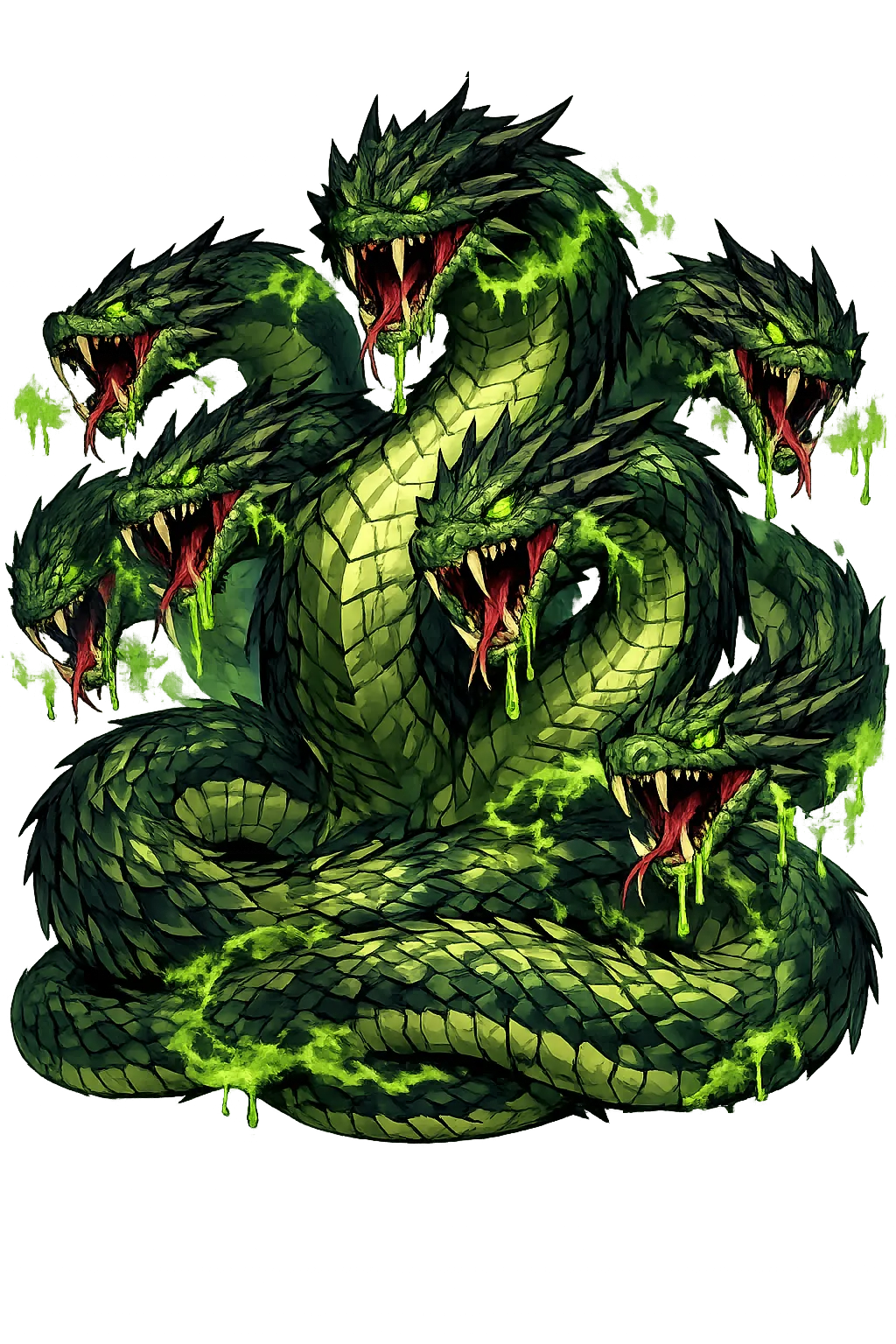
The Cult
No one worshipped the Hýdra; Greeks feared what it inhabited. The monster's lair was real ground: the marsh of Lerna below the Argive hills, beside the Alkyonian lake, a stretch of foul water that Pausanias reports even the divers of Nero's expedition could not fathom. Lerna was simultaneously a cult place — Pausanias describes the sacred grove there, images of Demeter Prosymnē and Dionysos, and mysteries celebrated by night — so the serpent haunted a landscape already dense with ritual, the unwholesome water set against the goddess's grove like a parody of sanctuary. The myth reads the terrain epidemiologically: stagnant water breeds disease, and the hero's labor is, in one ancient sense, drainage. Herakles himself had cult in the Argolid, but the beast drew no altar, no priest and no festival; it was feared, fought and buried, never adored. Its immortality is textual and stellar — which is more than most monsters manage.