PuniCodex

Extended Lore

환웅 (桓雄) Hwanung

Etymology · Phonology · Orthography · Cultural Legacy · Primary Sources

Tier 2 Hwanung
Hwanung — Son of Heaven, Descended
01

Quick Facts

Essential information about Hwanung, Son of Heaven, Descended

Original Script환웅 (桓雄)
Unicode RestorationHwanung
Reconstructed Pronunciation/hwa.nuŋ/
PantheonKorean
DomainSon of Heaven, Descended
MeaningHeavenly prince
ClassificationTier 2
Primary DomainHwanung
Sacred SymbolsSandalwood tree, Three heavenly seals, Wind, rain, clouds, grain, Clouds and mist
02

Etymology & Word Family

From original script to Unicode restoration

Original Script 환웅 (桓雄) Hwanung — "Heavenly prince"
Unicode Restoration Hwanung Restored stress, length, and script
Modern ASCII hwanung Plain-ASCII fallback

The second syllable ends in a velar nasal, like the ‘ng’ in ‘song’. The capitalised form marks the heavenly prince as a proper noun.

03

Unicode Character Breakdown

Character-by-character philological analysis

CharacterUnicodeNameBlockPhonetic Role
HU+0048Latin Capital Letter HBasic LatinSame, capitalized
wU+0077Latin Small Letter WBasic LatinSame
aU+0061Latin Small Letter ABasic LatinSame
nU+006ELatin Small Letter NBasic LatinSame
uU+0075Latin Small Letter UBasic LatinSame
nU+006ELatin Small Letter NBasic LatinSame
gU+0067Latin Small Letter GBasic LatinSame

The Tier 2 classification reflects how much of the original phonology this restoration preserves — stress and vowel length for Greek names, distinctive letters and diacritics for every other tradition.

04

Cultural Significance

From ancient cult to modern Unicode

Ancient Domain

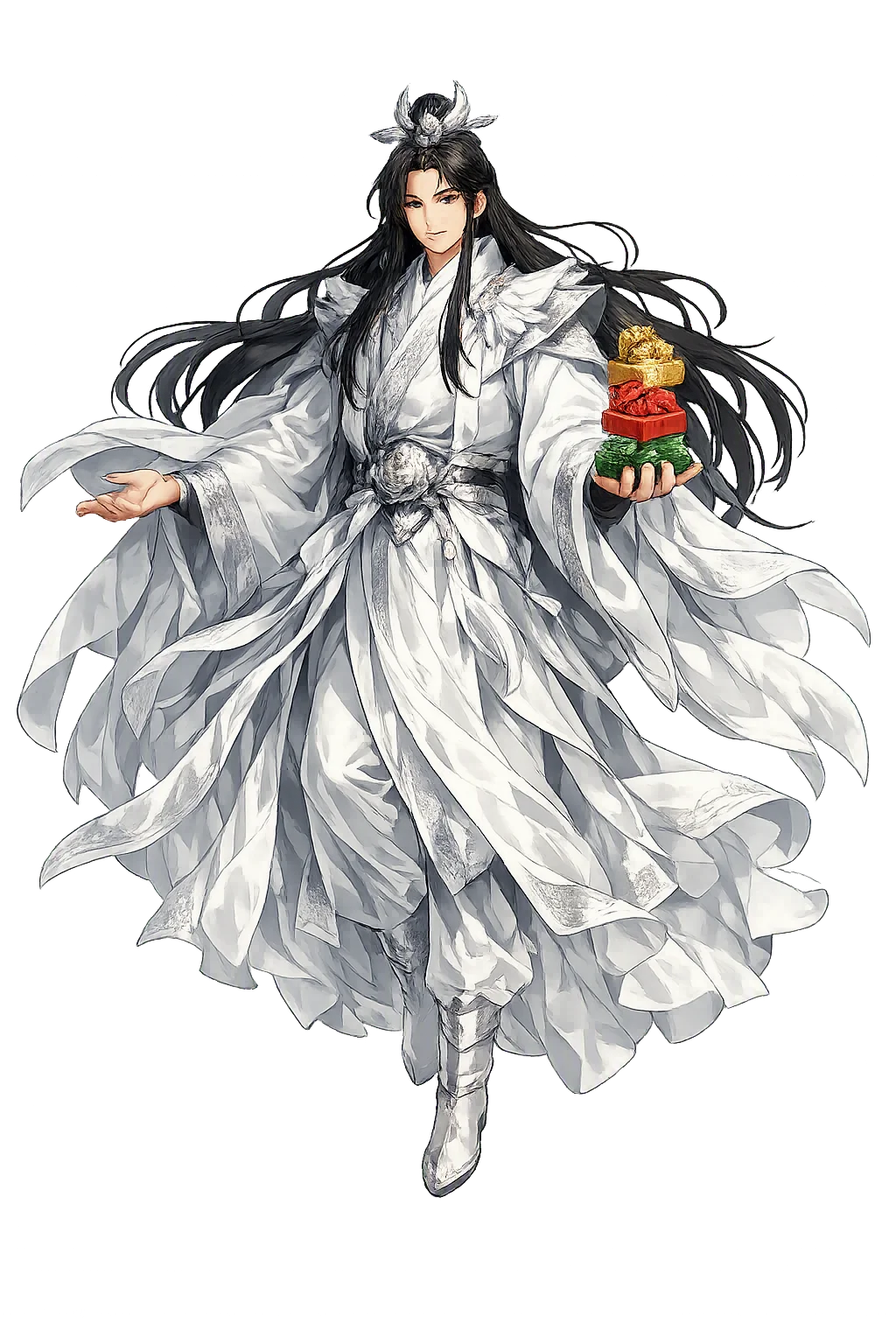
Hwanung is the heavenly prince who descends from the court of Hwanin to bring law, agriculture, and the arts of civilisation to earth in Korean tradition. The name means "Heavenly prince" and belongs to the domain "Son of Heaven, Descended." Hwanung is the son of Hwanin and the father of Dangun in the founding myth cycle recorded in the Samguk Yusa. He descends to earth beneath a sandalwood tree on a high mountain, bringing three heavenly seals and three thousand retainers.

Hwanung in Later Traditions

Hwanung functions as a culture-hero in the Korean mythic system, comparable to other East Asian figures who descend from heaven to teach agriculture and law. The story has been read through Confucian, Buddhist, and Daoist lenses, each tradition finding in it a model of virtuous rule or cosmic harmony. In modern Korean nationalism, Hwanung represents the heavenly origin of Korean civilisation, while in shamanic ritual he is remembered as one of the high spirits of the celestial pantheon.

Modern Legacy

Hwanung appears in national foundation pageants, school textbooks, museum displays, and cultural diplomacy. The myth of his descent is dramatised at the annual Dangun memorial rites and in television dramas that retell the founding story. The figure also informs Korean environmental thought: the mountain of descent, often identified with Baekdu or Taebaek, remains a sacred landscape. In digital spaces, Hwanung is invoked by those who see Korean civilisation as uniquely endowed with a heaven-granted mandate.

Unicode Restoration as Cultural Act

Restoring Hwanung in a domain name is more than orthographic accuracy. It is a statement that the internet should recognize the full range of human writing — not only the ASCII keyboard.

05

Frequently Asked Questions

Common questions about Hwanung, Son of Heaven, Descended, and Unicode restoration

01How do you pronounce Hwanung?

In reconstructed pronunciation, Hwanung is /hwa.nuŋ/ — approximately 'HWAH-noong' — The second syllable ends in a velar nasal, like the ‘ng’ in ‘song’. The capitalised form marks the heavenly prince as a proper noun..

02What does Hwanung mean?

Hwanung means Heavenly prince in the korean tradition.

03What are the symbols of Hwanung?

Hwanung is associated with Sandalwood tree (The axis at the descent place that links Hwanin's heaven to the Korean earth.), Three heavenly seals (Tokens of delegated sovereignty that authorise Hwanung to rule the human realm.), Wind, rain, clouds, grain (The cosmic departments over which Hwanung presides as culture-bringer.), Clouds and mist (The celestial medium through which the heavenly prince travels between realms.).

04Why restore Hwanung in Unicode?

Plain ASCII hwanung strips the stress, length, and script that make the name specific. Unicode restoration returns the name to its original written dignity.

05What is the most important myth about Hwanung?

Yearning to rule the world below, Hwanung asked his father Hwanin to send him to earth. Hwanin granted him three heavenly seals and three thousand retainers, and Hwanung descended to a sandalwood tree on the slopes of a high mountain.

06

Scholarly Sources

The philological foundations of this restoration

Every claim on this page is grounded in established scholarship. The orthographic restorations follow disciplinary convention. The etymological chain follows the best available reference works. This is not invention — it is resurrection through scholarship.

Lexicography & Philology

  • Samguk Yusa
  • Korean folklore

Primary Texts

  • Primary sources in the korean tradition for Hwanung.

Archaeology & Art History

  • Material evidence — iconography, inscriptions, and temple archaeology — for Hwanung and related cults.

Religious Studies

  • Iryeon, Samguk Yusa (Memorabilia of the Three Kingdoms), 1281; English trans. Ha Tae-Hung and Grafton K. Mintz (1972).
  • Lee, Peter H., ed., Sourcebook of Korean Civilization, vol. 1 (Columbia University Press, 1993).
  • Grayson, James H., Korea: A Religious and Cultural History (Routledge, 2002).
Return

The Surface Awaits

You have traced the name from its earliest attestation to its Unicode restoration. Now return to the myth. The story is where the name lives.

Back to Lore
Hwanung mascot