
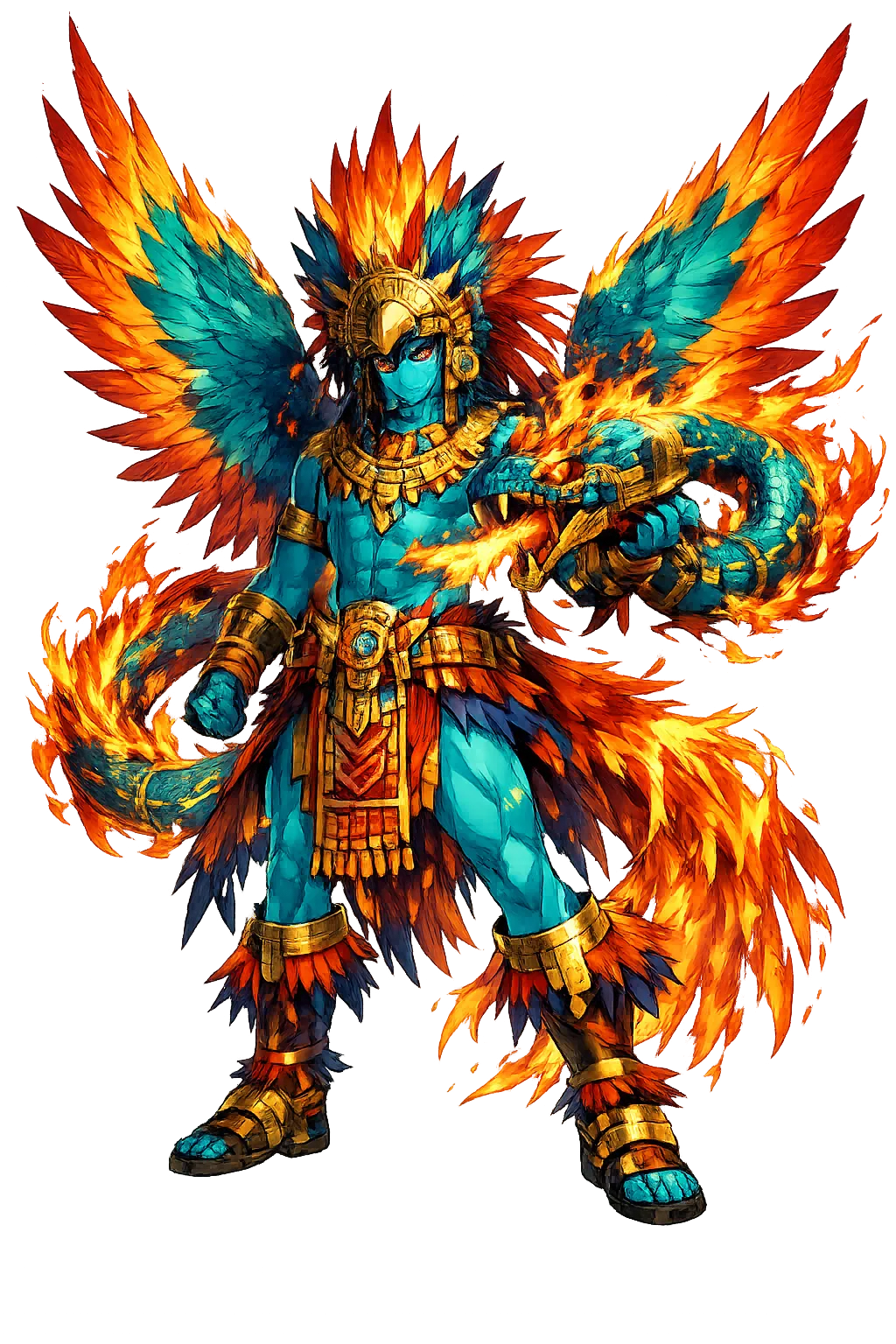
The Cult
The center of Huītzilōpōchtli’s worship was the Templo Mayor of Tenochtitlan, the double pyramid that anchored both city and cosmos. His shrine crowned the southern half, paired with Tlāloc’s; his cult image lived there, tended by priests of the calmecac, and the great disk of his dismembered sister Coyolxāuhqui lay at the stair’s foot, where offerings and sacrificial victims rehearsed the myth in stone. His principal festival was Panquetzaliztli, ‘the raising of banners,’ in the fifteenth month: four days of drums, torchlit processions, and the parading of a dough idol (tzoalli) anointed with blood, recorded in the Codex Borbonicus. The temple’s enlargement under Ahuitzotl in 1487 — when chroniclers claim thousands died over four days, numbers that grow with each retelling — marked the cult’s imperial zenith. Votive evidence comes from the offering caches themselves: jade, marine shell, carved masks, and human remains buried in the pyramid’s heart. Modern Mexicayotl movements honor him today; the ancient cult we know from the archaeology and from Nahua testimony committed to paper under Spanish eyes.