PuniCodex

Extended Lore

ᚼᚱᚢᚾᚴᚾᛁᚱ Hrungnir

Etymology · Orthography · Cult · Iconography · Reception · Sources

Tier 2 Hrungnir
Hrungnir — Giant, Duel with Thor
01

Quick Facts

Essential information about Hrungnir, Giant, Duel with Thor

Original Scriptᚼᚱᚢᚾᚴᚾᛁᚱ
Unicode RestorationHrungnir
Reconstructed Pronunciation/ˈhruŋɡ.nir/
PantheonNorse
DomainGiant, Duel with Thor
MeaningBrawler
ClassificationTier 2
Primary DomainHrungnir
Sacred SymbolsThe whetstone, Gullfaxi, The three-cornered stone heart, Mǫkkurkálfi, The fallen foot
02

Etymology & Word Family

From original script to Unicode restoration

Original Script ᚼᚱᚢᚾᚴᚾᛁᚱ Hrungnir — "Brawler"
Unicode Restoration Hrungnir Canonical scholarly spelling — ASCII-identical
Modern ASCII hrungnir Plain-ASCII fallback

The name Hrungnir reaches the modern world through scholarly transliteration of the norse tradition. Because the conventional spelling uses only Latin letters, its Unicode and ASCII forms coincide — the tradition it carries is in the name itself, not in diacritics.

03

Unicode Character Breakdown

Character-by-character philological analysis

CharacterUnicodeNameBlockPhonetic Role
HU+0048Latin Capital Letter HBasic LatinSame
rU+0072Latin Small Letter RBasic LatinSame
uU+0075Latin Small Letter UBasic LatinSame
nU+006ELatin Small Letter NBasic LatinSame
gU+0067Latin Small Letter GBasic LatinSame
nU+006ELatin Small Letter NBasic LatinSame
iU+0069Latin Small Letter IBasic LatinSame
rU+0072Latin Small Letter RBasic LatinSame

The Tier 2 classification here reflects fidelity to the attested tradition, not recovered diacritics: every character of Hrungnir already survives in ASCII. What the restoration preserves is the canonical spelling itself — the form scholarship standardised.

04

Cult & Worship

How the sacred was kept — rites, sanctuaries, remains

The Cult

There was no cult of Hrungnir — no sanctuary, festival, votive, or inscription anywhere names him, and a giant who exists to lose one duel was never a candidate for altars. The myth's one trace in lived practice is a taboo: Snorri ends the story by warning that whetstones must never be thrown across the floor, and Scandinavian folk custom preserved the prohibition long enough for nineteenth-century folklore collectors to note it — a giant's duel fossilized in household etiquette. Beyond that, the honest record is that Hrungnir's entire ancient existence is literary, a skald's poem and Snorri's retelling. Modern reverence or repurposing belongs to revival and genre fiction, not to any recoverable Viking-Age practice.

In the Earth

Hrungnir is a textual figure: no runestone invokes him, no votive deposit names him, and no picture stone can be securely tied to the duel — though the tradition of carving mythic combat on picture and rune stones is exactly the world his skald belonged to. His material witness is instead a poem about an object: Þjóðólfr of Hvin's Haustlöng was composed for a painted shield, a Viking-Age prestige object bearing mythic scenes, and the verses Snorri quotes are our evidence that the Hrungnir combat belonged to that visual repertoire in the early tenth century. The myth's own materiality is geological: Snorri anchors the shattered whetstone in the landscape — the hone-rocks of the world are its debris — and the taboo against throwing whetstones across the floor entered Scandinavian folk custom as the myth's trace in daily practice. The literary witnesses hang by the usual threads: Skáldskaparmál in the Codex Regius of the Prose Edda and its sister manuscripts, and the Haustlöng stanzas preserved nowhere else but in Snorri's quotation.

05

Iconography

How Hrungnir was imaged across the ages

The Image

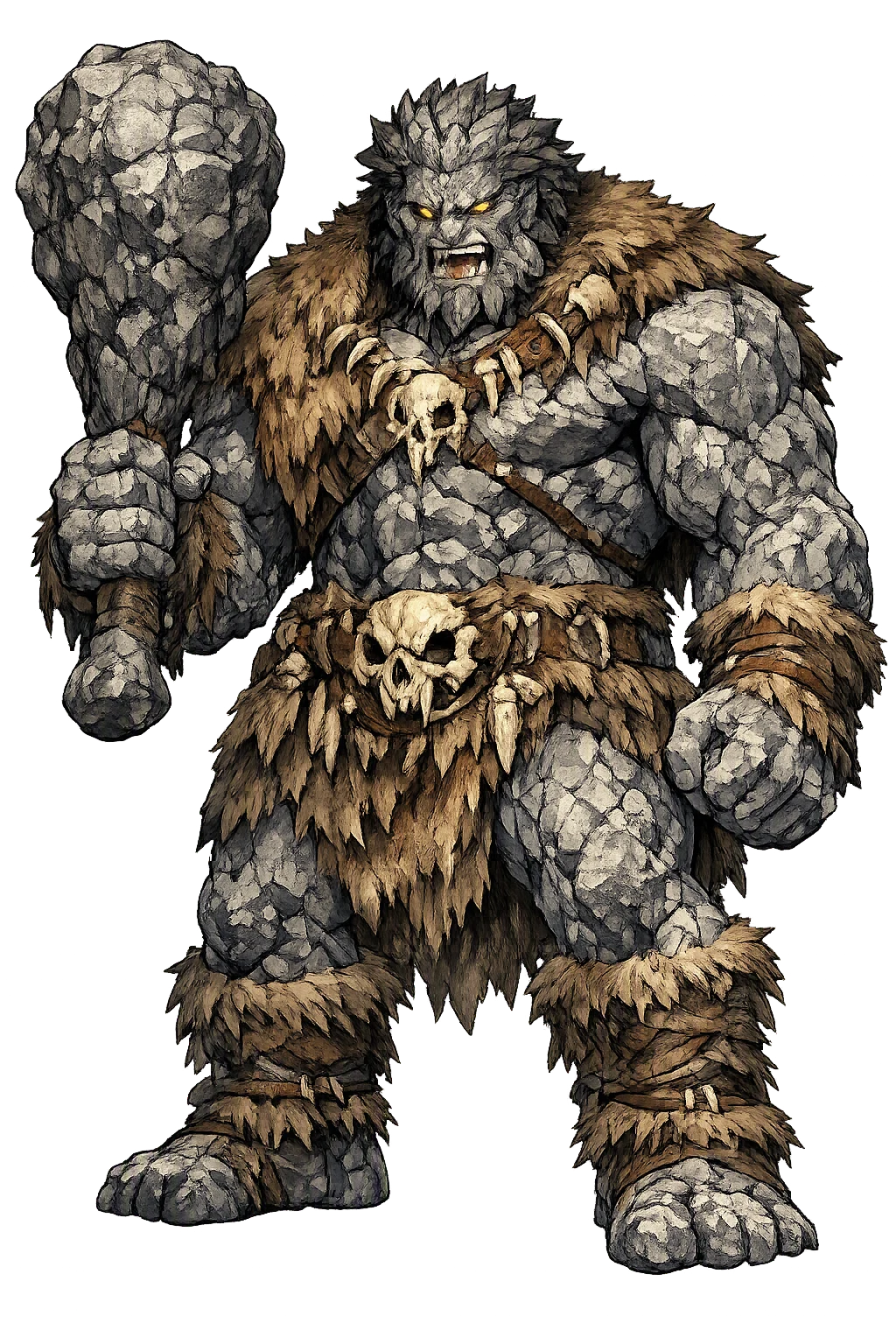
The duel's first image was painted on a shield — and lost. Þjóðólfr of Hvin's Haustlöng, composed in the early tenth century, is a shield-poem, verses describing the decoration of a prestige shield whose one face showed the Hrungnir combat; the poem is our sole evidence that the story belonged to the Viking-Age visual repertoire, and the shield itself has not survived. No carving of the fight has been securely identified, though giant-combats crowd the picture stones. Snorri's prose supplies the attributes every later artist has used: the stone heart, three-cornered and sharp-edged, the head and broad shield of stone, the whetstone held ready, and Gullfaxi, the gold-maned stallion. The image that froze is the Edda's own arithmetic of hardness — a giant built entirely of his weapon's material, hurling stone at iron, and falling forward so that his foot pins the victorious Thor.

06

Reception & Transformation

The name after its own age — transmission, translation, survival

Afterlives

Hrungnir's reception begins in the Viking Age itself, which is more than most giants can claim. Þjóðólfr of Hvin carved the combat into dróttkvætt verse around the year 900 — among the oldest sustained mythological verse we possess — and composed it for a painted shield, so the story reached the future through two media at once. Snorri then made the poem his authority, quoting Haustlöng stanza by stanza as he narrates the duel in Skáldskaparmál; because of that, every student of skaldic metre and kenning meets Hrungnir early, and the fight became a foundation text of Norse poetics. The manuscripts are the usual Eddic company — the Codex Regius of the Prose Edda and its sisters — but the myth's material afterlife is distinctive: the whetstone lodged in Thor's head and the taboo against throwing hones across the floor gave the story a second existence in Scandinavian folk custom. The Victorians took up the clay giant — Mǫkkurkálfi, all size and mare's heart — as the archetype of the hollow colossus, and the modern handbooks of Simek, Orchard, and Lindow still anchor their Þórr chapters to the duel. His name never entered the naming-pool; it remains what Haustlöng made it — the strongest thing the hammer ever had to kill.

Identifications Across Traditions

Hrungnir resists the usual syncretic moves. Attempts to read him as a reflex of an Indo-European dragon-slaying have been made — a stone-bodied chaos-being struck down by the thunderer's missile does resemble the Vedic Vṛtra pattern — but the fit is partial, since Hrungnir steals nothing, hoards nothing, and threatens no waters; scholars treat the combat as a native Norse contest-epic rather than an inherited myth. His truer company is within the corpus itself: he is one of the named great fights of Þórr, standing between Geirrøðr, killed by a thrown glowing iron, and Hymir, fished with and nearly killed by the sea. The whetstone lodged in Thor's head has been compared with the embedded weapons of other mythologies — the fragment that will not come out — but no source identifies a borrowing, and the handbooks register Hrungnir as a distinctively Norse invention, a giant built of the very landscape the North knew: stone, clay, and weather.

Modern Legacy

Hrungnir's afterlife runs through the skalds before it runs through anyone else: Haustlöng made his fall one of the foundation-texts of Norse poetics, and Snorri cites the poem as the authority for the myth, so that every handbook of Old Norse literature meets him early. The Victorians took up the clay giant — Mǫkkurkálfi recurs in retellings as the archetype of the hollow colossus, all size and mare's heart — and the detail that whetstones must not be thrown across the floor survived in folklore collections as a curiosity of thunder-lore. In modern reception he is the template for every stone-hearted boss the genre has built since: fantasy games and novels cast his duel whenever a hero must fight a mountain that can throw back. His name never entered living use the way Baldr's or Thor's did; it remains exactly what the Edda made it — the name of the strongest thing the hammer ever had to kill.

07

The Meditation

What Hrungnir means — beyond the dictionary

Hrungnir is the Edda's essay on confidence without flexibility. Every part of him is the hardest available material — heart of stone, head of stone, shield of stone — and the myth's arithmetic is that hardness is not the same as strength. The whetstone is the perfect weapon for him: a stone whose entire purpose is to sharpen other things, hurled once, shattering on the first iron it meets. Against him the Edda sets two counter-images. Mǫkkurkálfi, the engineered champion, enormous and empty, a mare's heart quaking in nine leagues of clay — the warning about size without courage. And Magni, three nights old, lifting what all the gods together could not — the warning about measuring strength by age, rank, or expectation. Hrungnir wagered his head on a horse race and lost it in a duel. The name survives, etymology unknown, as the corpus's permanent reminder that being the strongest thing in the room is a wager too — and someone always holds the hammer.

08

Frequently Asked Questions

Common questions about Hrungnir, Giant, Duel with Thor, and Unicode restoration

01How do you pronounce Hrungnir?

In reconstructed pronunciation, Hrungnir is /ˈhruŋɡ.nir/ — approximately 'HRUNG-nir' — begin with a breathy h, roll the r straight into a short 'oo' as in 'put', sound both the ng and the g as in 'finger', and trill the final r.

02What does Hrungnir mean?

Hrungnir means Brawler in the norse tradition.

03What are the symbols of Hrungnir?

Hrungnir is associated with The whetstone (The honing-stone hurled against the hammer — stone against iron, and the shard still buried in Thor's head), Gullfaxi (The gold-maned stallion whose speed was worth a giant's head — and ended in the hands of three-night-old Magni), The three-cornered stone heart (Courage of the wrong material: resolve that is hard, sharp, and entirely without flexibility), Mǫkkurkálfi (The nine-league clay giant with a mare's heart — the giants' engineered champion, terror to look at and nothing within), The fallen foot (Hrungnir's leg across Thor's neck, which all the Æsir together could not lift — the weight of the foe after the foe is dead).

04Why restore Hrungnir in Unicode?

Hrungnir is written entirely in ASCII letters, so its restoration is about canonical fidelity rather than recovered diacritics: the temple fixes the name in its scholarly standard spelling, attested in the source tradition, instead of leaving it to drift.

05What is the most important myth about Hrungnir?

“The Wager of Heads” — the Skáldskaparmál 17 story that anchors the mythology of Hrungnir, told in full on the lore page.

09

Scholarly Sources

The philological foundations of this restoration

Every claim on this page is grounded in established scholarship. The orthographic restorations follow disciplinary convention. The etymological chain follows the best available reference works. This is not invention — it is resurrection through scholarship.

◈

Lexicography & Philology

  • Cleasby-Vigfusson
  • Zoëga
◎

Primary Texts

  • Snorri Sturluson, Prose Edda: Skáldskaparmál 17–19 (the wager, the boasting in Valhǫll, the duel at Grjótúnagarðar, Magni and Gróa), trans. Anthony Faulkes
  • Þjóðólfr of Hvin, Haustlöng (the shield-poem's account of the Hrungnir combat, quoted in Skáldskaparmál)
◉

Archaeology & Art History

  • Material evidence — iconography, inscriptions, and temple archaeology — for Hrungnir and related cults.
✦

Religious Studies

  • Cleasby–Vigfusson, An Icelandic-English Dictionary, s.v. Hrungnir, Gullfaxi, Grjótúnagarðar, hein
  • Zoëga, A Concise Dictionary of Old Icelandic, s.v. Hrungnir
  • Simek, Dictionary of Northern Mythology, s.v. Hrungnir, Mǫkkurkálfi; Orchard, Dictionary of Norse Myth and Legend, s.v. Hrungnir
  • Lindow, Norse Mythology: A Guide to the Gods, Heroes, Rituals, and Beliefs, s.v. Hrungnir, Thor
Return

The Surface Awaits

You have traced the name from its earliest attestation to its Unicode restoration. Now return to the myth. The story is where the name lives.

Back to Lore
Hrungnir mascot