PuniCodex

Extended Lore

𓎛𓂝𓊪𓏭𓈘 Ḥꜥpy

Etymology · Orthography · Cult · Iconography · Reception · Sources

Tier 1 Ḥꜥpy.com · ḥp.com
Ḥꜥpy — Nile, Inundation, Abundance
01

Quick Facts

Essential information about Ḥꜥpy, Nile, Inundation, Abundance

Original Script𓎛𓂝𓊪𓏭𓈘
Unicode RestorationḤꜥpy
Reconstructed Pronunciation/ˈħaː.pi/
PantheonEgyptian
DomainNile, Inundation, Abundance
MeaningThe Nile flood god Hapi; from ḥꜥpj
ClassificationTier 1
Primary DomainḤꜥpy.com
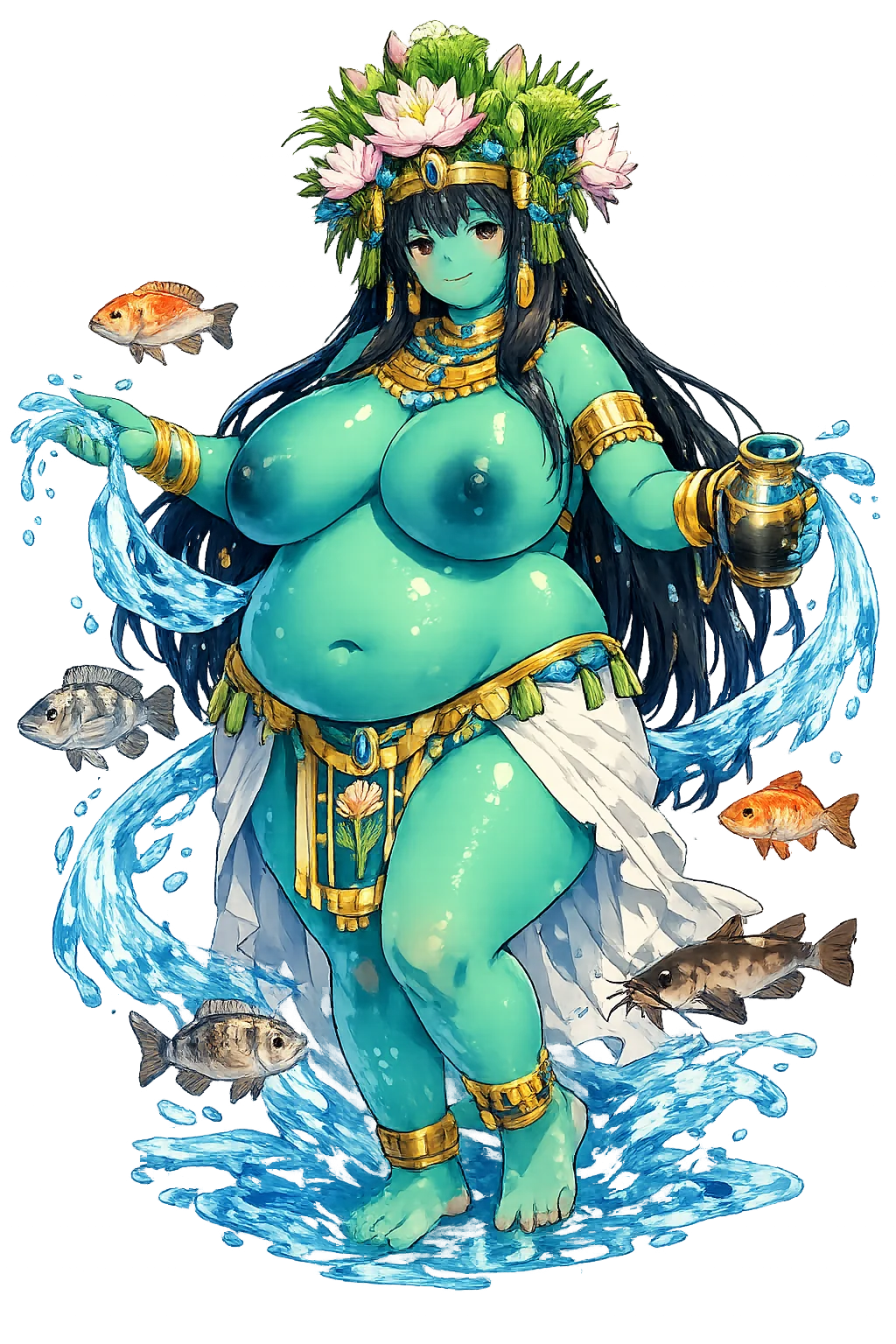
Sacred SymbolsThe blue-green skin, The heavy breasts and belly, The papyrus and lotus, The nilometer, Silt and the black land
02

Etymology & Word Family

From original script to Unicode restoration

Original Script 𓎛𓂝𓊪𓏭𓈘 Ḥꜥpy — "The Nile flood god Hapi; from ḥꜥpj"
Unicode Restoration Ḥꜥpy Restored stress, length, and script
Modern ASCII hp Plain-ASCII fallback

The name Ḥꜥpy carries the orthographic signature of the egyptian tradition: 𓎛𓂝𓊪𓏭𓈘. Unicode restoration recovers what ASCII flattens.

03

Unicode Character Breakdown

Character-by-character philological analysis

CharacterUnicodeNameBlockPhonetic Role
ḤU+1E24Latin Capital Letter H with Dot BelowUnknownPharyngeal ḥ
ꜥpyU+A725Character U+A725Latin Extended-DAyin (ꜥ) + p + y — full skeleton ḥꜥpy

The Tier 1 classification reflects how much of the original phonology this restoration preserves — stress and vowel length for Greek names, distinctive letters and diacritics for every other tradition.

04

Cult & Worship

How the sacred was kept — rites, sanctuaries, remains

The Cult

Ḥp was worshipped the way weather is feared: at the water's edge, not in a shrine. No temple of his own is attested anywhere in Egypt — the river was his temple, and every nilometer was his altar. Priests at Elephantine kept the sacred stairwell of cubit-gauges whose readings set the year's tax and the year's hope; the same service was kept at Philae and later at the octagonal shaft on Roda island. The cult's one fixed text was the Hymn to Ḥp, learned by heart by schoolboys for a thousand years — the closest thing Egypt had to a flood liturgy. On temple walls from the Old Kingdom onward his doubled figure performed the sema-tawy, the binding of the Two Lands, at the base of every sanctuary that faced the river. What ritual he had was mostly watching and measuring: the reading of the gauge, the recording of the cubits, the praying for the 'perfect flood' of sixteen cubits at Memphis. A modern echo survives in Egypt's Leylet en-Nukta, the 'Night of the Drop' when the Nile was said to receive its flood-drop — folk memory of the old river vigil, not a rite attested in pharaonic sources.

In the Earth

Nilometers survive at Elephantine (a stairwell of cubit scales rebuilt under the Romans), at Roda island in Cairo (the famous octagonal shaft, Abbasid-era over Fatimid work), and at Philae. His iconography is among the most common in Egyptian art: the procession of fat-bellied offering-bringers lines the base of temple walls from Karnak to Dendera, and the double-ḥp sema-tawy decorates royal thrones from the Old Kingdom onward. The Hymn to Hapi's best copies come from school texts — pupils learned the river's praise by heart.

05

Iconography

How Ḥꜥpy was imaged across the ages

The Image

Ḥp looks like what he is: the water made fat. Blue-green skin, heavy breasts and belly, androgynous with abundance, carrying trays of fish, fowl, and produce on offering-processions that line the base of temple walls from Karnak to Dendera. Doubled, he is the sema-tawy — one figure crowned with papyrus, one with lotus, knotting the Two Lands around the windpipe-sign, a device already Old Kingdom. The image is heraldic, not narrative: he never acts in art, only arrives, bearing. The type froze early and traveled far — the Roman marble Nile in the Vatican's Braccio Nuovo, first century CE, shows the reclining river-god ringed by sixteen children, one for each cubit of the perfect flood: the old gauge-wisdom translated into a classical body. Greco-Roman Egypt minted the type onto coins, where Neilos reclines with reed and cornucopia. Through every version the grammar holds: water-colored skin, food in the arms, and the quiet boast of a god whose body is a country's dinner.

06

Reception & Transformation

The name after its own age — transmission, translation, survival

Afterlives

The Greeks received him whole: as Neilos, the river-god to whom Herodotus' priests gave the most famous sentence in ancient geography — that Egypt itself was the gift of the Nile — and as the subject of Plutarch's late-antique theology, which read the rising water as the efflux of Osiris. Roman engineers rebuilt his gauges: the Elephantine nilometer still bore a commemorative inscription of the emperor Septimius Severus, and its readings became the ancient world's most quoted hydrological data. Medieval Islam inherited the vigil: the Roda island nilometer in Cairo, rebuilt under the Abbasid caliph al-Mutawakkil in 861, was read and described by Arab geographers for a thousand years — the last continuous observation of the flood anywhere. With the decipherment of hieroglyphs the Hymn to Ḥp became one of the first Egyptian religious texts published in modern translation, and Bonneau's La crue du Nil remains the standard study of his cult's observational core. Egyptology thus restored the god the Greeks had renamed — not a water-spirit but a nation-state's dependence, made measurable, and read like scripture at the water's edge.

Identifications Across Traditions

The Greeks called him Neilos and gave the river-god a Greek biography — making him, in some accounts, father of Memphis and ancestor of the Danaid line that returned to Argos. The word "Nile" itself descends through this identification. In Nubia he merged with local flood-lords; in the Fayum, his abundance fed the crocodile cult of Sobek, whose lake was the flood's great reservoir. Every downstream culture read the same rising water and named its own god.

Modern Legacy

He is the reason Egyptology has a tax-system to study: nilometer readings governed assessments, and the "perfect flood" — about 16 cubits at Memphis — was the single most important number in the ancient economy. The Aswan High Dam ended his annual epiphany in 1970: the fields no longer drown, and Egypt marks the loss in every history of the river. "Hapi" survives in countless modern Egyptian names and in the eco-memory of a regulated Nile.

07

The Meditation

What Ḥꜥpy means — beyond the dictionary

ḥp is the god of the right amount. Too little and Egypt starved; too much and it drowned: his theology is the arithmetic of enough. Every flood-forecast, every reservoir, every rationing scheme since is his liturgy translated — the oldest question of abundance is not how to get more, but how to receive what comes.

The dam ended his flood in a single generation, and Egypt's ambivalence about the Aswan High Dam is his modern myth: the silt no longer comes, the fields are fed by chemistry, the delta retreats — and no one would vote to bring the drowning back. ḥp's question outlives his river: abundance engineered is abundance owed to what? The flood that fed for five thousand years was never free; it was merely invoiced in a currency — rhythm, silt, patience — that modernity is only now learning to price again.

The hymn says it plainly: when he rises, the land rejoices; when he fails, the temples themselves seem to close. Egypt knew what every river civilization relearns — the water is not a resource but a relationship, renewed annually or not at all. The nilometer's cubits were the oldest economic forecast in the world, and the tax register waited on the river like a priest on an oracle.

08

Frequently Asked Questions

Common questions about Ḥꜥpy, Nile, Inundation, Abundance, and Unicode restoration

01How do you pronounce Ḥꜥpy?

In reconstructed pronunciation, Ḥꜥpy is /ˈħaː.pi/ — approximately HAH-pee; the ḥ is a strong breath, not a plain h.

02What does Ḥꜥpy mean?

Ḥꜥpy means The Nile flood god Hapi; from ḥꜥpj in the egyptian tradition.

03What are the symbols of Ḥꜥpy?

Ḥꜥpy is associated with The blue-green skin (The water itself, and the vegetation it summons), The heavy breasts and belly (Androgynous abundance — the flood as both father and mother), The papyrus and lotus (Lower and Upper Egypt, both his crowns), The nilometer (The cubit-gauge that read his body like a prophecy; every forecast and tax roll began with his measure), Silt and the black land (The kemet — the black earth the flood left behind, Egypt's own name for itself and his signature).

04Why restore Ḥꜥpy in Unicode?

Plain ASCII hp strips the stress, length, and script that make the name specific. Unicode restoration returns the name to its original written dignity.

05What is the most important myth about Ḥꜥpy?

“The Hymn to Hapi” — the The Hymn story that anchors the mythology of Ḥꜥpy, told in full on the lore page.

09

Scholarly Sources

The philological foundations of this restoration

Every claim on this page is grounded in established scholarship. The orthographic restorations follow disciplinary convention. The etymological chain follows the best available reference works. This is not invention — it is resurrection through scholarship.

◈

Lexicography & Philology

  • Faulkner, R. O. A Concise Dictionary of Middle Egyptian. Oxford: Griffith Institute, 1962.
  • Gardiner
  • Bonneau
◎

Primary Texts

  • Plutarch, On Isis and Osiris 32–36
◉

Archaeology & Art History

  • Material evidence — iconography, inscriptions, and temple archaeology — for Ḥꜥpy and related cults.
✦

Religious Studies

  • Faulkner, A Concise Dictionary of Middle Egyptian, s.v. ḥꜥp
  • Lichtheim, Ancient Egyptian Literature, vol. 1 (Hymn to Hapi)
  • Bonneau, La crue du Nil
  • Allen, Middle Egyptian
  • Te Velde, Seth, God of Confusion
Return

The Surface Awaits

You have traced the name from its earliest attestation to its Unicode restoration. Now return to the myth. The story is where the name lives.

Back to Lore
Ḥꜥpy mascot